Madrid, Spain
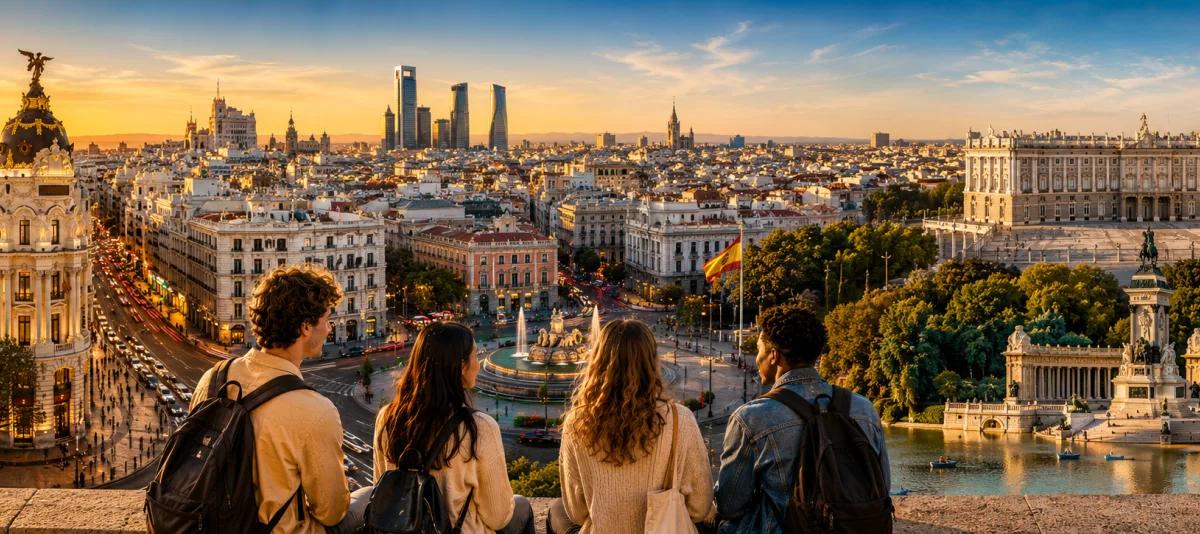
Quick facts
- Country
- Spain
- Population
- 3,506,730
- Languages
- Spanish
- Currency
- EUR
- Time zone
- CET (UTC+1)
- Guide score
- 7.2/10
- Safety
- 7/10
Overview
Madrid is the beating heart of Spain — a sprawling, energetic capital of 3.5 million people where student life thrives thanks to affordable living, world-class universities, and a social culture built around long nights, great food, and genuine human connection. As the seat of government, business, and culture, Madrid offers unrivaled access to internships, cultural events, and career opportunities, all wrapped in a city that rarely sleeps and welcomes outsiders with open arms.
The city is home to some of Spain's most prestigious universities, including the Universidad Complutense de Madrid (the largest in Spain and one of the oldest in the world), Universidad Autónoma de Madrid, Universidad Carlos III, and Universidad Politécnica de Madrid. These institutions collectively host tens of thousands of international students each year, and their campuses are scattered across the city and its outskirts. Madrid is also the country's primary hub for Erasmus students, consistently ranking as one of the top Erasmus destinations in Europe.
Unlike Barcelona, Madrid is not a tourist monoculture — it's a real, working city where locals and students coexist in vibrant neighborhoods that maintain their authentic character. The cost of living is manageable for a European capital, the food scene is extraordinary at every price point, and the transport system is one of the best in Europe. Summers are intensely hot and winters bring crisp, clear skies, but the city's energy never dips regardless of the season.
Student life
Madrid has one of the largest student populations in Europe, with over 300,000 university students in the metropolitan area. This critical mass creates a rich ecosystem of student bars, cultural events, language exchanges (intercambios), and social activities that make it almost impossible to feel isolated. The city's social culture is deeply inclusive — Spaniards are genuinely curious about international students and eager to share their city.
University culture in Madrid is a mix of academic rigor and social warmth. Study groups form naturally, and it's common to spend hours at the university library (especially Complutense's massive Biblioteca María Zambrano) before heading out for cañas (small beers) with classmates. Language exchanges happen at dozens of bars across the city every night of the week, making them one of the easiest ways to practice Spanish and meet people. Student associations (asociaciones) organize trips, parties, and cultural events throughout the year. The city also has a thriving startup and tech scene, with co-working spaces and incubators offering student discounts.
Neighborhoods
Malasaña is the bohemian heart of Madrid — trendy, artsy, and packed with vintage shops, independent cafés, and street art. It's extremely popular with students and young professionals. Rooms cost €550–750/month. Loud on weekend nights but full of character.
Moncloa / Argüelles is the quintessential student neighborhood, adjacent to the Ciudad Universitaria campus of Complutense and close to the Politécnica campus. It's well-connected, has affordable dining options, and is surrounded by parks. Rooms range from €450–650/month, making it one of the best value areas for students.
Chamberí is a slightly upscale residential neighborhood with a village-like feel, excellent food markets (Mercado de Vallehermoso), and beautiful architecture. It's quieter than Malasaña but equally central. Rooms cost €550–700/month.
Lavapiés is Madrid's most multicultural neighborhood — a melting pot of cultures with the cheapest rent in the center (rooms from €400–600/month). It has a vibrant street food scene, art galleries, and a gritty authenticity. Can feel rough around the edges late at night, but it's an incredibly stimulating place to live.
Tetuán / Nuevos Ministerios is further north and more residential, offering rooms at €400–550/month. It's less trendy but very well connected by metro and offers a more local, less touristy feel. A solid budget option with good transport links.
Food & restaurants
Madrid's food culture is one of its greatest assets. The city runs on a rhythm of meals and snacks that structures the entire day. Breakfast is light — a coffee and tostada con tomate at a local bar costs €2–3. The menú del día (daily lunch set menu) is a lifesaver for students: for €12–15, you get a starter, main course, drink, bread, and dessert. These are available at countless neighborhood restaurants between 1:00 and 4:00 PM.
For cheap eats, Casa Toni (Calle de la Cruz) serves some of the best patatas bravas in the city for €4. Lateral (multiple locations) offers modern Spanish food at reasonable prices. The area around Calle Ponzano has become Madrid's unofficial gastronomic street, with tapas bars and terraces stretching for blocks. For groceries, Mercadona, Lidl, and Carrefour Express cover basics, while neighborhood markets like Mercado de la Cebada and Mercado de Antón Martín offer fresh produce and prepared foods. Late-night dining is easy — many restaurants serve until midnight, and kebab and pizza joints stay open until 3–4 AM.
Nightlife & entertainment
Madrid's nightlife is legendary and arguably the best in Europe for students. Nights start late — meeting for drinks at 10–11 PM, hitting a club at 1–2 AM, and going home at 5–6 AM is standard behavior, not an exception. The city has strict noise regulations in residential areas but is generous with late-night licenses for dedicated nightlife zones.
Malasaña is the epicenter of indie bars and alternative clubs. La Vía Láctea and Tupperware are iconic. Chueca (adjacent to Malasaña) is Madrid's LGBTQ+ neighborhood with a vibrant bar scene. La Latina comes alive on Sunday afternoons with the El Rastro flea market and terrace drinks. Huertas / Sol has a denser concentration of bars and clubs, though some cater more to tourists. For larger clubs, Kapital (seven floors of different music), Sala Changó, Siroco, and Mondo Disko are student favorites. Student nights (fiestas universitarias) with discounted entry happen multiple times a week at various venues. Concerts and live music are abundant — the Sala Sol, WiZink Center, and Joy Eslava regularly host international and local acts.
Transport
Madrid's metro system is one of the best in Europe — clean, reliable, extensive (over 300 stations across 13 lines), and cheap. For students under 26, the Abono Joven transport pass costs just €10/month and covers unlimited travel on metro, buses, and commuter rail (Cercanías) across the entire Madrid region. This is one of the best deals in European public transport.
The bus network (EMT Madrid) complements the metro and runs nighttime routes (búhos) on weekends. Cercanías commuter trains connect the city center to suburban campuses and surrounding towns. BiciMAD, the city's public e-bike-sharing system, costs €0.50 per ride of up to 30 minutes or a €10/month flat rate with unlimited 30-minute rides, and is useful for short trips in the flat central areas. The city center is increasingly pedestrianized, and many students walk or bike for daily errands. For intercity travel, Madrid's Puerta de Atocha and Chamartín stations connect to the extensive AVE high-speed rail network, and Madrid-Barajas airport (MAD) is a major hub with cheap flights across Europe.
Cost of living
A realistic monthly student budget in Madrid is €900–1,200, which is very competitive for a European capital of this size and quality.
Monthly breakdown:
- Room in shared apartment: €500–700
- Groceries: €120–180
- Transport (Abono Joven under 26): €10
- Mobile phone: €10–15
- Entertainment & dining out: €100–200
- Gym: €25–40
- Utilities (shared): €30–50
The menú del día habit can save hundreds per month on food. Buying groceries at Mercadona or Lidl and cooking at home is the most affordable option. Madrid's free cultural offerings are extensive: the Prado, Reina Sofía, and Thyssen museums all have free entry hours, Retiro Park is a massive green space in the city center, and many concerts and cultural events are free.
Safety
Madrid is generally a safe city for students, with low rates of violent crime. The main concern is petty theft — pickpocketing is common in crowded areas like Sol, Gran Vía, the metro, and around tourist attractions. Keep your phone and wallet in front pockets, be aware on crowded metro cars, and avoid leaving belongings unattended on terrace tables.
Certain areas require more caution at night: parts of Lavapiés, Casa de Campo (especially after dark), and the outskirts of the city center can feel less safe. However, the widespread nightlife culture means streets are usually populated until very late, which adds a layer of natural safety. The police (Policía Nacional and Policía Municipal) are generally approachable. Emergency numbers: 112 (general emergencies), 091 (Policía Nacional), 092 (Policía Municipal).
Weather & climate
Madrid has a continental Mediterranean climate with hot, dry summers and cold, sunny winters. Summers (June–August) are intense, with temperatures regularly reaching 35–40°C — air conditioning is not universal in older apartments, so check before signing a lease. Winters (December–February) are crisp and dry, with temperatures around 2–10°C and occasional frost. Snow is rare but not unheard of.
Spring (March–May) and autumn (September–November) are the most pleasant seasons, with mild temperatures around 15–25°C and clear skies. Madrid has over 2,800 hours of sunshine per year — more than almost any other European capital. Rainfall is relatively low and concentrated in spring and autumn. The dry climate is generally comfortable, though summer heat can be exhausting. Most locals escape to the coast or mountains on weekends during July and August.