Salamanca, Spain
Quick facts
- Country
- Spain
- Population
- 146,110
- Languages
- Spanish
- Currency
- EUR
- Time zone
- CET (UTC+1)
- Guide score
- 6.7/10
- Safety
- 8/10
Overview
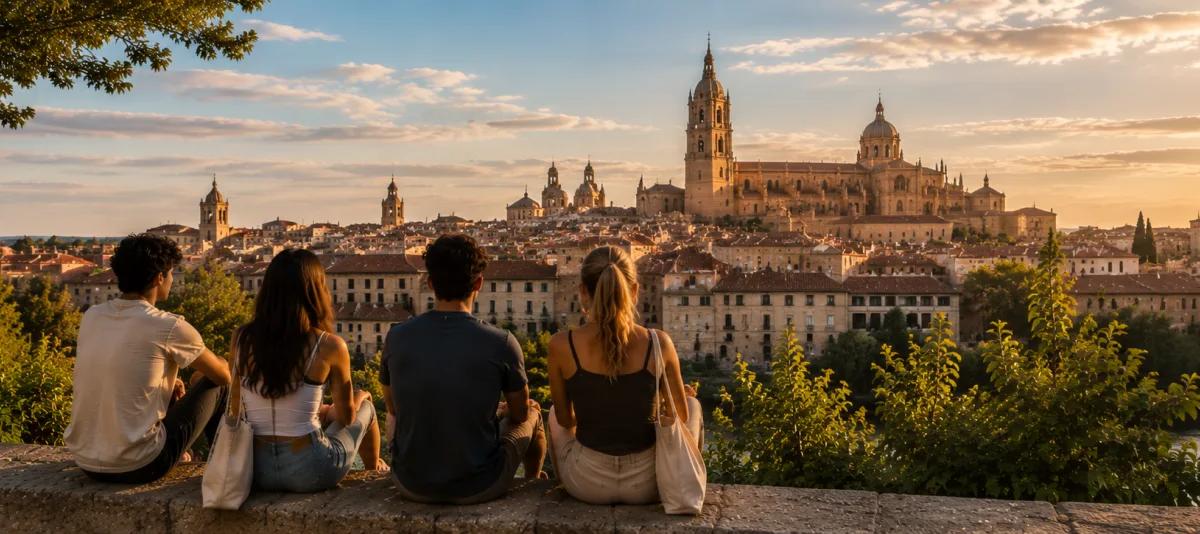
Salamanca is a UNESCO World Heritage city in western Spain's Castilla y León region, renowned for its golden sandstone architecture, vibrant student culture, and one of Europe's oldest universities. With a population of around 146,000 — of which roughly 40,000 are university students — the city pulses with youthful energy. Its compact, walkable historic center revolves around the stunning Plaza Mayor, widely considered one of Spain's most beautiful squares. Salamanca offers international students an authentic Spanish immersion experience at a fraction of the cost of Madrid or Barcelona, with a deeply social atmosphere where nearly everyone you meet is also a student.
The Universidad de Salamanca (USAL), founded in 1218, is the oldest university in Spain and one of the oldest in Europe. It enrolls over 40,000 students across undergraduate, master's, doctoral, and language programs, with a growing international presence — over 53% of doctoral students are international. The university also runs one of Spain's most prestigious Spanish language programs, attracting over 5,000 in-person language students each year. The Pontifical University of Salamanca (UPSA) adds another dimension to the city's academic scene. Both institutions offer Erasmus exchange programs and have strong reputations across humanities, law, medicine, and linguistics.
Student life
Student life in Salamanca is arguably the most intense in Spain. The city's small size means the student community is tightly knit — you'll run into the same people at the library, in tapas bars, and at clubs. The social scene revolves around Plaza Mayor, where students gather every evening for cheap cañas (small beers) and tapas before heading to the nightlife zones. Erasmus and international students integrate quickly thanks to organized events by ESN Salamanca and the university's international office. Language exchanges (intercambios) happen constantly in bars and cafés, making it one of the best cities in Spain to actually learn Spanish. The academic calendar runs from September to June, with exam periods in January–February and May–June. Outside of studies, students enjoy hiking in nearby natural areas like Arribes del Duero, day trips to Portugal (just 1.5 hours away), and the city's rich cultural calendar including Semana Santa processions and the Noche Vieja Universitaria celebration in December.
Neighborhoods
Centro / Casco Antiguo — The historic center around Plaza Mayor and the university buildings. Perfect for living at the heart of the action with everything within walking distance. Expect noise on weekends from nightlife. Rooms in shared flats: €300–€400/month.
Van Dyck — A popular student neighborhood just south of the center, known for its relaxed bar scene, affordable tapas joints, and proximity to the university. Great balance of price and location. Rooms: €250–€350/month.
San Bernardo — Ideal for students at Campus Miguel de Unamuno (Medicine, Pharmacy, Biology, Psychology). Features many shared apartments and student residences with good bus connections. Rooms: €230–€320/month.
Garrido — A quieter residential area north of the center with parks, supermarkets, and excellent transport links. Popular with students who prefer a calmer environment while still being a short bus ride from campus. Rooms: €220–€300/month.
Chinchibarra — An up-and-coming area between the center and Garrido, increasingly popular with students for its affordable rents and proximity to both campuses. Rooms: €220–€300/month.
Food & restaurants
Salamanca is a tapas city at heart, and eating well on a budget is easy. The menú del día (daily lunch set menu) is available at most restaurants for €10–€13 and typically includes a starter, main course, bread, drink, and dessert.
La Mariseca — In the historic center between Plaza Mayor and the cathedrals, offering over 60 different tapas at very low prices. Famous for their tortilla de patatas and Lagarto Ibérico. Open 9am–midnight.
Pintarolo — A cozy tapas bar beloved by students with excellent tortilla, empanadillas, and fast service. Most items €1–€5.
El Patio Chico — Near the old cathedral, serves tapas for just €1 each alongside grilled meat platters. A student budget classic.
MALDEAMORES Gastrobar — Modern tapas with vegetarian options and organic ingredients. Generous portions at €5–€10 per dish.
Don Quijote — Traditional Spanish fare with outdoor seating, meals under €9. Good for a relaxed lunch between classes.
For groceries, Mercadona, Carrefour Express, and Dia are scattered throughout the city. A weekly grocery run costs €25–€40 if you cook at home. The Mercado Central on Plaza del Mercado offers fresh produce, meats, and cheeses at good prices.
Nightlife & entertainment
Salamanca's nightlife is legendary among Spanish university cities. The party week runs Wednesday through Saturday, with Thursday being the biggest student night.
Calle Bordadores — The main nightlife street, packed with bars offering cheap drinks and student promotions. Start your night here around 11 PM with cañas and chupitos (shots) for €1–€2.
Gran Vía — Home to the bigger clubs and discotecas. Popular spots include Camelot (a converted church with multiple rooms), Gatsby (mainstream pop/reggaeton), and Cum Laude (student-focused with themed nights).
Plaza Mayor — The gathering point for the early evening botellón culture and people-watching before bars open.
The Irish Rover — Popular with Erasmus students for its international atmosphere and English-speaking staff.
El Alquimista — A quirky bar with creative cocktails and alternative music, popular with arts students.
The typical Spanish night: pre-drinks at home (9–11 PM), tapas and bars (11 PM–2 AM), clubs (2–6 AM). Cover charges are rare except for special events; drinks cost €3–€6 in most venues. A night out costs €15–€25 depending on consumption.
Transport
Salamanca is small enough that most students walk everywhere — the entire center is crossable in 20 minutes on foot. For those living further out:
- City bus (Salamanca de Transportes): Single ticket €1.20, rechargeable bonobús card €0.37/trip. Youth monthly pass (Abono Joven): €7.34/month for unlimited rides.
- Bicycles: The city is flat and bike-friendly. Municipal bike rental available at ~€5/week.
- Intercity travel: The bus station connects to Madrid (2.5h, €15–€25), Valladolid (1.5h, €8–€12), and Porto, Portugal (3h, €15–€20). The train station offers services to Madrid (1.5h by Alvia, €20–€30).
- Abono Joven: Spain's national youth transport subsidy may apply for certain intercity services for under-26s.
No metro or tram system exists — the city simply doesn't need one due to its compact size.
Cost of living
| Item | Monthly Cost (€) |
|------|------------------|
| Room in shared flat | 250–400 |
| Utilities (water, electricity, internet) | 30–50 |
| Groceries | 120–180 |
| Transport (bus pass) | 7–15 |
| Eating out (occasional) | 50–80 |
| Nightlife | 60–100 |
| Phone plan | 10–20 |
| Gym membership | 20–35 |
| Total estimate | 550–880 |
Salamanca is one of the cheapest university cities in Spain. A comfortable student budget is €600–€750/month. Very frugal students can manage on €500/month.
Safety
Salamanca is one of Spain's safest cities, with low crime rates and a friendly, small-city atmosphere. The historic center is well-lit and busy with students at all hours, making it safe to walk home even late at night. Petty theft (pickpocketing) is rare but can occur around Plaza Mayor during peak tourist season in summer. There are no particularly dangerous neighborhoods for students. Standard precautions apply: don't leave belongings unattended in bars, be aware of your surroundings after heavy drinking, and lock your apartment door. Emergency number: 112. The local police station is on Calle Rúa Mayor.
Weather & climate
Salamanca has a continental Mediterranean climate with hot summers and cold winters — more extreme than coastal Spanish cities.
- Winter (December–February): Cold, with temperatures ranging from -1°C to 10°C. Frost is common in the mornings, though snow is rare. Bring a warm coat.
- Spring (March–May): Mild and pleasant, 5°C to 20°C. The rainiest season, so pack a light jacket. April and May are beautiful.
- Summer (June–September): Hot and dry, 12°C to 32°C. July and August can exceed 35°C. The city empties as students leave.
- Autumn (October–November): Cool and clear, 4°C to 18°C. Short but pleasant.
The city enjoys approximately 2,500 hours of sunshine per year. Pack layers — temperature swings between day and night can be 15°C or more.
Universities in Salamanca
Other cities in Spain
Next steps
Sources
- boe.es/diario_boe/txt.php?id=BOE-A-2025-25362
- comunicacion.usal.es/universidad-consolida-su-crecimiento-global-ante-nuevo-curs
- tribunasalamanca.com/noticias/429025/precios-definitivos-del-bus-urbano-de-salam
- salamancartvaldia.es/noticia/2026-08-25-cuanto-cuesta-compartir-piso-salamanca-s
- idealista.com/news/inmobiliario/vivienda/2026/08/24/910850-la-oferta-de-habitaci