Universidad Cooperativa de Colombia
Datos rápidos
- Ciudad
- Bogotá
- País
- Colombia
- Tipo
- Privada
- Fundada en
- 1958
- Estudiantes
- 36.636
- Nota media de la guía
- 6,4/10
Web oficial: www.ucc.edu.co
Resumen
The Universidad Cooperativa de Colombia (UCC) is a large private university of the solidarity-economy sector. Its institutional story starts in 1958 with the Instituto Moses Michael Coady; the Ministry of Education recognised it as a university in 1983. The official site lists 36,636 students, 127 undergraduate programmes, and 15 campuses in 17 Colombian cities, with Bogotá as the legal domicile. UCC does not appear among the 12 Colombian universities published in the QS World University Rankings 2027.
UCC's pitch is access rather than elite prestige: affordable, multi-city higher education for middle- and working-class students. The Bogotá campus has the widest programme list. Facilities and research capacity have been upgraded in recent years, but academic quality still varies by campus — Bogotá, Medellín, and Bucaramanga are generally the stronger sites.
Oferta académica
Established programmes include Law, Medicine, Dentistry, and Business Administration, with clinical training through local hospital partnerships. Engineering covers systems, civil, and industrial tracks with a practical emphasis. Accounting and Business Administration feed Colombia's SME and cooperative sector. The curriculum still carries the cooperative-movement language of social responsibility. Graduate specialisations and master's programmes have expanded. Research groups register with MinCiencias; output is developing rather than leading the national tables.
Vida en el campus
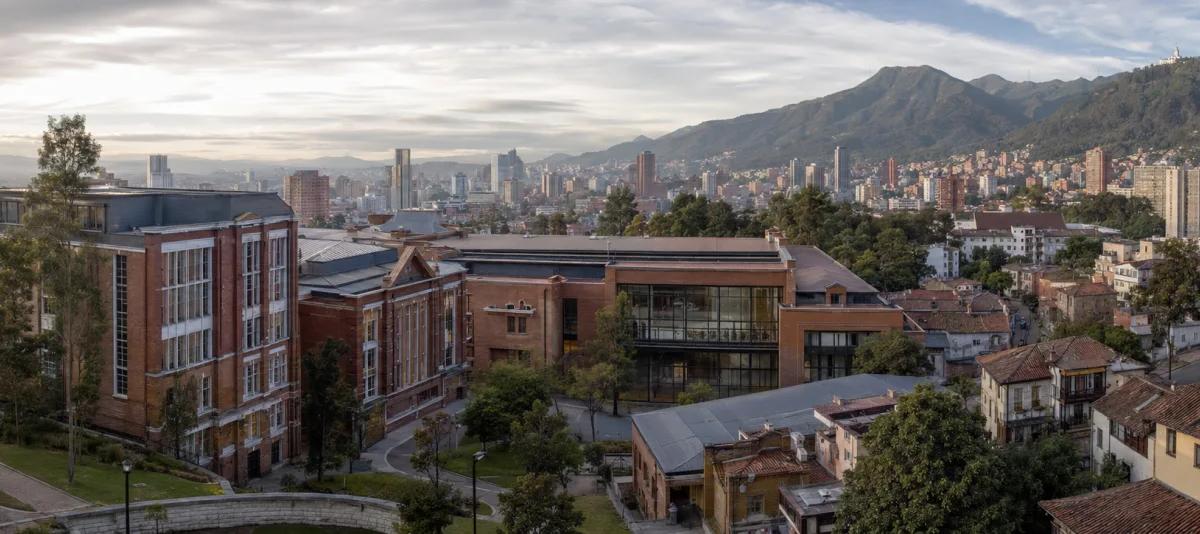
The Bogotá campus is an urban cluster of buildings rather than a park-like site. Classrooms, computer labs, health-science simulation rooms, and libraries have been modernised. Student life follows Colombia's sociable pattern: study groups, student government, cultural weeks, and outreach projects. Because UCC spans many cities, campus culture changes with the city. In Bogotá, students use the capital's museums, theatres, Zona T and Zona G nightlife, and food scene. Inter-campus sports tournaments and regional cultural weeks are the main university-wide events.
Intercambios
Internationalisation is real but smaller than at Los Andes, Nacional, or Rosario. UCC belongs to UDUAL (and its PAME student-mobility scheme), RCI, AUIP, and several Latin American academic networks — not ODUCAL. Outbound undergraduates can apply for the Fondo Pasaporte grant (COP 5,500,000 in the 2026-2 call) toward travel and living costs at partner universities, with host-tuition waivers where a convenio exists. Published destinations are mainly Mexico, Peru, Ecuador, and Argentina. Incoming internationals are relatively few and almost all from the region. Instruction is in Spanish, so proficiency is essential. Each campus has its own internacionalización coordinator.
Admisión
Admission is online: secondary-school diploma or acta, ID, and Saber 11 / ICFES scores. UCC does not publish an acceptance rate; access is broad, with Medicine and Dentistry more competitive and using extra cuts. For 2027-1, inscriptions for programmes other than Medicine run from 7 September 2026 to 30 January 2027 (classes from 1 February 2027). Medicine inscriptions for that intake closed on 18 November 2026. For 2027-2, Medicine inscriptions run 1 March–4 June 2027; admissions for other programmes open on 3 March 2027. International applicants need an apostilled diploma, a recognised secondary-exit exam (or Saber 11), and — for on-campus degrees — a student visa and cédula de extranjería.
Tuition is set per campus and programme in annual rectoral resolutions (Bogotá is Resolución 132 of 27 November 2025) and is charged by credit, with a 5% national increase for 2026. The university does not publish a single bachelor sticker price, and it does not quote a separate international rate.
Alojamiento
UCC does not operate dormitories. Near the Bogotá campus, Chapinero, Teusaquillo, and Galerías are the usual shared-flat zones, with rooms often around COP 800,000–1,400,000 a month. The university gives listings and basic guidance. Visit flats in person and stay close to a TransMilenio station. FincaRaíz, Metrocuadrado, and student Facebook groups are the main search tools. Neighbourhood quality and safety vary block by block.
Empleabilidad
The Centro de Egresados runs an online board and periodic fairs. The official alumni figure is 215,640, spread across Colombia, which matters more in regional law, healthcare, and business markets than a Bogotá prestige brand. Support includes CV workshops, interview practice, and entrepreneurship training aligned with the cooperative sector. UCC graduates compete on practical training and local networks rather than on the name recognition of Los Andes or Nacional.
Oferta académica
- Law
- Medicine
- Engineering
- Business Administration
- Accounting
- Psychology
- Dentistry
- Education
- Veterinary Science
Plazos de solicitud
- fall: 4 June 2027 (2027-2 Medicine inscriptions)
- spring: 30 January 2027 (2027-1 non-Medicine inscriptions)
Intercambio
Member of UDUAL (PAME mobility) and RCI. Fondo Pasaporte grants (COP 5.5 million in the 2026-2 call) support outbound exchange to Latin American partners. Teaching is in Spanish.