Osorno, Chile
Datos rápidos
- País
- Chile
- Habitantes
- 166.000
- Idiomas
- Spanish
- Moneda
- CLP
- Zona horaria
- CLT/CLST (UTC-4/-3)
- Nota media de la guía
- 5,9/10
- Seguridad
- 7/10
Resumen
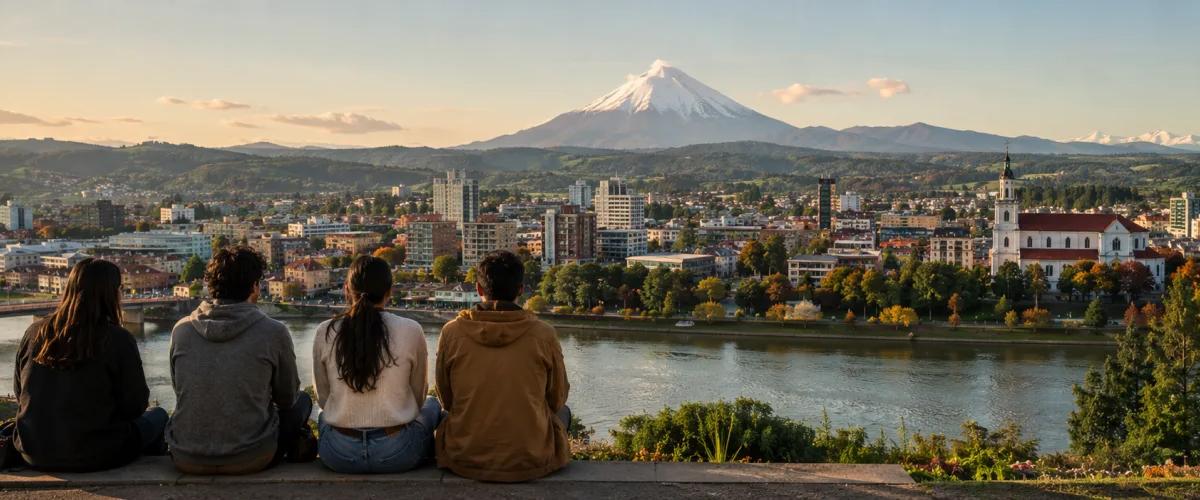
Osorno is a mid-sized city of about 166,000 people (Censo 2024) in the Los Lagos Region of southern Chile, at the gateway to the country's stunning Lake District. Founded in the 16th century and later shaped by German immigration, it retains a distinctive character — dairy and agriculture drive the economy, and the surrounding countryside of lakes, rivers, volcanoes, and forests is spectacular. Osorno is the commercial hub for a rich farming region and a base for exploring the south.
For students, Osorno is home to the Universidad de Los Lagos (ULagos) and other institutions, offering solid education at a much lower cost than Santiago. For Spanish speakers — including students from Spain and Latin America — the shared language, cultural familiarity, and low cost of living make it an easy and affordable place to study. The big draw is the natural setting: this is a "natural laboratory" of volcanoes (Osorno, Puyehue), lakes (Llanquihue, Puyehue, Rupanco), hot springs, and national parks, ideal for anyone who loves the outdoors.
Vida estudiantil
Student life in Osorno is centred on the Universidad de Los Lagos and is smaller-scale, local, and community-oriented compared to Santiago. The affordable cost of living means students can enjoy their experience without heavy financial pressure, and the friendly southern-Chilean culture makes it welcoming. The university has strengths in areas relevant to the region — agriculture, aquaculture, environmental and social sciences — and opened Medicine in Osorno for the 2026 intake.
The defining feature of life here is proximity to nature. Weekends revolve around the Lake District — hiking around volcanoes, swimming and kayaking in the lakes, visiting hot springs (termas), skiing on Volcán Osorno in winter, and camping in national parks like Puyehue. The German heritage shows up in the architecture, food (kuchen cakes, craft beer), and nearby towns like Frutillar and Puerto Varas. It's a quieter, outdoorsy student life rather than a big-city one, ideal for students who value nature, tranquillity, and affordability.
Barrios
Centro (CLP 200,000–350,000 for a room): Central and convenient, close to services and the university's downtown presence.
Rahue (more affordable): A large sector across the river, generally cheaper, residential.
Ovejería (CLP 200,000–250,000 for a room): Residential area popular with students, reasonable rents.
Francke (mid-range): A well-regarded residential neighbourhood.
Shared student flats near ULagos (Av. Fuchslocher area) (CLP 150,000–300,000 per room): The typical student choice — affordable rooms and flats close to campus.
Comida y restaurantes
Osorno's food reflects its agricultural, dairy, and German-influenced heritage. The region is famous for its dairy products, meat, and hearty southern-Chilean cooking. German immigration left a legacy of kuchen (cakes), crafts, and a strong craft-beer culture in the wider Lake District. Local markets ("ferias") offer fresh, cheap produce, and seafood from the nearby coast is excellent.
Cooking at home is very affordable here — Osorno is one of Chile's cheaper cities, and groceries at markets and supermarkets (Unimarc, Líder, Jumbo) go a long way. Chilean staples like empanadas, completos, cazuela, and asados are cheap and everywhere. Casual meals cost CLP 4,000–8,000 and a restaurant dinner CLP 8,000–15,000. The low food costs are a real advantage for students on a budget.
Vida nocturna y ocio
Osorno's nightlife is modest and low-key — a handful of bars, pubs, and clubs in the centre serve the local and student population, but this is a quiet regional city rather than a nightlife hotspot. Student social life tends to revolve around university events, gatherings with friends, and the surrounding towns of the Lake District (Puerto Varas and Puerto Montt, a short trip away, offer a bit more).
The real entertainment here is the outdoors. Osorno is a base for an extraordinary range of nature activities: hiking and skiing on Volcán Osorno, relaxing in the natural hot springs at Puyehue, swimming and water sports on the lakes, visiting waterfalls and national parks, and exploring the charming German-heritage lakeside towns. For students who love mountains, lakes, and volcanoes, the region is one of the most beautiful in Chile, and it's all within easy reach.
Transporte
Osorno is a compact city where getting around is done mainly by micros (buses) and colectivos (shared route taxis), which are cheap. Adult urban fares are typically a few hundred pesos, and students with a Tarjeta Nacional Estudiantil (TNE) pay a reduced micro fare. The centre is walkable, and the city is small enough that commutes are short. Many locals drive, but students generally manage on public transport.
Osorno is a transport hub for the south, sitting on the Pan-American Highway (Ruta 5) with frequent long-distance buses to Puerto Montt, Valdivia, and Santiago (the capital is a long overnight bus or a short flight away). The Cañal Bajo Airport offers flights to Santiago. Regional buses reach the lakes, volcanoes, and national parks that define the area, and there are cross-border connections to Argentina (Bariloche) over the Andes. For exploring southern Chile, Osorno is very well positioned.
Coste de vida
Monthly budget for a student in Osorno:
- Room in a shared flat: CLP 150,000–350,000
- Food & groceries: CLP 200,000–280,000
- Transport (bus/colectivo): CLP 25,000–40,000
- Phone & internet: CLP 20,000–35,000
- Leisure & personal: CLP 60,000–120,000
- Total: CLP 530,000–750,000/month
Osorno is much cheaper than Santiago or Antofagasta, making it one of the most affordable places to study in Chile. At Universidad de Los Lagos, 2026 professional-degree aranceles are about CLP 5.0–5.1 million a year for programmes such as Agronomía and Derecho; Medicine is CLP 7.74 million. The low cost of living combined with the incredible natural surroundings is the city's key appeal for students.
Seguridad
Osorno is a relatively safe, quiet regional city. As a smaller southern town, it has less of the crime associated with big cities, and students generally feel comfortable. Petty theft is the main concern, as anywhere, so normal precautions with valuables apply, especially in the centre and on public transport.
Chile is among the safest countries in South America, and Osorno's calm, community-oriented character adds to the sense of security. Common-sense caution at night and in isolated areas is enough. Emergency numbers: 131 (ambulance/SAMU), 132 (firefighters), 133 (police/Carabineros).
Clima
Osorno has a cool, wet, temperate oceanic climate — southern Chile is green and lush precisely because it rains a lot. Expect frequent rain spread across the year, especially in the autumn and winter (roughly April–September), when it can be persistently grey and damp. Winters (Jun–Aug) are cold and wet at 3–12°C, with frost and occasional snow, and the nearby volcanoes get ski-worthy snowfall.
Summers (Dec–Feb) are mild and much drier at 12–24°C and are the best time to enjoy the lakes, hiking, and the outdoors. Spring and autumn are cool and changeable. The abundant rainfall keeps the landscape spectacularly green and feeds the region's lakes, rivers, and forests. Waterproof clothing and layers are essential — this is a rainy part of the world — but the payoff is some of the most beautiful natural scenery in Chile.