Lima, Peru
Datos rápidos
- País
- Peru
- Habitantes
- 10.400.000
- Idiomas
- Spanish
- Moneda
- PEN
- Zona horaria
- PET (UTC-5)
- Nota media de la guía
- 6,2/10
- Seguridad
- 4/10
Resumen
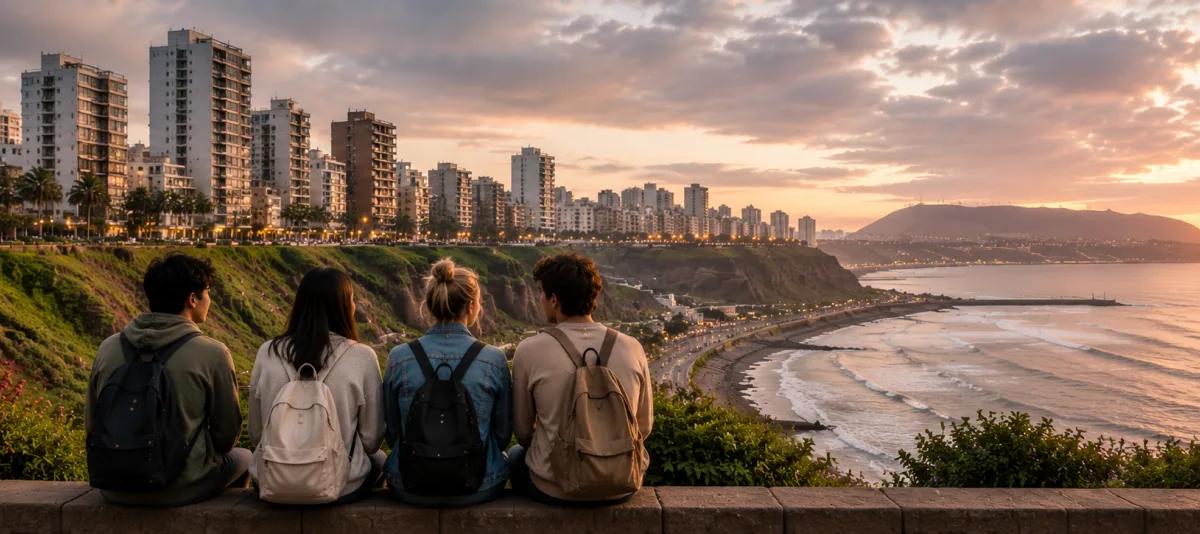
Lima is a sprawling coastal megacity of about 10.4 million people — roughly 30% of Peru's entire population — perched between the Pacific Ocean and the foothills of the Andes. It's the political, economic, and gastronomic capital of Peru, home to world-renowned restaurants (Central, Maido, Kjolle), colonial architecture in the Historic Center, and a thriving contemporary art scene. The city stretches over 40 districts with wildly different characters, from the upscale boulevards of San Isidro to the bohemian murals of Barranco. The climate is unusual: mild year-round but overcast and misty from June to October (the "garúa" season), with proper sunshine only from December to April.
Lima hosts Peru's top universities, making it the country's primary student hub. Pontificia Universidad Católica del Perú (PUCP) is the highest-ranked nationally and most popular for exchange students, followed by Universidad del Pacífico (strong in economics/business), Universidad de Lima, ESAN (MBA programs), UPC, and the historic Universidad Nacional Mayor de San Marcos. Most exchange programs are concentrated in private universities that have dedicated international offices and some English-taught courses.
Vida estudiantil
Student culture in Lima revolves around tight social circles, WhatsApp groups, and late-night socializing. University campuses are self-contained worlds with cafeterias, sports facilities, and study areas, but the real social life happens outside — in Miraflores cafés, Barranco bars, and the weekend "previas" (pre-parties at someone's apartment). Exchange students typically bond fast through university-organized welcome events and the inevitable group trips to Cusco and Huacachina. The "menú del día" lunch culture means students eat affordably near campus (S/ 8–12 for a full meal), and evenings are for study groups that inevitably turn into dinner plans. Peruvian students are genuinely welcoming to foreigners and eager to practice English, making integration easier than in many Latin American countries.
Barrios
### Miraflores
The default choice for exchange students and the most cosmopolitan district. Oceanfront malecón (cliff-top promenade), Parque Kennedy as the social hub, excellent restaurants, reliable Wi-Fi cafés, and the safest streets in Lima. Walking distance to surf breaks and paragliding. Feels almost European in parts.
- Rent: S/ 1,200–2,000/month for a private room; S/ 800–1,300 shared (€200–330 / €300–500)
### Barranco
Lima's artistic soul — colorful colonial houses, street murals, independent galleries, and the best bar scene in the city. Compact and walkable, slightly grittier than Miraflores but full of character. The Puente de los Suspiros and Bajada de Baños are iconic landmarks.
- Rent: S/ 1,000–1,800/month private; S/ 700–1,200 shared (€175–300 / €250–450)
### San Isidro
Lima's business district — tree-lined avenues, El Olivar park, embassies, and corporate towers. Very safe and quiet but less student-oriented. Best for Universidad del Pacífico students (campus is here). Limited nightlife.
- Rent: S/ 1,400–2,200/month private; S/ 900–1,500 shared (€225–375 / €350–550)
### Jesús María
A middle-class residential district with good access to multiple universities (PUCP, UPC). The Campo de Marte park is a pleasant green space. More "real Lima" than tourist districts — local markets, neighborhood bakeries, and authentic picanterías.
- Rent: S/ 800–1,400/month private; S/ 550–900 shared (€140–225 / €200–350)
### Pueblo Libre
A quiet, traditional district popular with budget-conscious students. Home to the Museo Larco and close to PUCP. Good local food scene with authentic "huariques" (hidden gem restaurants). Slightly further from nightlife.
- Rent: S/ 700–1,200/month private; S/ 500–800 shared (€125–200 / €175–300)
Comida y restaurantes
Lima is widely considered the gastronomic capital of South America. Key eating options for students:
Budget lunches (menú del día — S/ 8–15 / €2–4):
Virtually every block has a "menú" restaurant serving a set lunch (soup + main course + drink). Look for handwritten signs saying "Menú S/ 10." Quality varies but portions are always generous.
Mid-range restaurants:
- La Lucha Sanguchería — iconic sandwiches, S/ 15–25
- Tanta (by Gastón Acurio) — Peruvian comfort food, S/ 30–50 per dish
- El Chinito — legendary chicharrón sandwiches, open 24h, S/ 12–20
- Punto Azul — excellent ceviche, S/ 35–55 per plate
- Panchita — anticuchos and criollo food, S/ 30–45
High-end (for special occasions):
- Central (World's #1 restaurant, 2023) — tasting menu ~S/ 700
- Maido (World's #1 restaurant, 2025) — Nikkei cuisine, tasting menu ~S/ 500
- Chicha by Gastón Acurio — regional Peruvian, S/ 50–80 per dish
Groceries:
- Plaza Vea, Metro, Tottus — large supermarkets with good prices
- Mercado de Surquillo — local market with fresh produce, much cheaper than supermarkets
- Wong — slightly upscale supermarket
Vida nocturna y ocio
Lima's nightlife is concentrated in Miraflores and Barranco, with action peaking Thursday through Saturday.
Miraflores (mainstream/international crowd):
- Calle de las Pizzas (Calle Francisco de Paula Camino) — the classic starting point with bars and restaurants side by side
- Bizarro — popular with exchange students, dance floor
- BarBarian — craft beer bar with 20+ taps, S/ 15–30 per pint
- Mandala — high-energy club near Larcomar
Barranco (alternative/bohemian):
- Ayahuasca Restobar — cocktails in a stunning restored 19th-century mansion
- La Noche — live music venue, peña-style
- Noise — electronic music, younger crowd
- Dada Bar — intimate cocktail bar with DJs
Schedule: Peruvians eat dinner 8:30–10 PM, then head to a "previa" (pre-party) or bar around 10:30–11 PM. Clubs fill up after midnight and run until 4–5 AM on weekends. Cover charges are typically S/ 20–50 (€5–12). Budget S/ 50–100 (€12–25) for a standard night out with drinks.
Tip: Locals pick one zone per night. Don't try to hop between Miraflores and Barranco — they're connected but the taxi will eat into your budget and time.
Transporte
Metropolitano (BRT bus):
Lima's dedicated bus rapid transit runs north-south on exclusive lanes. It's the fastest way to traverse the city.
- Regular fare: S/ 3.20 (€0.80)
- Student fare (medio pasaje): S/ 1.60 (€0.40)
- Feeder routes (alimentadores): S/ 0.50–0.75 for students (S/ 1.75 for a combined trunk + feeder trip)
- Requires a rechargeable Metropolitano or Lima Pass card (S/ 4.50)
Metro de Lima (Line 1):
East-west elevated train connecting Villa El Salvador to San Juan de Lurigancho. Useful for some areas but doesn't serve tourist/student districts well.
- Fare: S/ 1.50 (€0.37); university students pay S/ 0.75 Monday–Saturday
Combis & microbuses:
Chaotic but cheap (S/ 1.00–2.50). Routes are shouted by a "cobrador." Not recommended for newcomers — confusing routes and pickpocket risk.
Uber / InDriver / DiDi:
The practical choice for most students. A Miraflores–Barranco ride costs S/ 7–12 (€1.70–3.00). Always use app-based rides, never hail taxis on the street.
Student discount: Requires a personalized preferential card (medio pasaje), activated at the card service centres (CAT) in major Metropolitano stations with your ID and a valid SUNEDU university card. Your university's international office can confirm whether you qualify — it halves Metropolitano fares.
Coste de vida
Monthly budget estimate for an exchange student in Lima:
| Item | PEN | EUR |
|------|-----|-----|
| Rent (shared room, Miraflores) | S/ 1,000–1,400 | €250–350 |
| Groceries & cooking | S/ 400–600 | €100–150 |
| Eating out (menús + occasional dinners) | S/ 300–500 | €75–125 |
| Transport (Metropolitano + occasional Uber) | S/ 150–250 | €37–62 |
| Mobile phone | S/ 30–50 | €7–12 |
| Internet (shared) | S/ 25–40 | €6–10 |
| Entertainment & nightlife | S/ 200–400 | €50–100 |
| Gym membership | S/ 100–200 | €25–50 |
| Total | S/ 2,200–3,400 | €550–850 |
Money tips: Yape (BCP) and Plin (Interbank/BBVA/Scotiabank) are mobile payment apps used everywhere — even street vendors accept them. Open a local bank account in your first week.
Seguridad
Lima requires street awareness. The tourist/student districts (Miraflores, Barranco, San Isidro) are relatively safe with police presence and CCTV, but petty theft remains common citywide.
Key risks:
- Phone snatching is the #1 issue — motorcyclists grab phones from pedestrians near roads. Keep your phone in your pocket when walking on sidewalks near traffic.
- Pickpocketing on crowded buses and in markets.
- Express kidnappings (rare in tourist areas but exist).
Areas to avoid (especially at night):
- Callao (near the airport) — take a direct transfer to your district
- La Victoria — particularly around the Gamarra textile market area
- The Historic Center after dark
- Any poorly lit area outside Miraflores/Barranco/San Isidro
Safety rules:
- Use Uber/InDriver, never street taxis
- Don't flash expensive items (cameras, watches, laptops)
- Carry a photocopy of your passport, not the original
- Withdraw cash inside bank branches, not street ATMs
- Walk facing traffic so motorcyclists can't approach from behind
- Trust your instincts — if a street feels empty or dark, take an Uber
Clima
Lima has a subtropical desert climate with almost zero rainfall but persistent coastal mist.
Summer (December–March): 23–27°C, sunny and warm. Best season — everyone heads to the beaches. High UV despite the mildness; wear sunscreen.
Autumn (April–May): 20–23°C, still pleasant with increasing cloud cover.
Winter (June–September): 15–19°C, overcast and grey with persistent "garúa" (fine mist). It rarely rains properly but everything feels damp. This is the gloomiest period — pack a light jacket and expect short days psychologically.
Spring (October–November): 18–21°C, clouds begin to clear. The transition period before summer returns.
Key notes: It almost never actually rains in Lima (only ~2mm annually), so you don't need a raincoat. But the winter garúa makes everything feel cool and damp. The lack of central heating in most apartments means winter nights can feel cold indoors — bring warm layers for home.
Universidades en Lima
Otras ciudades de Peru
Siguientes pasos
Fuentes
- gob.pe/es/institucion/inei/noticias/1092367-lima-exceeds-10-million-400-thousand
- gob.pe/institucion/atu/noticias/1359069-atu-como-obtener-o-renovar-la-tarjeta-de
- ositran.gob.pe/anterior/vias-ferreas/linea-uno-metro-de-lima/
- larepublica.pe/sociedad/2026/02/02/linea-1-del-metro-de-lima-actualizan-guia-que
- theworlds50best.com/stories/News/the-worlds-50-best-restaurants-2026-lima.html
- numbeo.com/cost-of-living/in/Lima