Arequipa, Peru
Datos rápidos
- País
- Peru
- Habitantes
- 1.200.000
- Idiomas
- Spanish
- Moneda
- PEN
- Zona horaria
- PET (UTC-5)
- Nota media de la guía
- 6,1/10
- Seguridad
- 5/10
Resumen
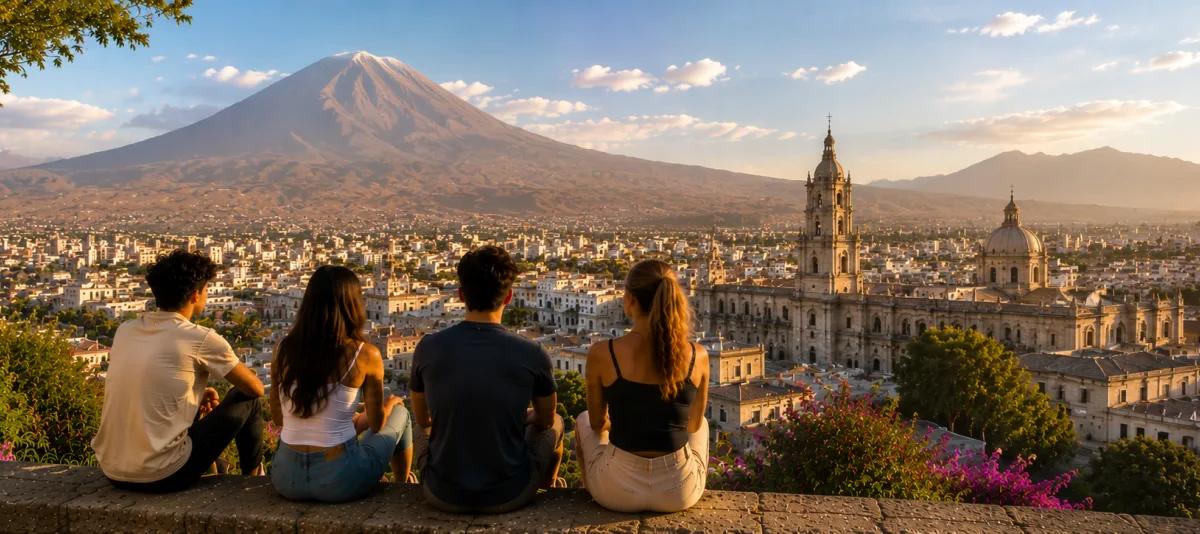
Arequipa is Peru's second-largest city (about 1.2 million people), known as the "White City" for its stunning colonial architecture built from white volcanic sillar stone. Nestled at 2,335 meters in a valley flanked by three volcanoes — El Misti (5,822m), Chachani, and Pichu Pichu — it offers a dramatic Andean landscape with a year-round dry, sunny climate that makes Lima's winter gloom feel like a different country. The Historic Center is a UNESCO World Heritage Site, and the city serves as the gateway to Colca Canyon (one of the world's deepest), the Salinas y Aguada Blanca nature reserve, and trekking routes across southern Peru. Arequipa has a fiercely independent identity — locals joke about seceding from Peru — with its own cuisine, slang, and cultural traditions.
The city's main university is Universidad Nacional de San Agustín (UNSA), a large public institution founded in 1828 with around 30,000 students. Other options include Universidad Católica de Santa María (UCSM) and Universidad Católica San Pablo. Exchange programs are less common here than in Lima, meaning fewer English-speaking support structures but a more immersive, authentic Peruvian student experience. Classes are entirely in Spanish, and the academic environment is less internationalized.
Vida estudiantil
Student life in Arequipa is social, affordable, and deeply Peruvian. The university calendar follows March–July and August–December semesters. Student culture revolves around "polladas" (fundraising parties with chicken and beer), university sports leagues, and group study sessions that inevitably end at a picantería or chicha bar. The city is compact enough that most students walk or take combis to campus. Weekends often involve group trips to Colca Canyon, hot springs at Yura or Chivay, or climbing one of the surrounding volcanoes. Social circles form quickly in Arequipa — the city is smaller and tighter-knit than Lima, so being a foreigner makes you memorable (and popular). That said, almost no one speaks English, so functional Spanish (B1+) is non-negotiable.
Barrios
### Yanahuara
The most popular district for students and expats. Walkable, charming streets with views of El Misti from the famous mirador. Cafés, restaurants, and small shops cater to international tastes. Safe and well-maintained, with a village-within-a-city feel.
- Rent: S/ 1,000–1,600/month for a studio or private room (€250–400)
### Cayma
Adjacent to Yanahuara and growing rapidly with newer apartment buildings. Good amenities, parking, and security — popular with young professionals and students who want modern facilities. Slightly cheaper than Yanahuara.
- Rent: S/ 800–1,400/month for a studio (€200–350)
### Cercado (Historic Center)
The colonial core around Plaza de Armas. Beautiful architecture, close to everything (university, nightlife, restaurants), but noisier and more congested. Some older buildings lack modern amenities. Best for students who want to be in the thick of it.
- Rent: S/ 600–1,100/month for a room or mini-apartment (€150–275)
### José Luis Bustamante y Rivero
A residential middle-class district south of the center. Practical, affordable, with good local markets and direct combi routes to universities. Less charming but more spacious apartments.
- Rent: S/ 600–1,000/month for a room (€150–250)
### Vallecito / IV Centenario
Close to UNSA campus, these areas are popular with local students. Very affordable, authentic neighborhood life, street food on every corner. Basic accommodation but unbeatable prices.
- Rent: S/ 400–700/month for a shared room (€100–175)
Comida y restaurantes
Arequipa has its own distinct culinary tradition, often considered the best regional cuisine in Peru. The city is famous for its picanterías — traditional restaurants with communal tables, chicha de jora (fermented corn beer), and massive portions.
Traditional picanterías:
- La Nueva Palomino — the most famous picantería, legendary for rocoto relleno, adobo arequipeño, and chupe de camarones. Mains S/ 20–40 (€5–10).
- La Lucila — authentic, less touristy, with a daily-changing menu
- Sol de Mayo — beautiful garden setting, popular for Sunday almuerzo
Restaurants:
- Zig Zag — grilled alpaca and beef on volcanic stone, stunning presentation. Mains S/ 45–75 (€11–19).
- Chicha (by Gastón Acurio) — refined Arequipeño cuisine with volcano views. Mains S/ 40–70 (€10–17).
- Crepisimo — popular crêperie for casual student meals, S/ 15–30
Budget eating:
- Menú del día in Cercado: S/ 7–12 (€1.70–3.00) for soup + main + drink
- Street food: papa rellena S/ 3, anticuchos S/ 5, queso helado (traditional frozen dessert) S/ 3–5
- Market food at Mercado San Camilo: fresh juices S/ 3–5, full plates S/ 8–12
Groceries:
- Plaza Vea and Franco supermarkets for basics
- Mercado San Camilo — the central market for fresh produce, meat, and spices at local prices
Vida nocturna y ocio
Arequipa's nightlife scene is concentrated in the historic center, particularly around Calle San Francisco and Calle Santa Catalina. It's smaller and less flashy than Lima's but authentic and student-friendly.
Bars & pubs:
- Museo del Pisco — pisco tasting bar with expertly made cocktails, S/ 20–35 per drink
- Chelawasi Public House — craft beer specialist with local brews, S/ 12–20
- Wild Rover — Irish-themed hostel bar, backpacker/student hub, cheap drinks and pub quiz nights
- Brujas Bar — popular student hangout with happy hour deals (2x1 cocktails until 10 PM)
- Siwara Tavern — craft beers and cocktails in a cozy setting
Clubs:
- Deja Vu — the main club for students, electronic and pop music, open until 4 AM
- La Casona Forum — larger venue for themed parties and live music events
- Patria 209 — late-night dancing with a mixed local/tourist crowd
Rooftop bars: Several venues around Plaza de Armas offer terraces with views of the illuminated cathedral and El Misti at night.
Schedule: Nights start at bars around 9–10 PM after dinner, moving to clubs around midnight. Weekdays are quiet; Thursday and Saturday are the main party nights. Budget S/ 30–60 (€7–15) for a night out. Beer at a bar costs S/ 8–15 (€2–4), cocktails S/ 18–30 (€4.50–7.50).
Transporte
Arequipa doesn't have a metro or BRT system — public transport relies on combis (minivans) and buses, many of them operated by concessionaires of the municipal Sistema Integrado de Transporte (SIT), that follow fixed routes but with no official maps or apps.
Combis:
- Fare: S/ 1.00 official SIT fare (€0.25); some operators still charge S/ 1.30 amid an ongoing 2026 fare dispute
- Student fare (medio pasaje): S/ 0.50 with a valid university card
- Routes are shouted by a cobrador (fare collector) — you flag them down anywhere along the route
- Chaotic but functional once you learn the main routes. Ask locals or fellow students which number goes where.
Taxis:
- Base fare: S/ 5–7 (€1.25–1.75)
- Cross-city ride: S/ 8–15 (€2–3.75)
- Always negotiate the price before getting in — meters are rare
- Use InDriver or Uber for transparent pricing (available but with fewer drivers than Lima)
Walking:
The historic center and surrounding districts (Yanahuara, Vallecito) are very walkable. Most students walk to university if living nearby.
Intercity travel:
- Cruz del Sur and Oltursa buses to Lima (~15 hours, S/ 80–180 depending on class)
- Colca Canyon day trips via tour companies (~S/ 80–120 including transport)
- Flights to Lima from Rodríguez Ballón airport (~1.5 hours, S/ 150–400 one way)
Coste de vida
Monthly budget estimate for a student in Arequipa:
| Item | PEN | EUR |
|------|-----|-----|
| Rent (shared room, Cayma/Cercado) | S/ 700–1,100 | €175–275 |
| Groceries & cooking | S/ 350–500 | €87–125 |
| Eating out (menús + occasional dinners) | S/ 200–350 | €50–87 |
| Transport (combis + occasional taxi) | S/ 60–120 | €15–30 |
| Mobile phone | S/ 30–50 | €7–12 |
| Internet (shared) | S/ 25–40 | €6–10 |
| Entertainment & nightlife | S/ 150–300 | €37–75 |
| Utilities (share of electricity/water) | S/ 40–80 | €10–20 |
| Total | S/ 1,550–2,540 | €390–635 |
Arequipa is roughly 25–30% cheaper than Lima, particularly for housing and eating out. The menú del día culture is even more affordable here, and the lack of a tourist premium in most areas keeps prices genuinely low.
Seguridad
Arequipa is generally safer than Lima, with lower rates of violent crime. The Historic Center and residential districts like Yanahuara and Cayma are safe for walking during the day and reasonably safe at night in well-lit areas.
Main risks:
- Petty theft — bag snatching and pickpocketing in crowded areas (Mercado San Camilo, bus terminals)
- Phone snatching — less aggressive than Lima but still occurs on busy streets
- Taxi scams — always agree on price before riding; use app-based transport when possible
Areas requiring caution:
- The bus terminal (Terrapuerto) area at night
- Outlying districts south of the city (Socabaya fringes, Alto Selva Alegre upper parts)
- Quiet streets in Cercado after midnight — stick to main roads with lighting
Positive notes:
- Arequipa's compact size means you rarely end up in unfamiliar areas accidentally
- Police presence around Plaza de Armas is consistent
- The university areas have natural foot traffic from students until late evening
- Violent crime against foreigners is rare — most incidents are opportunistic theft
Tips: Keep a low profile with valuables, don't walk alone in unfamiliar areas at night, and learn your combi routes to avoid confusion. Ask local students which areas to avoid.
Clima
Arequipa enjoys one of Peru's most pleasant climates — over 300 sunny days per year with low humidity, thanks to its high-altitude desert location at 2,335m.
Dry season (April–November):
- Daytime: 18–22°C (64–72°F)
- Nighttime: 5–10°C (41–50°F)
- Clear blue skies virtually every day, intense sunshine
- May–August nights can be genuinely cold — bring warm layers for evenings
Rainy season (December–March):
- Daytime: 19–21°C (66–70°F)
- Nighttime: 8–11°C (46–52°F)
- Afternoon thunderstorms (typically brief, 1–2 hours), mornings remain sunny
- February is the wettest month — some streets flood temporarily
Key notes:
- The altitude means strong UV radiation year-round — sunscreen and sunglasses are essential even on "cool" days
- Day-to-night temperature swings of 10–15°C are normal — always carry a jacket for evenings
- Altitude acclimatization: at 2,335m, some people feel mild effects (headaches, breathlessness) for the first 1–2 days. Drink plenty of water and coca tea, avoid alcohol on arrival day
- The dry season's crystal-clear skies make Arequipa feel warmer than the thermometer suggests
Universidades en Arequipa
Otras ciudades de Peru
Siguientes pasos
Fuentes
- gob.pe/institucion/inei/noticias/1420177-censos-nacionales-2025-poblacion-total-
- en.wikipedia.org/wiki/Arequipa
- noticiasarequipa.pe/pasaje-del-sit-seguira-en-s-1-00-tras-inicio-de-negociacione
- diarioelpueblo.com.pe/2026/09/16/municipalidad-provincial-sanciona-a-30-transpor
- sunedu.gob.pe/lista-de-universidades-licenciadas/
- numbeo.com/cost-of-living/in/Arequipa-Peru