Latacunga, Ecuador
Quick facts
- Country
- Ecuador
- Population
- 77,267
- Languages
- Spanish
- Currency
- USD
- Time zone
- ECT (UTC-5)
- Guide score
- 5.9/10
- Safety
- 6/10
Overview
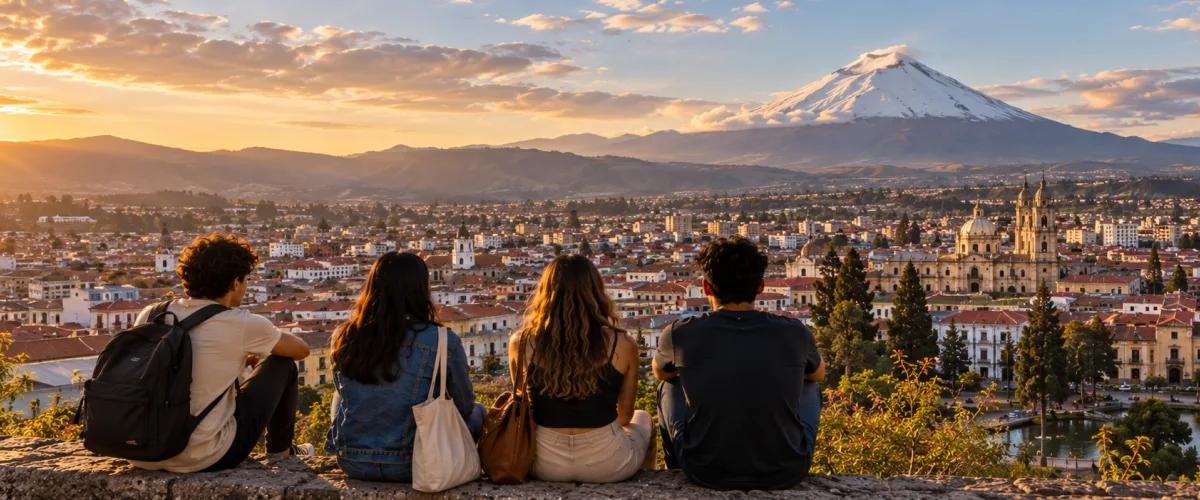
Latacunga is the capital of Cotopaxi Province in Ecuador’s central Andes, often called the “Sultana del Cotopaxi.” It sits at about 2,860 m in the Cutuchi River valley, with Cotopaxi volcano rising to the northeast. The urban area had 77,267 residents in the 2022 census (canton 217,761). The historic centre, markets, and the famous Mama Negra festivals (September and November) give the city a strong cultural identity, while its position on the Pan-American Highway makes it a natural stop between Quito and Ambato.
For students, Latacunga hosts the Universidad Técnica de Cotopaxi (UTC). Campus La Matriz is on Av. Simón Rodríguez in barrio El Ejido / San Felipe; Campus Salache (agro and natural resources) is on the vía Salache km 7.53, sector La Florida; there are further sites in Salcedo, Pujilí, and La Maná. Classes are in Spanish. The combination of affordable highland living and immediate access to Cotopaxi, Quilotoa, and the Avenue of Volcanoes is the city’s main student appeal.
Student life
Student life clusters around UTC’s Matriz and Salache campuses and a mid-sized provincial rhythm. Weekdays mean classes, almuerzo, and group study; weekends often mean Cotopaxi National Park, Quilotoa crater lake, or short hops to Quito (~2 hours by bus) and Ambato. Mama Negra celebrations bring music, processions, and crowds — a cultural highlight if your calendar aligns.
Social life is friendly but not metropolitan. Spanish is essential; some Kichwa is heard in surrounding communities. International student numbers are modest, so expect to integrate with local classmates. Outdoor and festival culture outweigh nightlife.
Neighborhoods
Centro Histórico (USD 90–160 for a room): Plazas, colonial streets, and services; convenient but busier during festivals.
San Felipe / El Ejido (near UTC Matriz) (USD 100–180): Practical for administrative and engineering faculties on the main campus.
El Carmen and other urban residential areas (USD 90–170): Everyday housing with local shops; small apartments appear in the USD 150–220 range.
Belisario Quevedo / southern sectors (USD 100–180): Popular with students linked to nearby institutes; listings for furnished rooms/suites often cite roughly USD 115–180.
City-wide, shared student rooms commonly fall around USD 90–180. Areas farther from Matriz or across the Cutuchi are often cheaper if you accept a bus commute; Salache students may prefer housing oriented to the southern exit roads.
Food & restaurants
Cotopaxi highland cooking includes chugchucaras (a local fried-pork specialty), llapingachos, soups, roast meats, and market produce. Almuerzos in comedores typically cost about USD 2.50–4. Markets and small restaurants keep daily eating cheap.
Casual meals out usually stay under USD 8–10. Cooking at home is easy and affordable. Festival periods raise demand and noise more than prices. Quito day trips expand food options when you want variety.
Nightlife & entertainment
Latacunga’s nightlife is limited: a few bars and weekend spots rather than a large club circuit. This guide does not invent venue names — evenings are mostly low-key. Mama Negra and independence festivities are the real peaks of public entertainment.
Nature dominates leisure: Cotopaxi for hiking and views (respect park rules and weather), Quilotoa for a crater-lake day trip, and surrounding páramo landscapes. Sports fields and university events fill the rest of the social calendar.
Transport
Urban buses serve the city and nearby parishes; the adult urban fare has remained about USD 0.30 since 2016 (preferential lower), though operators have pushed for increases and municipal debate continues. Taxis and short colectivo hops cover hills and late returns.
Latacunga is a transport hinge: frequent buses to Quito, Ambato (~USD 1.30 on the Latacunga–Ambato frequency when regulated fares are respected), Riobamba, and coastal routes. Cotopaxi and Quilotoa tours or public-bus combinations are standard student weekends. The city is walkable in sectors but elongated along the valley — buses matter for cross-town trips.
Cost of living
Monthly budget for a student in Latacunga (USD):
- Room in a shared house/flat: USD 90–180
- Food & groceries: USD 110–170
- Transport (urban + weekend buses): USD 20–40
- Phone & internet: USD 15–25
- Leisure & personal: USD 40–80
- Total: about USD 280–495/month (≈ €255–€455)
Latacunga is cheaper than Quito while offering faster access to the capital than more remote Sierra towns. UTC is a public university under national fee frameworks. Budget extra for Cotopaxi/Quilotoa trips — still inexpensive by European standards.
Safety
Latacunga is a typical mid-sized highland city: generally manageable with common-sense precautions. Watch for petty theft in terminals, markets, and during crowded festivals. At night, prefer known routes and registered taxis. Mountain weather on Cotopaxi can turn dangerous — use authorized guides/operators for serious climbs and check conditions. Emergency number: 911. Stay aware of national security updates as elsewhere in Ecuador.
Weather & climate
At about 2,860 m, Latacunga is cool even by Ecuadorian highland standards, with an average near 13–14°C. Mornings and nights are cold; midday sun can feel strong. Rain is common in many months; clear days offer spectacular volcano views. Pack thermal layers, a windproof jacket, and sun protection — altitude amplifies UV even when air feels chilly.