Esmeraldas, Ecuador
Quick facts
- Country
- Ecuador
- Population
- 155,487
- Languages
- Spanish
- Currency
- USD
- Time zone
- ECT (UTC-5)
- Guide score
- 5.2/10
- Safety
- 3/10
Overview
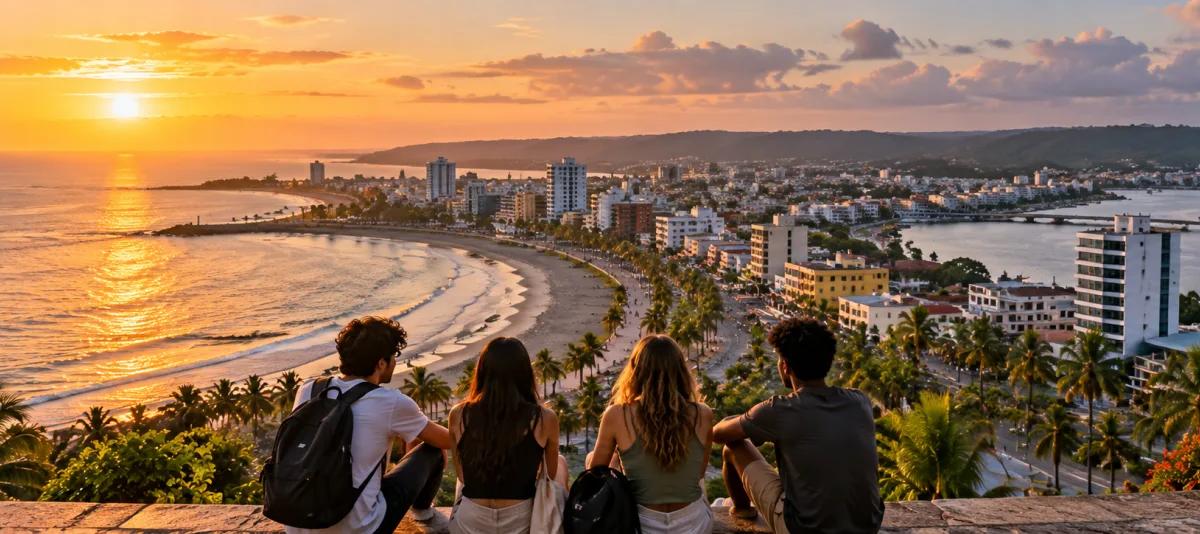
Esmeraldas is a Pacific coastal city and capital of Esmeraldas Province in northwestern Ecuador — low-lying (around 15 m), hot, and culturally distinct from the Andean sierra. The urban area counted 155,487 residents in the 2022 census (canton 211,848). It is a major Afro-Ecuadorian cultural centre, known for marimba music, coastal cuisine, the Las Palmas waterfront, and nearby beach towns such as Atacames, Tonsupa, and Súa. The city is also an oil-pipeline terminal and commercial port.
For students, Esmeraldas hosts the Universidad Técnica Luis Vargas Torres (UTELVT / UTLVTE). The main city campus is Ciudadela Universitaria Nuevos Horizontes (west of the centre, parroquia Bartolomé Ruiz); there is also the large Mútile agricultural campus in rural San Mateo, plus a sede in La Concordia. Instruction is in Spanish. This is a coastal, not Andean, student city: heat, humidity, beaches, and Afro-Ecuadorian culture define daily life — but security conditions require careful reading of current advisories.
Student life
Student life centres on UTELVT faculties at Nuevos Horizontes and related sites, with social life shaped by coastal rhythms: beach weekends, marimba and dance, football, and family networks. Campus and barrio life are Spanish-speaking and locally rooted; international exchange communities are small.
Weekends often mean Atacames or other southern beaches rather than mountain hikes. Heat makes early classes and late-afternoon outdoor plans more comfortable than midday. Social life can be warm and musical, but nightlife and beach areas need the same safety caution as the rest of the city. Expect a coastal public-university experience very different from Quito or Cuenca.
Neighborhoods
Nuevos Horizontes / Colinas del Sol (near UTELVT) (USD 100–180 for a student room): Practical for main-campus students; listings near the university cite rooms around USD 150 with shared kitchen and Wi‑Fi.
Centro and malecón / Las Palmas area (USD 100–200): Closer to commerce and the beachfront; busier and more exposed to tourist/port traffic — choose buildings carefully.
Vuelta Larga and other residential ciudadelas (often similar or slightly cheaper): Family housing further from campus; useful if rent is lower and you accept a bus or taxi.
City-wide student rooms commonly fall around USD 100–180 based on local listings; treat neighbourhood figures as indicative rather than a full market survey. Avoid isolated rentals without trustworthy local advice.
Food & restaurants
Coastal Afro-Ecuadorian cuisine is a highlight: encocado (coconut sauce fish or shrimp), ceviche, plantains, rice, and fresh seafood. Market and comedor meals are inexpensive — almuerzos often USD 2.50–5. Beach towns add tourist pricing but still remain affordable by international standards.
Cooking at home works well if you have refrigeration in the heat. Drink bottled or properly filtered water if you are unsure about local supply. Fruit juices and street seafood are common; use busy, clean stalls when trying raw or marinated fish.
Nightlife & entertainment
Beach towns south of the city (especially Atacames) are more associated with nightlife and holiday crowds than quiet downtown Esmeraldas. In the city, evenings may include bars, music, and malecón walks, but verified club names change often and safety conditions matter more than venue lists — this guide does not invent nightlife spots.
Cultural entertainment includes marimba, dance, football, and provincial festivals. Nature and coast — beaches, mangroves further afield, and river landscapes — are the main leisure draw when conditions allow safe travel.
Transport
Urban buses are run by local cooperatives (notably routes associated with Las Palmas and Alonso de Illescas). The adult urban fare has remained about USD 0.30 for years (preferential lower), though operators have repeatedly sought increases and service disruptions have occurred during tariff disputes. Taxis are widely used, especially after dark.
Long-distance buses connect to Quito and other provinces; the city also has a domestic airport. Beach towns to the south are reached by frequent regional buses. Plan extra time in heat and traffic, and prefer trusted transport at night.
Cost of living
Monthly budget for a student in Esmeraldas (USD):
- Room in a shared house/flat: USD 100–180
- Food & groceries: USD 120–180
- Transport (bus/taxi): USD 20–40
- Phone & internet: USD 15–30
- Leisure & personal: USD 40–90
- Total: about USD 300–520/month (≈ €275–€480)
Heat can raise electricity costs if you use fans or air conditioning. UTELVT is a public university; fee rules follow national public higher-education frameworks. Overall living costs are low, but security-related choices (safer housing, taxis at night) can add to the budget.
Safety
Security is the main constraint. The U.S. State Department advises not to travel to Esmeraldas city and areas north of it because of crime and terrorism concerns, and to reconsider travel to areas south of the city. Violent crime, gang activity, and theft have affected the province. Students who must be here should follow university and embassy guidance, avoid unnecessary night movement, use trusted transport, and keep a low profile with valuables. This page cannot replace an official advisory — check current guidance before committing to study here. Emergency number: 911.
Weather & climate
Esmeraldas is coastal and low elevation (~15 m), with a hot tropical climate — typically around 24–31°C, humid, and cloudy much of the year. A wetter season usually runs roughly January–April; May–December is relatively drier but still warm. This is the opposite of Andean city weather: pack light breathable clothing, sun protection, and mosquito precautions, not highland jackets.
Universities in Esmeraldas
Other cities in Ecuador
Next steps
Sources
- citypopulation.de/en/ecuador/admin/esmeraldas/0801__esmeraldas/
- utelvt.edu.ec/admision/contacto/
- travel.state.gov/en/international-travel/travel-advisories/ecuador.html
- extra.ec/noticia/ecuador/esmeraldas-transportistas-urbanos-exigen-revision-tarif
- en.wikipedia.org/wiki/Esmeraldas
- primicias.ec/sociedad/buses-esmeraldas-paralizacion-servicio-11mayo-alza-pasaje-