Tulcán, Ecuador
Quick facts
- Country
- Ecuador
- Population
- 56,719
- Languages
- Spanish
- Currency
- USD
- Time zone
- ECT (UTC-5)
- Guide score
- 5.3/10
- Safety
- 5/10
Overview
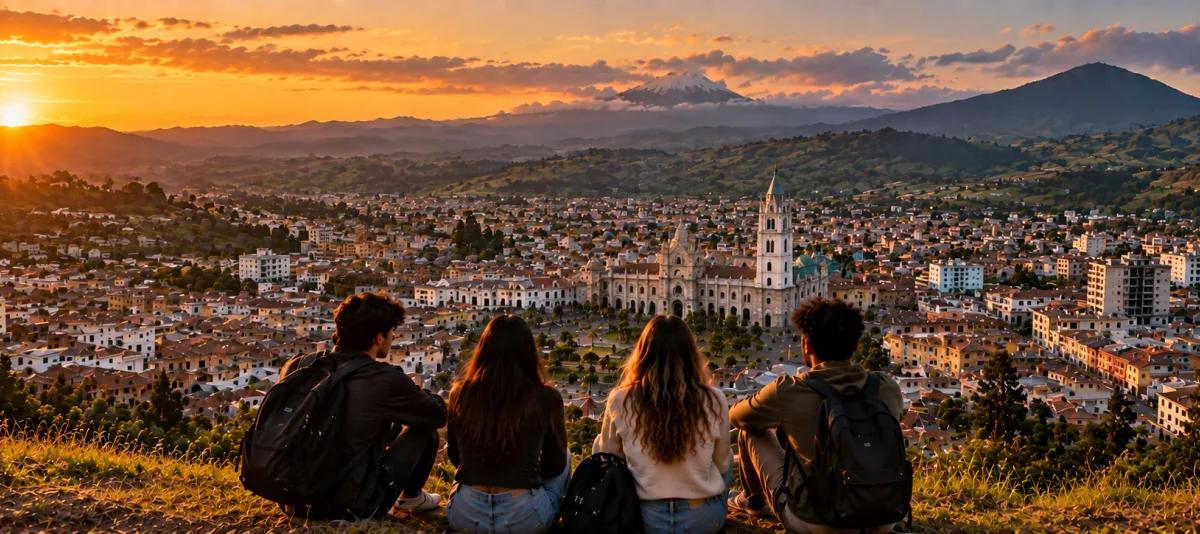
Tulcán is the capital of Carchi Province in northern Ecuador, on the Andean border with Colombia. The urban area had 56,719 residents in the 2022 census (canton 92,375). At about 2,980 m it is Ecuador’s highest major city, cold by national standards, and known for its topiary cemetery and the Rumichaca international bridge roughly 5–7 km north toward Ipiales (Colombia).
For students, Tulcán is home to the Universidad Politécnica Estatal del Carchi (UPEC). The main campus is at Calle Antisana y Av. Universitaria. Classes are in Spanish. Cross-border commerce shapes daily life; weekend trips into southern Colombia are geographically easy when the border is open and documents are in order.
Student life
Student life centres on UPEC in a compact highland border city. Days are academic and practical; evenings are quiet. UPEC-Creativa operates evening student transport routes (roughly 20:00–22:00) toward northern, central, and southern Tulcán sectors and nearby towns such as Julio Andrade, Huaca, and Tufiño — useful after late classes.
Expect cold mornings, Spanish-only classrooms, and a social scene built on classmates, plazas, and short regional trips rather than nightlife. English is uncommon.
Neighborhoods
Reliable per-neighbourhood room series are thin, so use a city-wide estimate of about USD 80–150/month for a student room. Small apartments near campus can run higher (listings near UPEC have advertised around USD 190–210 for multi-room flats).
Near UPEC / Av. Universitaria / southern sectors (e.g. toward Las Tejerías–El Progreso): Most convenient for campus, Supermaxi, and services.
Centro: Markets, terminal links, and urban bus spines; busier by day, quieter at night.
Northern sectors toward Rumichaca: Practical if you use border services often, but colder wind exposure and more transit traffic.
Cheaper rooms tend to sit farther from Av. Universitaria if you accept a bus or the evening UPEC student service.
Food & restaurants
Food is highland Ecuadorian with strong border influence — soups, potatoes, dairy, roasted meats, and Colombian products when shopping across Rumichaca. Almuerzos at comedores commonly cost about USD 2.50–4. Cooking at home is affordable; heat is less of a storage issue than cold kitchens and hot water.
Casual meals out stay cheap; Ipiales offers additional restaurant options on permitted border days.
Nightlife & entertainment
Nightlife is limited. Tulcán is a cold, functional border city — a few bars and restaurants, university events, and quiet nights. Do not expect a club circuit. Daytime draws include the topiary cemetery, nearby páramo, thermal areas in the wider province, and cross-border day trips when immigration rules allow.
Entertainment is outdoors and cultural more than nocturnal.
Transport
Three urban bus cooperatives (including Stebart, Frontera Norte, and 11 de Abril) run routes linking south/west sectors with the centre and north. Confirm the current adult fare on boarding — a specific 2026 municipal sticker was not clearly published in sources consulted for this page. Taxis cover cold nights and campus hops. UPEC’s evening student transport service extends coverage after 20:00 on weekdays.
The Terminal Terrestre and the Pan-American corridor connect Tulcán with Ibarra, Quito, and Colombian routes via Rumichaca. Luis A. Mantilla Airport has limited service. Carry valid documents for any border crossing; rules and queues change.
Cost of living
Monthly budget for a student in Tulcán (USD; Ecuador uses the US dollar):
- Room in a shared house/flat: USD 80–150
- Food & groceries: USD 110–160
- Transport (urban bus/taxi/UPEC evening routes): USD 15–35
- Phone & internet: USD 15–25
- Leisure & personal: USD 30–70
- Total: about USD 260–440/month (≈ €240–€405)
Public UPEC tuition follows national public-university rules for eligible students. Heating, hot water, and warm clothing are the budget extras highland students sometimes underestimate.
Safety
Tulcán is a busy border city: petty theft can occur around terminals, markets, and crossing zones. Use normal precautions and prefer registered taxis at night. The U.S. advisory highlights serious risks in areas from northern Esmeraldas east toward Carchi province (Do Not Travel for that northern coastal-border belt) while Carchi itself has also seen temporary states of emergency in recent years — monitor current alerts. Cross only at official posts with valid documents; avoid informal crossings and isolated páramo roads after dark. Emergency number: 911 (ECU 911).
Weather & climate
At about 2,980 m, Tulcán has a cold Andean highland climate with an average near 13–14°C. Mornings and nights are chilly to cold; midday sun can feel strong despite low air temperatures. Rain is frequent in many months (often wetter roughly November–May). Pack serious layers, a windproof jacket, and rain protection.
This is Ecuador’s high-border cold — nothing like coastal Portoviejo or Amazonian Puyo.