Cochabamba, Bolivia
Quick facts
- Country
- Bolivia
- Population
- 661,484
- Languages
- Spanish, Quechua
- Currency
- BOB
- Time zone
- BOT (UTC-4)
- Guide score
- 5.5/10
- Safety
- 5/10
Overview
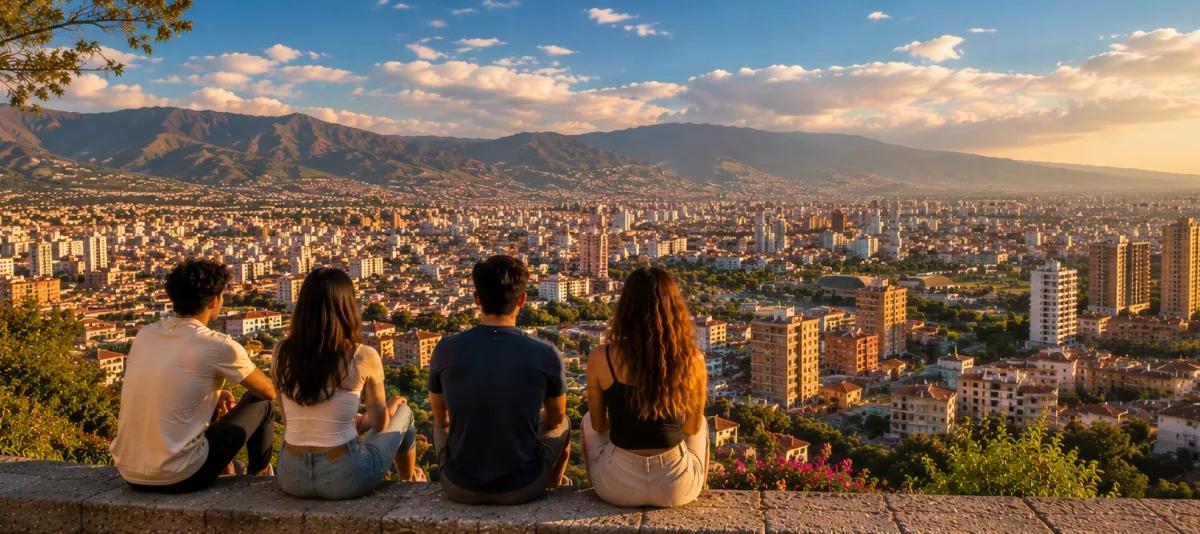
Cochabamba is Bolivia's fourth-largest city and its culinary capital, nestled in a fertile valley at 2,558 meters above sea level in the heart of the country. Known as the "City of Eternal Spring" for its mild, sunny climate, Cochabamba is home to around 660,000 people (2024 census; roughly 1.4 million in the Kanata metropolitan region) and occupies a privileged geographic position between the Andean highlands and the tropical lowlands. The city is greener and warmer than La Paz, with a more relaxed pace of life, and is famous across Bolivia for its food culture — cochabambinos take immense pride in their cuisine, and the city's markets and chicharronerías are legendary.
The dominant university is the Universidad Mayor de San Simón (UMSS), founded in 1832 and ranked as Bolivia's second-best university. UMSS is enormous — roughly 80,000 students across 14 faculties and 99 undergraduate programs — making it the beating heart of the city's social and intellectual life. The campus and surrounding streets form the main student district. Other institutions include the private Universidad Privada Boliviana (UPB) and the Universidad del Valle (Univalle). As in La Paz, instruction is almost exclusively in Spanish, and international exchange students are rare but welcomed warmly. UMSS recently launched a Gastronomy program, reflecting Cochabamba's identity as Bolivia's food capital.
Student life
Student culture in Cochabamba is warm, social, and deeply tied to food. The UMSS campus is the gravitational center — between classes, students gather at the comedores and juice stands surrounding the university, and faculty centros de estudiantes organize events, sports tournaments, and cultural activities. Academic life can be disrupted by occasional strikes and political assemblies (this is Bolivia, after all), but the overall atmosphere is more laid-back than La Paz. Cochabambinos are known for their friendliness and hospitality, and international students are a genuine novelty that attracts curiosity and invitations to asados and family gatherings. Weekend activities include day trips to Toro Toro National Park (dinosaur footprints and caves), hikes to the Cristo de la Concordia (one of the largest Christ statues in the world), and visits to the Yungas cloud forest. The altitude at 2,558 m is moderate — noticeably easier to acclimatize to than La Paz, and most students feel comfortable within a day or two.
Neighborhoods
Queru Queru is the most desirable residential neighborhood for students seeking safety and comfort. It's a wealthier, quiet area with good restaurants, pharmacies, and a strong police presence. Close to the UMSS campus. Rooms in shared apartments cost 1,000–1,800 BOB/month (€75–€135). Calm streets and a well-maintained environment.
Recoleta is an upscale neighborhood with colonial charm, quiet tree-lined streets, and a peaceful atmosphere. The hilltop location offers good views of the valley. Slightly farther from the university but safe and pleasant. Rooms cost 900–1,600 BOB/month (€70–€120).
Tupuraya is a residential area near the UMSS campus, popular with students for its convenience and emerging café scene. It has a mix of student housing and family homes, and an increasing number of small restaurants and bakeries. Rooms cost 700–1,400 BOB/month (€53–€105). Good value for proximity to campus.
Cala Cala is a lively mixed neighborhood with shops, restaurants, bars, and a youthful energy. It has some of the city's better nightlife spots but can be noisier and less safe after dark in certain blocks. Rooms cost 800–1,500 BOB/month (€60–€115). Best for students who want to be close to the social scene.
Centro (Downtown) is the commercial heart around Plaza 14 de Septiembre, with the cathedral, government buildings, and the massive La Cancha market nearby. Very affordable rooms (600–1,200 BOB/month, €45–€90) but busy, noisy, and requires caution with belongings. Not recommended for students who value quiet or safety at night.
Food & restaurants
Cochabamba is Bolivia's undisputed food capital. Cochabambinos say "no se vive para comer, se come para vivir" — but in practice, they eat more enthusiastically than anyone else in the country. The city is famous for its chicharrón (deep-fried pork served with mote corn, llajwa salsa, and potatoes), silpancho (breaded beef on rice with fried egg and salad), and pique macho (a mountainous platter of beef, sausage, fries, and peppers).
Market eating is the student staple. La Cancha — South America's largest open-air market — has dozens of comedores offering set almuerzo lunches for 15–18 BOB (€1.15–€1.35). Mercado 25 de Mayo (Centro) is another good option for cheap, filling meals. Salteñas from any reputable street vendor cost 7–10 BOB. A typical restaurant meal costs 20–35 BOB (€1.50–€2.65), while a fancier sit-down dinner runs 50–100 BOB (€3.75–€7.50).
For specific spots: La Casa de Campo is a traditional chicharronería in the southern outskirts that's a weekend institution. Paprika (Recoleta) is a popular modern restaurant with international and Bolivian fusion dishes. Café del Mundo (Cala Cala) serves coffee, cocktails, and light meals in a cozy setting. For groceries, Hipermaxi and IC Norte are the main supermarket chains, while La Cancha offers the cheapest fresh produce, meat, and spices. A weekly grocery shop costs 120–200 BOB (€9–€15).
Nightlife & entertainment
Cochabamba's nightlife scene is surprisingly active for a mid-sized Bolivian city, concentrated around Cala Cala, Recoleta, and parts of the Centro. The typical evening out starts with dinner or drinks around 9–10 PM and moves to clubs around midnight, with venues open until 3 AM on weekends.
Taberna El Encuentro hosts poetry nights and underground live bands — a favorite among university students. La Casona de Dante is a converted mansion with jazz nights and acoustic sets, offering a more intimate atmosphere. Bar Coin in Cala Cala is a speakeasy-style bar with craft cocktails. El Mirador sits on a hillside above the city and plays house and techno music with panoramic views of the valley — a unique experience. For dancing, Club 36 and La Villa are popular with the university crowd. Espacio Simón I. Patiño hosts traditional folkloric music performances, ideal for experiencing Bolivia's cultural heritage.
Beer at a bar costs 12–20 BOB (€0.90–€1.50), cocktails 30–45 BOB (€2.25–€3.40). Many bars have free entry; clubs charge 20–40 BOB (€1.50–€3) cover on weekends. The nightlife scene is very affordable and generally welcoming to newcomers.
Transport
Cochabamba lacks a modern mass transit system like La Paz's teleférico, relying instead on an extensive network of minibuses, micros, and trufis. The city is flat enough that cycling and walking are viable in central neighborhoods.
Micros (large buses) cover the city and nearby municipalities, minibuses follow fixed routes displayed on windshield signs, and trufis (shared taxis seating ~7 passengers) are slightly more comfortable. Since fuel subsidies were removed, the city applies a provisional flat fare of 3 BOB (about €0.23), or 2 BOB for university students; a further increase was under review in September 2026. Routes can be confusing initially — the Trufi App (available for Android and iOS) provides GPS-based route planning with fare estimates.
Regular taxis are cheap: a cross-city ride typically costs 15–30 BOB (€1.15–€2.25). Agree on the price before getting in, as meters are not used. Radio taxis (called by phone) are safer than street hails, especially at night. Ride-hailing apps like InDriver have gained popularity and offer transparent pricing.
For intercity travel, the Terminal de Buses connects Cochabamba to La Paz (6–8 hours, 55–150 BOB on the official tariff depending on bus class), Santa Cruz (6 hours, up to about 130 BOB), Sucre, and other cities. Operators raised intercity fares sharply after the September 2026 diesel price rise, so check current prices at the terminal. Jorge Wilstermann Airport (CBB) has domestic flights to La Paz, Santa Cruz, and Sucre via BoA and EcoJet.
Cost of living
Cochabamba is one of the cheapest cities in South America. A student can live comfortably on 3,000–5,000 BOB (€225–€375) per month. Euro figures use the September 2026 rate of about 13 BOB per euro; the boliviano has floated freely since mid-2026 and local prices are rising.
Monthly breakdown:
- Room in shared apartment: 700–1,800 BOB (€53–€135)
- Groceries: 600–900 BOB (€45–€68)
- Transport (minibuses/trufis): 80–150 BOB (€6–€11)
- Mobile phone (prepaid data plan): 50–80 BOB (€4–€6)
- Dining out (occasional): 200–400 BOB (€15–€30)
- Utilities (electricity, water, internet — shared): 150–300 BOB (€11–€23)
- Gym membership: 200–300 BOB (€15–€23)
- Entertainment: 100–250 BOB (€8–€19)
The market almuerzo for 15–18 BOB and salteñas for 7–10 BOB make daily eating remarkably cheap. A student who shops at La Cancha and eats at comedores can spend under 40 BOB (€3) per day on food. Utilities are low thanks to the mild climate — no need for heating or heavy air conditioning.
Safety
Cochabamba is moderately safe by Bolivian standards — better than El Alto or parts of La Paz, but petty crime remains the main concern. Pickpocketing, bag-snatching, and phone theft occur primarily in crowded areas like markets, bus terminals, and downtown streets.
Safer areas: Queru Queru, Recoleta, Sarco, and Saguapac are residential neighborhoods with lower crime and better lighting. These are recommended for student housing.
Areas requiring caution: The Centro is busy and safe during the day but becomes riskier after dark, particularly around La Cancha market, La Coronilla hill, and the bus terminal area. Zona Norte and some blocks of Cala Cala can be sketchy late at night. Avoid displaying expensive electronics or jewelry in public. Outside the city, the U.S. State Department advises against all travel to the Chapare Province in the east of the department because of narcotrafficking-related crime.
General tips: use radio taxis or InDriver at night, keep phones and wallets in front pockets in markets, avoid walking alone late at night in unfamiliar areas, and don't carry more cash than you need. Bolivian police emergency number is 110. Cochabamba does not experience the same level of political protests as La Paz, but occasional university or civic strikes can disrupt daily routines.
Weather & climate
Cochabamba's nickname — "City of Eternal Spring" — is well earned. At 2,558 m, it sits low enough to avoid the bitter cold of the Altiplano but high enough to stay temperate year-round. The climate is semi-arid with comfortable conditions and minimal extremes.
Dry season (April–October): Sunny, clear skies with almost no rain. Daytime temperatures reach 20–25°C, dropping to 5–10°C at night. June and July are the coolest months with nighttime lows occasionally touching 3–4°C, but sunny afternoons warm to a pleasant 16–18°C. This is the most comfortable season.
Wet season (November–March): Afternoon thunderstorms are common, especially December–January. Daytime temperatures are similar (18–25°C) but humidity increases. Rainfall can be heavy but is usually short-lived. The valley turns green and lush during these months.
The main weather feature is the significant day-night temperature swing — layers are essential. UV radiation is strong year-round at this altitude, so sunscreen and sunglasses are daily necessities. Compared to La Paz, altitude sickness is far less of a concern at 2,558 m — most people adjust within a day. If arriving directly from sea level, you may feel mild fatigue or slight breathlessness for the first 24 hours.
Universities in Cochabamba
Other cities in Bolivia
Next steps
Sources
- erbol.com.bo/nacional/datos-del-ine-ciudad-de-la-paz-redujo-poblaci%C3%B3n-y-el-
- es.wikipedia.org/wiki/Regi%C3%B3n_metropolitana_de_Kanata
- umssstat.umss.edu.bo/
- umss.edu.bo/facultades/
- unitel.bo/noticias/economia/estas-son-las-tarifas-provisionales-del-transporte-p
- vision360.bo/noticias/2026/09/23/69130-pasajes-suben-50por_ciento-en-sucre-y-14p
- reduno.com.bo/noticias/att-fija-tarifas-de-pasajes-desde-la-paz-conoce-los-preci
- jms.com.bo/mediamonitor/2026/09/22/sin-tarifas-oficiales-actualizadas-los-pasaje
- numbeo.com/cost-of-living/in/Cochabamba
- lavozbolivia.com/subio-precio-de-los-almuerzos-completos-en-mercados/
- apps.apple.com/bo/app/trufi/id1471411924
- travel.state.gov/en/international-travel/travel-advisories/bolivia.html