Stanford, United States
Datos rápidos
- País
- United States
- Habitantes
- 21.150
- Idiomas
- English
- Moneda
- USD
- Zona horaria
- PST (UTC-8)
- Nota media de la guía
- 7,7/10
- Seguridad
- 9/10
Resumen
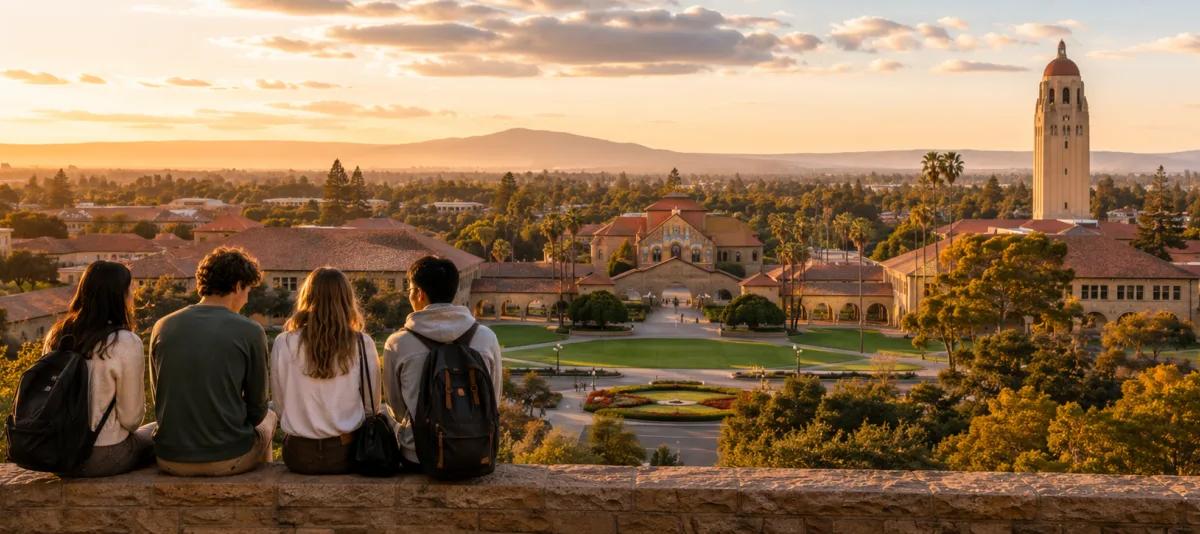
Stanford is a university community in the heart of Silicon Valley, roughly 55 km south of San Francisco on the San Francisco Peninsula, with about 21,000 residents at the 2020 census. The area is dominated by Stanford University, one of the world's most prestigious institutions and the intellectual engine of Silicon Valley — its alumni founded companies like Google, HP, Nike, and Netflix. The campus itself ("the Farm") is enormous (over 8,300 acres), sunny, and palm-lined, bordering the towns of Palo Alto and Menlo Park.
For international students, Stanford offers world-leading academics — especially in engineering, computer science, business, and the sciences — alongside unmatched proximity to the world's biggest tech companies and venture capital. The catch is cost: Palo Alto and the surrounding Peninsula form one of the most expensive housing markets in the United States. The weather, however, is famously pleasant, and the campus is a self-contained community with excellent facilities.
Vida estudiantil
Stanford student life is centred almost entirely on its vast, residential campus. Undergraduates live in dorms and houses across "the Farm," while graduate students have dedicated housing communities. The academic system runs on quarters (rather than semesters), making terms fast and intense. Campus culture blends serious academic and entrepreneurial ambition with a laid-back California vibe.
The university offers extraordinary facilities — libraries, labs, sports complexes, and open space for cycling and running. Startup culture is everywhere; many students launch companies or intern at nearby tech giants. Athletics are a big deal (Stanford Cardinal sports, the annual "Big Game" against Cal). Because the campus is somewhat isolated from a traditional city, social life happens on campus and around Palo Alto, with trips into San Francisco for bigger outings. Cycling is the defining mode of campus life.
Barrios
On-campus graduate housing ($1,203–$3,014/mo per person in 2026–27, furnished, utilities included): The best-value option — Stanford housing is priced below local market rents; shared apartments are cheapest and single studios cost $1,570 and up.
On-campus undergraduate dorms (housing and food budgeted at $22,944/year in 2026–27): The standard for undergrads, immersive and social.
Palo Alto ($1,800–$3,500+/mo per room/studio): Adjacent to campus, extremely expensive, walkable and safe.
Menlo Park / Mountain View ($1,500–$2,800/mo): Nearby Peninsula towns, still pricey but slightly more affordable, connected by Caltrain and bike.
Redwood City / East Palo Alto ($1,300–$2,200/mo): More affordable options a short drive or bus/bike ride away.
Comida y restaurantes
Most students eat through campus dining plans, which are convenient but a required cost for most undergraduates. The campus and Palo Alto have a strong food scene reflecting the area's wealth and diversity — from cheap taquerias and boba tea shops to high-end restaurants. University Avenue in downtown Palo Alto and Castro Street in Mountain View are the main dining strips.
Groceries at Trader Joe's, Safeway, and Asian markets run $400–$700/month. Casual meals are $15–25, and sit-down dinners $30–50+ (plus ~9% sales tax and 15–20% tip). California's produce is excellent and farmers' markets are abundant. The tech-money economy means prices are high across the board, so cooking at home and using dining plans are the main ways students manage food costs.
Vida nocturna y ocio
Stanford and Palo Alto are not nightlife destinations — this is a quiet, affluent, suburban area. The legal drinking age is 21, strictly enforced. Social life revolves around on-campus parties, dorm and house events, coffee shops, and gatherings rather than bars and clubs. Palo Alto's downtown has some bars and restaurants but shuts down relatively early.
For real nightlife, students head to San Francisco (about an hour by car or Caltrain) or San Jose. Entertainment on the Peninsula leans outdoorsy and cultural: hiking in the nearby foothills and Santa Cruz Mountains, beaches at Half Moon Bay and Santa Cruz (about an hour away), the Cantor Arts Center on campus (free), and Stanford's sports events. The mild weather makes outdoor recreation a year-round draw.
Transporte
The Stanford campus is huge and best navigated by bike — cycling is the defining mode of transport, and nearly everyone has a bike. The free Marguerite shuttle, open to everyone, circulates around campus and connects it with the Palo Alto Transit Center (Caltrain station) and Redwood City. Beyond campus, a car is genuinely useful in car-dependent Silicon Valley, though many students manage without one.
Caltrain runs up and down the Peninsula, connecting Palo Alto to San Francisco (about an hour, less on express trains) and San Jose. Graduate students who live off campus within commuting range can get a free Caltrain GoPass (the programme currently runs until August 2027); undergraduates are not eligible. Bus service (VTA, SamTrans) is limited and slow. San Francisco (SFO) and San Jose (SJC) airports are each about 30–45 minutes away. Overall, public transport is weaker than in East Coast cities, so bikes plus Caltrain plus occasional ride-hailing (Uber/Lyft) is the typical student setup.
Coste de vida
Monthly budget for a student at Stanford / Palo Alto:
- On-campus grad housing: $1,203–$3,014 (utilities included)
- Off-campus room/studio: $1,800–$3,500+
- Groceries: $400–$700
- Transport (Caltrain, bike upkeep): $0–$150
- Health insurance: Cardinal Care costs $2,936 per quarter unless waived, plus a $281 quarterly health fee (billed with tuition)
- Leisure & personal: $200–$400
- Total: $2,500–$4,500+/month
Palo Alto is among the most expensive places in the US. On-campus housing (priced below market and including utilities) is by far the best value — apply as early as possible. Stanford budgets $22,944 for undergraduate housing and food in 2026–27, with generous financial aid available: families earning under $100,000 with typical assets pay no tuition, room or board.
Seguridad
The Stanford campus and Palo Alto are very safe. This is an affluent, quiet, suburban area with low violent crime, well-lit campus paths, and its own university public safety department offering escorts and emergency phones. Students generally feel comfortable walking or cycling around campus at night.
The main risks are bike theft (extremely common — use a strong U-lock) and occasional property crime, plus car break-ins in some parking areas. Nearby East Palo Alto has historically had higher crime, though it has improved. The emergency number is 911. Overall, safety is one of the area's strong points, and families rank it highly.
Clima
Stanford enjoys one of the most pleasant climates in the US — a Mediterranean climate with warm, dry summers and mild, wet winters, and plenty of sunshine. Summers (Jun–Sep) are warm and dry, with daytime highs usually around 25–30°C, cool evenings and almost no rain. Winters (Dec–Feb) are mild, with daytime highs around 13–16°C and chilly nights, the only genuinely rainy season, but rarely cold.
Spring and autumn are gorgeous and mild. Rain falls almost entirely between November and March; the rest of the year is reliably sunny and dry. The pleasant, stable weather is a major quality-of-life draw and makes the outdoor, bike-centric campus lifestyle possible year-round. Fog can roll in from the coast, but the Peninsula is generally sunnier than San Francisco itself.
Universidades en Stanford
Otras ciudades de United States
Siguientes pasos
Fuentes
- census.gov/quickfacts/stanfordcdpcalifornia
- rde.stanford.edu/pdf/2026-27_Grad_Rates-Options_Chart
- rde.stanford.edu/sites/default/files/2024-11/2025-26_2026-27_Grad_Rate-Ranges_Ch
- financialaid.stanford.edu/undergrad/budget/index.html
- transportation.stanford.edu/getting-stanford/marguerite
- transportation.stanford.edu/getting-stanford/public-transit/caltrain-gopass
- vaden.stanford.edu/get-know-vaden/accessing-care-through-vaden-campus-health-ser
- facts.stanford.edu/