Cali, Colombia
Datos rápidos
- País
- Colombia
- Habitantes
- 2.270.000
- Idiomas
- Spanish
- Moneda
- COP
- Zona horaria
- COT (UTC-5)
- Nota media de la guía
- 6,2/10
- Seguridad
- 4/10
Resumen
Cali is Colombia's third-largest city and the undisputed salsa capital of the world — a vibrant, tropical metropolis of 2.27 million people in the Cauca Valley where rhythm, warmth, and Afro-Colombian culture define daily life. At just 1,000 meters above sea level, the city is significantly warmer than Bogotá or Medellín, with a tropical energy that infuses everything from its legendary nightlife to its street food culture. For international students, Cali offers the most affordable urban experience among Colombia's major cities, combined with an unmatched cultural richness and a social scene built around dance, music, and community.
The city hosts several important universities: Universidad del Valle (one of the top public universities in Colombia), Pontificia Universidad Javeriana sede Cali, Universidad Icesi (highly regarded for business and technology), and Universidad Autónoma de Occidente. The international student community is smaller than in Bogotá or Medellín, which means deeper cultural immersion and more authentic experiences — but also fewer English-speaking support systems. Spanish is essential here.
Vida estudiantil
Student life in Cali revolves around two things: studying and dancing. The city's university population is large and socially active, with student culture deeply intertwined with Cali's musical identity. It's common for students to attend salsa classes between lectures, gather at university cafeterias for extended discussions, and head out dancing on weeknights. The social fabric is tight — Caleños (Cali locals) are famously warm, festive, and inclusive, and international students who make an effort to integrate are welcomed enthusiastically.
Salsa dancing is not just entertainment — it's a social language. Taking classes (many universities offer them for free) is one of the fastest ways to build connections. Student groups organize trips to nearby natural attractions (the Pacific coast, Lago Calima, San Cipriano), and the university campuses host cultural events, concerts, and festivals regularly. The cost of student life is remarkably low — a typical student night out (drinks, cover, transport) might cost 40,000–60,000 COP (€9–14). The pace of life is more relaxed than Bogotá, and the social culture is less formal.
Barrios
Granada is the top choice for students and expats — a tree-lined, walkable neighborhood with restaurants, cafés, gyms, and a mix of international residents. It's safe, convenient, and has genuine neighborhood charm. Furnished one-bedroom apartments cost 1,800,000–2,700,000 COP (€410–615/month); rooms in shared apartments 600,000–1,000,000 COP (€135–230/month).
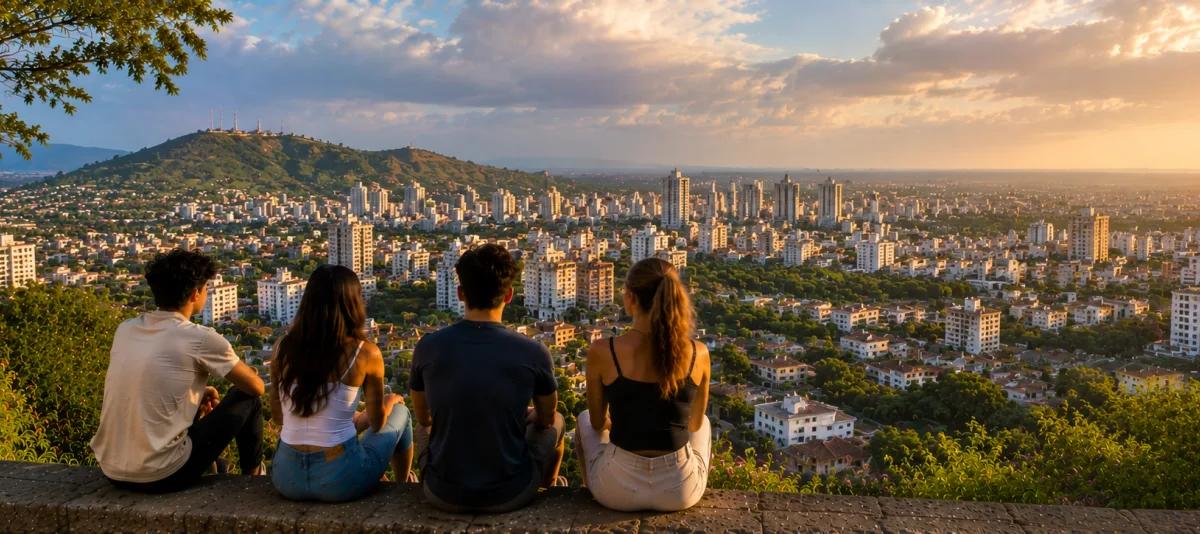
San Antonio is Cali's bohemian heart — a hillside neighborhood with colonial architecture, street art, stunning city views, and an artistic community. The area around Parque de San Antonio has galleries, live music venues, and traditional restaurants. It's characterful and affordable: apartments 1,600,000–2,800,000 COP (€365–640/month), though hillier streets require good fitness.
El Peñón is adjacent to San Antonio with a more polished, upscale feel. Safe and cultural, with theaters (Teatro Jorge Isaacs nearby), art galleries, and upscale restaurants. One-bedroom apartments: 1,500,000–2,500,000 COP (€340–570/month). Popular with professionals and older students.
Ciudad Jardín is the safest and most residential neighborhood — leafy streets, modern apartments, and a family-oriented atmosphere. It's further from nightlife and university campuses but offers peace and security. Apartments: 1,800,000–3,200,000 COP (€410–730/month).
Univalle area (Meléndez) — the neighborhood surrounding Universidad del Valle's main campus is the most affordable option for students at that institution. Basic rooms from 400,000–700,000 COP (€90–160/month). Less polished but functional and social.
Comida y restaurantes
Cali's food culture is deeply rooted in Afro-Colombian and Pacific coast influences, making it distinct from other Colombian cities. The almuerzo corriente (set lunch) is incredibly cheap here: 12,000–18,000 COP (€2.70–4.10) at neighborhood restaurants. Street food is ubiquitous and excellent.
Signature Cali dishes include cholado (a massive shaved ice with fruit and cream — find the best at Parque del Perro for 8,000–12,000 COP), empanadas de pipián (unique to the region, 2,500–3,500 COP), aborrajados (fried plantain stuffed with cheese, 3,000 COP), and lulada (a refreshing lulo fruit drink, 5,000 COP). The pandebono (cheese bread) at Pan de Bono del Valle is legendary.
In Granada, restaurants range from local to international: La Comitiva serves creative Colombian cuisine (mains 28,000–45,000 COP); El Zaguán de San Antonio offers traditional food with views. For groceries, Olímpica and Éxito are the main supermarket chains (the local chain La 14 closed in 2021), supplemented by D1 and Ara for budget shopping. The Galería Alameda (main market) has the cheapest fresh produce in the city. Fruit juice stands on every corner sell exotic tropical juices (mango, lulo, maracuyá, guanábana) for 3,000–5,000 COP.
Vida nocturna y ocio
Cali's nightlife is legendary — this is the world capital of salsa, and the city lives up to its reputation every single night. The salsa scene ranges from traditional temples to modern fusion clubs, and you don't need to be an expert dancer to enjoy it (though you'll improve fast).
Top salsa venues:
- Tin Tin Deo (San Antonio) — the temple of traditional salsa brava with an intense, small dance floor. Open 8 PM–3 AM, cover ~20,000 COP. Thursday is the classic night.
- La Topa Tolondra — arguably Cali's most famous salsa club with retro décor and advanced-level dancing. Thursday–Saturday, 8 PM–2 AM, entry 10,000 COP. Monday "Friends Salsa Party" has free beginner classes 7–9 PM.
- Zaperoco Bar — blends tradition with modern production. Wednesday–Saturday, 9 PM–4 AM. Free beginner classes on Wednesdays at 9 PM. Entry 15,000–40,000 COP.
- La Caldera del Diablo (Calle 5 #14-35) — live orchestras, vinyl nights, and thematic parties. Friday–Saturday, 8:30 PM–3 AM.
Beyond salsa: Granada has modern bars and clubs playing crossover, reggaeton, and electronic music. Menga (north Cali) has larger clubs and discotecas. The annual Feria de Cali (late December) is a massive festival celebrating salsa culture with concerts, parades, and nonstop dancing for a week.
Budget: Cover charges 10,000–40,000 COP (€2.30–9); beer 6,000–12,000 COP (€1.40–2.70); cocktails 15,000–25,000 COP (€3.40–5.70). Significantly cheaper than Bogotá or Medellín nightlife.
Transporte
Cali's public transport system centers on the MIO (Masivo Integrado de Occidente) — a bus rapid transit system similar to Bogotá's TransMilenio but smaller in coverage. The 2026 fare is 3,500 COP (~€0.80) per trip, payable with the MIO card or a contactless Visa/Mastercard. The 2026 legal monthly transport allowance for workers (249,095 COP / €57) covers about 71 trips.
MIO system:
- Troncal (trunk) routes run on dedicated lanes through major corridors
- Alimentador (feeder) routes serve neighborhoods not on trunk corridors
- Service is decent during peak hours but frequency drops significantly at night and on weekends
- Coverage does not reach all neighborhoods — plan housing location with transport access in mind
Alternative transport:
- Uber, DiDi, and InDriver are affordable (5,000–12,000 COP for most city rides)
- Taxis are metered and relatively cheap (minimum fare 7,100 COP; 1,800 COP surcharge at night, Sundays and holidays)
- Cycling is possible but infrastructure is limited and the heat makes it less comfortable
- Walking within neighborhoods (Granada, San Antonio) is pleasant but inter-neighborhood distances are large
Monthly transport budget: 120,000–200,000 COP (€27–45) with MIO for daily use. No official student discount on MIO fares.
Coste de vida
Cali is 15–25% cheaper than Medellín and significantly cheaper than Bogotá, making it one of the most affordable major city options for international students in Latin America. A comfortable student budget is 2,000,000–3,500,000 COP (€455–800/month).
Monthly breakdown:
- Room in shared apartment (Granada): 600,000–1,000,000 COP (€135–230)
- Rent (1BR furnished, safe area): 1,800,000–2,700,000 COP (€410–615)
- Groceries: 450,000–700,000 COP (€100–160)
- Transport (MIO + ridesharing): 120,000–200,000 COP (€27–45)
- Dining out: 250,000–400,000 COP (€57–90)
- Utilities + internet: 200,000–350,000 COP (€45–80)
- Mobile phone: 30,000–50,000 COP (€7–11)
- Entertainment: 150,000–300,000 COP (€34–68)
- Health insurance: 200,000–350,000 COP (€45–80)
The low cost of food is a major advantage — eating out daily at local restaurants (almuerzo corriente) for lunch and cooking simple dinners can keep monthly food costs under 600,000 COP (€135).
Seguridad
Cali requires more safety awareness than Bogotá or Medellín. The city has higher crime rates, particularly related to robbery and phone theft. However, the neighborhoods where students typically live (Granada, San Antonio, El Peñón, Ciudad Jardín) are considerably safer than the city average.
Key safety advice:
- Stay in well-known, safe neighborhoods — Granada, El Peñón, Ciudad Jardín, and San Antonio (central parts)
- Avoid walking alone at night outside safe zones, especially in eastern and southeastern barrios
- Phone theft is very common — keep phones hidden on the street
- Use ride-hailing apps (Uber, DiDi) instead of hailing taxis, especially at night
- Be aware of your surroundings in crowded areas and on public transport
- Don't display expensive jewelry, watches, or electronics
- Avoid the Juanchito zone alone at night unless in a group with locals
- The area around the bus terminal (Terminal de Transportes) requires extra caution
Despite these concerns, thousands of students live safely in Cali by following common-sense precautions. The warmth of the people and the city's cultural richness make it a rewarding place to live. Emergency number: 123.
Clima
Cali sits at 1,000 meters above sea level in the Cauca Valley, giving it a warm tropical climate that's hotter and more humid than Medellín or Bogotá.
Temperature: Average highs of 30–32°C and lows of 19–21°C year-round. There's minimal seasonal variation — it's consistently warm to hot. The heat peaks in July–August and December–January.
Rainfall: Two wet seasons (March–May and October–November) and two drier periods (June–September and December–February). Annual rainfall is approximately 900mm. When it rains, it's typically intense afternoon/evening downpours that pass within 1–2 hours.
What to pack: Light, breathable clothing is essential — cotton and linen are your friends. A light rain jacket or umbrella for the wet seasons. Sunscreen and a hat for daily use. You will not need any warm clothing except perhaps a light layer for air-conditioned spaces.
Comfort note: The heat combined with humidity (averaging 70–75%) can be intense for those coming from temperate climates. Air conditioning is not standard in all apartments — check before renting. Fans are a minimum requirement. The city cools down noticeably in the evenings, making nights comfortable.
Universidades en Cali
Otras ciudades de Colombia
Siguientes pasos
Fuentes
- metrocali.gov.co/es-oficial-pasaje-del-mio-sera-de-3-500-en-2026-y-permitira-pag
- metrocali.gov.co/cali-moderniza-el-mio-pasaje-se-podra-pagar-con-tarjetas-debito
- eltiempo.com/colombia/cali/que-no-lo-tome-por-sorpresa-asi-quedo-establecida-la-
- elpais.com.co/cali/almacenes-la-14-asi-avanza-el-proceso-de-liquidacion-a-cuatro
- telencuestas.com/censos-de-poblacion/colombia/2026/valle-del-cauca/cali
- numbeo.com/cost-of-living/in/Cali