Universidad del Rosario
Quick facts
- City
- Bogotá
- Country
- Colombia
- Type
- Private
- Founded
- 1653
- Students
- 10,126
- International students
- 3 %
- National ranking
- #5
- Tuition (local students)
- COP 40,394,000
- Guide score
- 7.2/10
Official website: www.urosario.edu.co
Overview
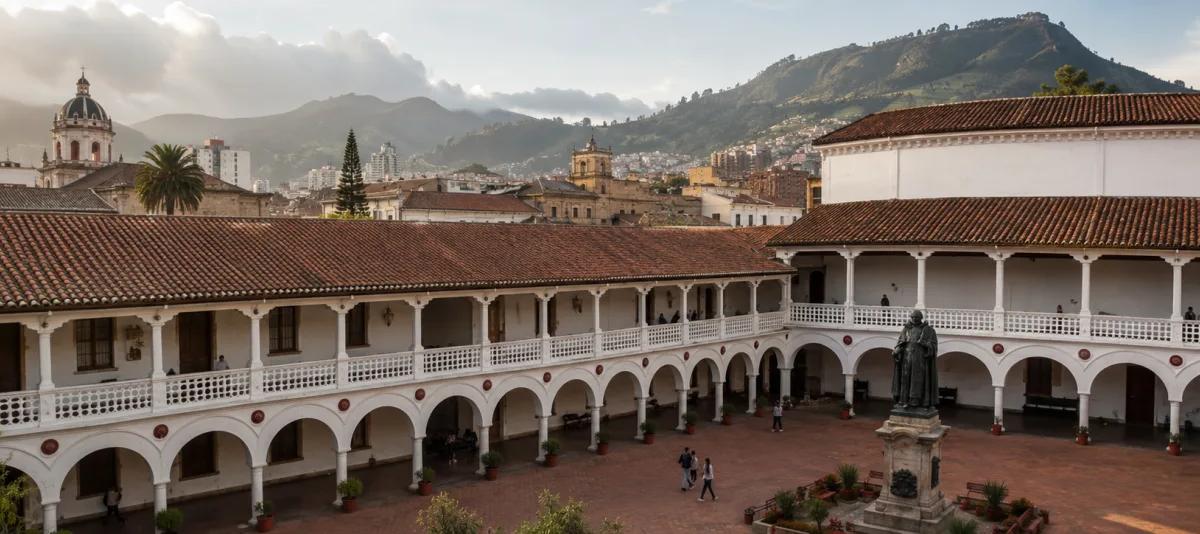
The Universidad del Rosario is one of the oldest universities in Colombia and the Americas, founded in 1653 by Fray Cristóbal de Torres. Its historic Claustro sits in La Candelaria, steps from the Plaza de Bolívar, and the university has long been tied to Colombian legal and political life — a long list of presidents studied here. In the QS World University Rankings 2027 it sits in the 901–950 band, fifth among the 12 Colombian universities QS published.
Despite the colonial cloister, Rosario is a modern research university. The Claustro still houses administration and Jurisprudence; Quinta de Mutis and other sites hold health sciences, economics, and business. QS lists about 10,100 students, including 328 international students (around 3%). The campus network is small enough for personal attention and still carries weight in Colombian public life.
Academic programs
Law (Facultad de Jurisprudencia) and Political Science remain the historic strengths. Economics is research-active and ranked first in Colombia for Análisis Económico on Saber Pro 2024; the school publishes dual-degree routes with Toulouse School of Economics, Tilburg, and the London School of Economics. Medicine is selective and uses clinical rotations in Bogotá hospitals. Newer programmes — Data Science, Liberal Arts (Artes Liberales), and International Relations — sit alongside the Escuela de Administración. Teaching is mostly in Spanish, with a growing English offer in economics, business, and international relations.
Campus life
Studying in a 17th-century cloister in La Candelaria is the Rosario postcard: cobblestones, colonial churches, and cafés a few minutes away. Quinta de Mutis is the more modern campus, with labs, lounges, sports areas, and a larger cafeteria. Student life is strong in Model UN, debate, and legal clinics that offer free services. Guest lectures and public-policy events are frequent. Off campus, Usaquén, Zona Rosa, and La Candelaria's own bars and galleries cover evenings. Safety varies by block and hour; treat late walks in the historic centre with care.
Exchange programs
The international office (Cancillería) lists more than 200 partner universities for semester exchange. The 2027-1 outbound call ran from 10 August to 2 October 2026. Dual degrees are faculty-specific; Economics advertises Toulouse, Tilburg, and LSE. Incoming students are nominated by a partner university. Most agreements waive host tuition; a short list of Spanish partners still charge fees. English-taught courses make a semester possible without fluent Spanish, but B1 Spanish makes housing, clinics, and everyday Bogotá much easier. Summer and short programmes sit alongside the semester tracks.
Admissions
Colombian applicants submit the online form, Saber 11 scores, and — for most programmes — an interview. Jurisprudence, Economics, and the School of Human Sciences do not interview; they decide on the file. Rosario does not publish an overall acceptance rate. Inscription for 2027-1 opened on 12 August 2026 and closes as places fill; the double-programme window closes on 10 January 2027, and classes start on 26 January 2027. The inscription fee was COP 231,000. International degree-seekers use a dedicated track with apostilled documents and language proof. Exchange students apply after nomination. Merit scholarships (Becas Mérito, including the NOVA test) can cut tuition substantially.
Undergraduate tuition is set by Acuerdo 323 for 2026 and differs by programme. Economics publishes COP 20,197,000 per semester (about COP 40,394,000 a year). Jurisprudence is COP 21,424,000 per semester. Philosophy sits lower (about COP 13.7 million a semester before the published scholarship). International students are not quoted a separate sticker price.
Student housing
Rosario does not run dormitories. For the Claustro, La Candelaria, La Macarena, and Chapinero are the usual search areas, with rooms often around COP 1,000,000–1,800,000 a month. Quinta de Mutis students also look at Teusaquillo and Chapinero Alto. Cancillería points incoming students to vetted landlords and roommate matches. Arrange a hostel or short rental for the first week and visit flats in person. Neighbourhood safety changes after dark; use TransMilenio and registered taxis or apps at night.
Career services
The Centro de Trayectoria Profesional runs fairs, employer talks, and alumni mentoring. QS 2027 places Rosario 341st globally for employment outcomes and third in Colombia on that indicator. The alumni network is strongest in law, government, economics, and consulting. The university also runs incubation and seed-funding competitions. For international students, a Rosario semester is most useful for Latin American affairs, diplomacy, and regional business.
Academic programs
- Law
- Medicine
- Economics
- Political Science
- International Relations
- Business Administration
- Psychology
- Liberal Arts
- Data Science
Application deadlines
- fall: 2027-2 July start dates pending
- spring: 10 January 2027 (2027-1 double-programme close)
Exchange
200+ bilateral exchange partners via Cancilleria. Economics dual degrees include Toulouse School of Economics, Tilburg and LSE. Incoming students are nominated by a partner university. English-taught options exist in economics, business and international relations; B1 Spanish is still useful.
Universities in Bogotá
- Escuela Superior de Administración Pública
- Fundación Universitaria Los Libertadores
- Universidad Cooperativa de Colombia
- Universidad de América
- Universidad Externado de Colombia
- Universidad La Gran Colombia
- Universidad Militar Nueva Granada
- Universidad Nacional Abierta y a Distancia
- Universidad Sergio Arboleda
Next steps
Sources
- urosario.edu.co/periodico-nova-et-vetera/nuestra-u/la-universidad-del-rosario-av
- portafolio.co/economia/gobierno/universidades-colombianas-caen-en-ranking-mundia
- urosario.edu.co/aspirantes/pregrado
- urosario.edu.co/programa-en-economia
- urosario.edu.co/jurisprudencia-derecho
- urosario.edu.co/intercambio-academico-2026
- topuniversities.com/universities/universidad-del-rosario