Quito, Ecuador
Datos rápidos
- País
- Ecuador
- Habitantes
- 2.800.000
- Idiomas
- Spanish
- Moneda
- USD
- Zona horaria
- ECT (UTC-5)
- Nota media de la guía
- 6,1/10
- Seguridad
- 5/10
Resumen
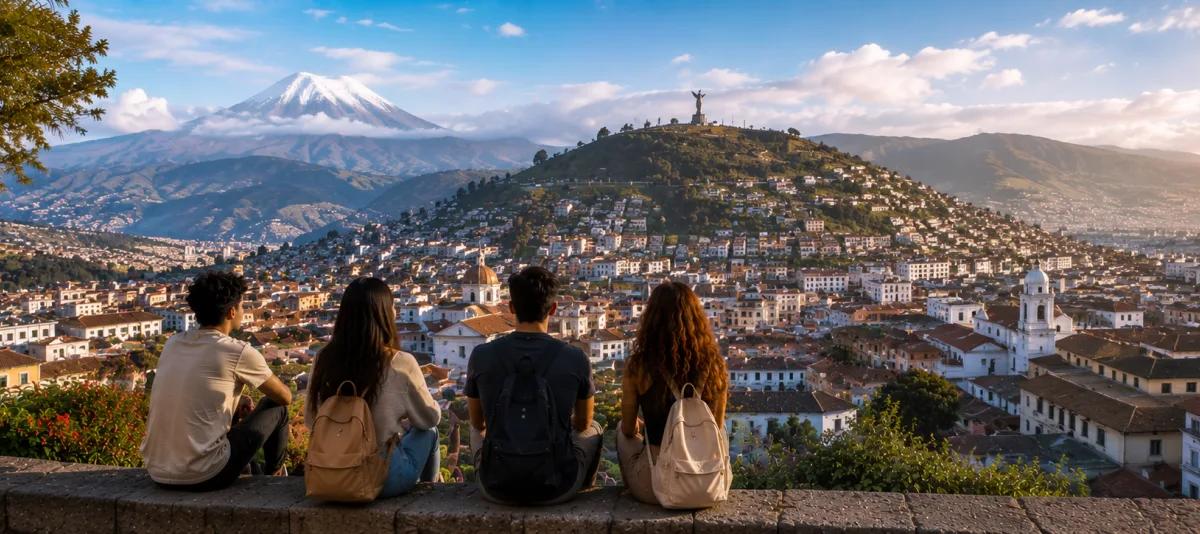
Quito is Ecuador's capital and the political, cultural, and educational center of the country, sitting dramatically at 2,850 meters (9,350 feet) above sea level in a narrow Andean valley flanked by volcanoes. With a population of approximately 2.8 million, it is the second-largest city in Ecuador and one of the highest capital cities in the world. The historic center — a UNESCO World Heritage Site since 1978 — is the largest and best-preserved colonial center in the Americas, filled with ornate churches, cobblestone streets, and grand plazas. Modern Quito stretches north with malls, business districts, and lively neighborhoods that give the city a cosmopolitan edge without losing its Andean soul.
Quito is home to Ecuador's most respected universities, making it the country's primary destination for international students. The Universidad San Francisco de Quito (USFQ) is the highest-ranked private university, known for its liberal arts approach and growing number of English-taught courses. The Pontificia Universidad Católica del Ecuador (PUCE) is a prestigious Jesuit institution with strong humanities and social science programs. The Escuela Politécnica Nacional (EPN) is the leading STEM institution. The Universidad Central del Ecuador (UCE), the oldest and largest public university, offers affordable tuition but conducts classes exclusively in Spanish. Together, these institutions create a vibrant academic ecosystem with exchange programs, research opportunities, and unique fieldwork access to Andean and Amazonian ecosystems.
Vida estudiantil
Student life in Quito is shaped by the city's unique combination of affordable living, rich culture, and extraordinary natural surroundings. The academic community is active and social — university clubs, volunteer organizations, and student associations organize events ranging from cultural festivals to weekend hiking trips to nearby volcanoes like Cotopaxi and Pichincha. Language exchanges (intercambios) are popular at bars and cafés in La Mariscal and La Floresta, providing an easy way to practice Spanish and meet both locals and other international students.
The daily rhythm is built around the almuerzo: most students eat a full set lunch at a local comedor or restaurant for $2.50–$4, which typically includes soup, a main course with rice and protein, juice, and dessert. Afternoons are spent studying at university libraries or cafés, and evenings bring social gatherings at neighborhood plazas or informal meetups at someone's apartment. Quito's altitude (2,850m) takes some getting used to — expect to feel winded for the first week or two, and alcohol hits harder at this elevation. The city's student population is concentrated in the northern-central neighborhoods, creating a walkable, lively environment where it's easy to build a social circle. Weekend trips to hot springs, indigenous markets (like Otavalo), cloud forests, and volcano hikes are a quintessential part of the Quito student experience.
Barrios
La Floresta is Quito's bohemian and creative hub, popular with younger expats, artists, and students. The neighborhood is walkable, full of independent cafés, art galleries, bookshops, and street art. It's close to PUCE and within easy reach of other universities. The area has good foot traffic and feels safe during the day and early evening. Rooms in shared apartments cost $250–$400/month (€230–€370).
La Mariscal is the most internationally known neighborhood, centered around Plaza Foch and often called "Gringolandia." It's the main nightlife and backpacker district, packed with bars, restaurants, hostels, and language schools. It's lively and convenient but can feel noisy and tourist-heavy. Exercise caution at night as petty crime is more common here. Rooms cost $200–$350/month (€185–€320).
González Suárez is an upscale neighborhood with modern high-rise apartments offering stunning views of the valley and volcanoes. It's quiet, well-maintained, and safer than central neighborhoods, but more expensive and less walkable. Rooms in shared apartments cost $350–$500/month (€320–€460).
Cumbayá is a suburban area east of central Quito, home to USFQ and popular with wealthier Quiteños and international families. It has a warmer microclimate, shopping malls (Paseo San Francisco, Scala Shopping), and a more relaxed vibe, but the commute to central Quito can take 30–90 minutes depending on traffic. Rooms cost $300–$450/month (€275–€415).
Centro Histórico is the UNESCO-listed colonial heart of the city — architecturally stunning but less practical for daily student life. It has limited nightlife, fewer modern amenities, and requires more caution after dark. However, rent is cheaper and the cultural immersion is unbeatable. Rooms cost $150–$250/month (€140–€230).
Comida y restaurantes
Quito's food scene is diverse and extremely affordable. The almuerzo (set lunch) is the cornerstone of daily eating — for $2.50–$4 (€2.30–€3.70), local comedores and restaurants serve a full meal including soup (usually locro de papa or a grain-based sopa), a main course with rice, protein, salad, and a fresh fruit juice. These are available at countless neighborhood spots between 12:00 and 2:30 PM.
For specific recommendations, Café Dios No Muere in La Floresta is a beloved local spot with excellent traditional food. Bandido Brewing on Calle Olmedo serves craft beer and gastropub fare in a colonial courtyard. Zazu (La Mariscal) is one of Quito's best upscale restaurants for a special occasion ($25–$40 per person). Mercado Central and Mercado Iñaquito are traditional markets where a full meal costs $2–$3. For street food, empanadas de viento ($0.50–$1), humitas ($1), and bolones de verde ($1–$2) are ubiquitous and delicious. Grocery shopping at Supermaxi or Mi Comisariato costs $25–$40/week, and the smaller tiendas de barrio (corner shops) are convenient for daily staples. International food is available but pricier — expect to pay $8–$15 for a burger, sushi, or pizza at mid-range restaurants.
Vida nocturna y ocio
Quito's nightlife is concentrated in La Mariscal, particularly around Plaza Foch, where bars and clubs line the streets and bar-hopping is the standard Thursday-through-Saturday routine. The scene kicks off around 9–10 PM and runs until midnight on weekdays or 2–3 AM on weekends (bars and clubs must close by 2 AM, or 3 AM in the tourist zone). Bungalow 6 is a multi-level nightclub on Plaza Foch with DJs and dance floors ($5–$10 cover on weekends). Dirty Sanchez is a trendy cocktail bar with live bands. Strawberry Fields offers cheap beer and a psychedelic rock vibe. Bandido Brewing in the Centro Histórico serves excellent craft beer in a beautiful colonial setting.
La Floresta has a more low-key, artsy scene with indie music venues, craft beer bars, and art gallery openings. Rooftop bars in the Centro Histórico offer stunning views over the illuminated colonial skyline — ideal for a quieter evening. Cumbayá has upscale electronic music venues popular with USFQ students. Drink prices are very reasonable: domestic beer $2–$3, craft beer $4–$6, cocktails $5–$8. Keep in mind that altitude (2,850m) amplifies the effects of alcohol — acclimatize for at least 2 days before a big night out. Cover charges are uncommon except at larger clubs ($5–$10). Live music — salsa, cumbia, rock nacional — is a regular feature at many venues.
Transporte
Quito's public transport system has undergone a major transformation with the opening of the Metro de Quito, a single-line subway running 22 km north-to-south through the city's urban core. A single metro trip costs $0.45 (€0.41), or $0.22 (€0.20) at the reduced fare for passengers aged 6–18 and over 65. The city also operates the Trole (trolleybus) and Ecovía (bus rapid transit) corridors, which cost $0.35 (€0.32) regular or $0.17 (€0.16) reduced. Since April 2026, the Sistema Integrado de Recaudo lets you pay on Metro, Trole, and Ecovía with a single free "Tarjeta Ciudad" card, your ID or a QR code linked to a Cuenta Ciudad, although each trip is still charged separately.
Conventional city buses cost $0.25–$0.35 and cover routes the BRT systems don't reach, though they can be crowded and confusing for newcomers. Taxis are affordable — a cross-city ride runs $3–$6, but always use registered yellow taxis with visible identification or ride-hailing apps (Uber, InDriver, and the local Cabify all operate in Quito). Traffic congestion is severe during rush hours, especially on the Avenida Oriental and the route to Cumbayá through the Guayasamín tunnel. Walking is practical within individual neighborhoods but the city's extreme north-south elongation and hilly terrain make it less viable for cross-city travel. For intercity travel, the Quitumbe and Carcelén bus terminals connect to virtually every city in Ecuador at low cost ($5–$15 for most destinations).
Coste de vida
A realistic monthly student budget in Quito is $750–$1,100 (approximately €690–€1,010), making it one of the most affordable capital cities in the Americas.
Monthly breakdown:
- Room in shared apartment: $250–$400 (€230–€370)
- Groceries: $100–$150 (€92–€138)
- Transport (metro/bus): $15–$25 (€14–€23)
- Mobile phone: $10–$20 (€9–€18)
- Entertainment & dining out: $80–$150 (€74–€138)
- Health insurance (local): $50–$100 (€46–€92)
- Utilities (shared): $20–$35 (€18–€32)
- Gym: $25–$40 (€23–€37)
The almuerzo habit ($2.50–$4 per lunch) is the single best way to save on food. Cooking at home is also very affordable, with markets offering fresh produce, chicken, and fish at far lower prices than supermarkets. Free cultural activities are abundant — many museums have free entry days, parks and plazas host regular events, and hiking in the surrounding mountains costs nothing but bus fare.
Seguridad
Quito is classified as a medium-risk city. It is generally safer than Guayaquil and other coastal cities, but petty crime is a persistent concern that requires constant awareness. Pickpocketing is common in crowded areas, on public transport, and around tourist zones like the Centro Histórico and La Mariscal. Bag snatching by motorbike passengers occurs, and distraction scams (fake mustard spills, staged arguments) are known tactics. Express kidnapping via unlicensed taxis, though rare, has been reported.
Areas requiring extra caution include southern Quito (working-class neighborhoods with higher crime rates), the Centro Histórico after dark (deserted streets become risky once businesses close), and parts of La Mariscal late at night. El Panecillo — the hilltop viewpoint — should only be visited via taxi or organized tour, as muggings on the walking paths are common. Safer neighborhoods include La Floresta (well-lit, good foot traffic) and Cumbayá (affluent suburb). General rules: avoid walking alone at night, use registered taxis or ride-hailing apps exclusively, keep valuables in inside pockets, don't display expensive phones or jewelry, and carry only the cash you need. In emergencies, dial 911 (ECU 911).
Clima
Quito's high altitude (2,850m) gives it a mild, spring-like climate year-round despite sitting on the equator. Temperatures are remarkably consistent throughout the year: daytime highs range from 17–22°C (63–72°F) and nighttime lows from 8–10°C (46–50°F). There is no true summer or winter — locals describe the seasons as "wet" and "dry" rather than hot and cold. The key weather feature is afternoon rain: from October through May (the wet season), brief but heavy downpours are common between 2:00 and 5:00 PM, so carrying a light rain jacket or compact umbrella is essential.
The dry season runs from June to September, with lower rainfall, clearer skies, and the best views of surrounding volcanoes. Humidity is moderate (60–80%) and the city gets approximately 12.5 hours of daylight year-round due to its equatorial location. The UV index is extremely high at this altitude — sunscreen is non-negotiable even on cloudy days. Mornings are often cool and sunny, making them ideal for exploring, while clouds typically build throughout the afternoon. The temperature difference between sun and shade is dramatic — it can feel 10°C warmer in direct sunlight. Pack layers: a light jacket for mornings and evenings, a rain layer, and sun protection are the essentials.
Universidades en Quito
Otras ciudades de Ecuador
Siguientes pasos
Fuentes
- ecuadorencifras.gob.ec/proyecciones-poblacionales/
- quitoinforma.gob.ec/2026/03/20/las-tarifas-del-transporte-publico-municipal-se-m
- teleamazonas.com/actualidad/noticias/quito/nueva-forma-pagar-pasaje-quito-113497
- primicias.ec/quito/tarjetas-pasaje-trole-ecovia-metro-cuenta-ciudad-117289/
- elcomercio.com/actualidad/seguridad/jovenes-beben-licor-eluden-restricciones-qui
- travel.state.gov/en/international-travel/travel-advisories/ecuador.html
- numbeo.com/cost-of-living/in/Quito