Potosí, Bolivia
Datos rápidos
- País
- Bolivia
- Habitantes
- 218.702
- Idiomas
- Spanish
- Moneda
- BOB
- Zona horaria
- BOT (UTC-4)
- Nota media de la guía
- 4,7/10
- Seguridad
- 5/10
Resumen
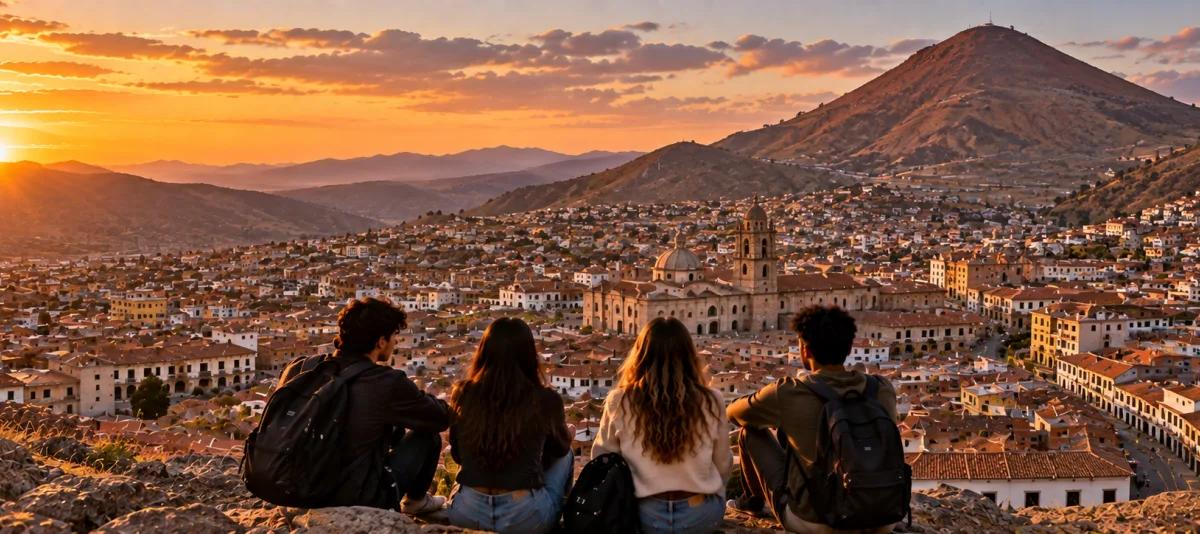
Potosí — the Villa Imperial — is a UNESCO World Heritage mining city of about 218,700 people (municipality, Censo 2024), built on the flanks of Cerro Rico. Mean elevation is about 4,090 m (often cited near 4,067 m for the urban core), making it one of the world's highest large cities. Colonial churches and steep streets sit under thin, cold air; silver history still shapes identity even as the modern economy is quieter than the imperial past.
The public university is the Universidad Autónoma Tomás Frías (UATF), founded in 1892. The central campus is on Av. del Maestro / Av. Cívica, with additional facilities and departmental sub-seats elsewhere in Potosí Department. Instruction is in Spanish, with a strong Quechua-speaking local context. Students come for affordable public degrees, mining and regional programmes, and a historic highland setting — plus weekend access toward Uyuni — not for mild weather or big-city nightlife.
Vida estudiantil
Student life clusters around UATF faculties, cheap comedores, and the colonial centre. International enrolment is limited; social circles form through classmates, sports, and faculty organisations. Political assemblies and occasional strikes can pause classes. Cold nights push gatherings indoors; sunny dry-season days are better for exploring churches, viewpoints, and Cerro Rico tours (choose reputable operators — mine tourism has real risks).
Altitude dominates the first weeks: stairs feel harder, sleep can be poor, and alcohol hits faster. Students who already adapted in La Paz still notice the extra height. Warm clothing and slow pacing are part of academic survival here.
Barrios
UATF scholarship documentation has long used about 300 BOB/month as an estimated room rent for aid calculations, and local classifieds often show student rooms near faculties around 350–800 BOB (€26–€60). Treat the practical student band as roughly 400–1,200 BOB/month (€30–€90) city-wide, with nicer centre places higher — confidence is partially verified near campus, not a full market survey.
Centro Histórico / around Plaza 10 de Noviembre: Colonial core, walkable to many services; convenient but cold, steep, and tourist-busy by day.
Near Av. del Maestro (UATF campus): Best for reducing micro time; popular with students.
San Pedro and mid-slope residential streets: Mixed family housing; often better value than plaza-front buildings.
Higher / peripheral slopes: Usually cheaper, but colder, steeper walks, and thinner night lighting.
Comida y restaurantes
Potosí eats highland Bolivian staples: soups, quinoa and potato dishes, salteñas, api, and market almuerzos typically around 15–25 BOB (€1.10–€1.90). Restaurant dinners might run 30–60 BOB (€2.25–€4.50). Cooking at home is economical if you shop mercados; heating water and longer boil times are altitude facts of life.
Tourist cafés near the centre cost more than student comedores — follow locals at lunch for the real student budget.
Vida nocturna y ocio
Nightlife is limited and low-key. A few centre bars serve students and locals, but there is no large verified club scene worth listing by name. Evenings are early by coastal standards because of cold and altitude. Cultural life leans on colonial heritage, religious festivals, and music rather than late discos.
The draw is daytime: UNESCO historic centre, Cerro Rico (with caution), and overland trips toward the Uyuni salt flats. For louder nights, plan travel to Sucre or La Paz rather than expecting Potosí to transform after dark.
Transporte
Micros and minibuses climb the city's steep grid. A September 2026 transitional municipal agreement set adult micro fares around 4 BOB, university/normalista fares around 2 BOB, with other differentiated rates for older adults and schoolchildren (€0.30 / €0.15 at ~13.3 BOB/€). Confirm on boarding — fuel reforms keep tariffs provisional.
Walking the historic centre is possible but exhausting at 4,090 m; many students combine short walks with micros. Intercity buses link Potosí to Sucre, Oruro, La Paz, and Uyuni routes. Taxis are available; agree prices before riding.
Coste de vida
Monthly budget for a student in Potosí:
- Room in shared housing: 400–1,200 BOB (€30–€90)
- Food & groceries: 700–1,100 BOB (€53–€83)
- Transport: 100–250 BOB (€8–€19)
- Phone & internet: 80–150 BOB (€6–€11)
- Leisure & personal: 150–350 BOB (€11–€26)
- Total: roughly 1,800–3,200 BOB/month (€135–€240)
Euro figures use about 13.3 BOB per euro (September 2026). The boliviano has floated since June 2026, so keep a buffer for price swings. Warm bedding and occasional heaters matter more for comfort than flashy entertainment spending.
Seguridad
Petty theft is the main street risk in crowded markets and near terminals; the historic centre is busy by day and quieter at night — stick to lit streets. Mine tourism and informal mining areas carry separate physical hazards; only use established operators if you visit Cerro Rico.
Altitude-related illness is a genuine safety issue at ~4,090 m. Seek help for worsening soroche symptoms. Protests can block roads. Emergency numbers: 110 (police), 118 (ambulance), 119 (fire).
Clima
Potosí has a cold semi-arid / cold arid highland climate (BSk–BWk) at extreme elevation. Days can be sunny and cool; nights are frequently near or below freezing, especially May–August. The wetter months (roughly November–March) bring afternoon storms but not Amazon humidity.
UV radiation is severe. Pack serious layers, a windproof jacket, sunscreen, and lip balm. This climate is harsher than Oruro and far colder than Trinidad or Cobija — do not copy lowland packing lists.
Universidades en Potosí
Otras ciudades de Bolivia
Siguientes pasos
Fuentes
- es.wikipedia.org/wiki/Potos%C3%AD
- siip.produccion.gob.bo/noticias/files/2025-cc2eb-6-1-Fichas-Municipales-Dpto-Pot
- es.wikipedia.org/wiki/Uatf
- vivepotosi.com/2026/09/aprueban-tarifa-transitoria-de-bs-4-00-en-micros-y-se-lev
- radiokollasuyo.bo/2026/01/27/estudio-2024-presenta-nueva-propuesta-tarifaria-par
- cpv2024.ine.gob.bo/index.php/el-censo-2024-tendra-el-apoyo-de-la-universidad-aut
- travel.state.gov/en/international-travel/travel-advisories/bolivia.html