Universidad Técnica de Oruro
Quick facts
- City
- Oruro
- Country
- Bolivia
- Type
- Public
- Founded
- 1892
- Students
- 28,655
- Tuition (local students)
- BOB 0
- Tuition (international)
- BOB 1,500
- Acceptance rate
- 59 %
- Guide score
- 5.8/10
Official website: www.uto.edu.bo
Overview
The Universidad Técnica de Oruro (UTO) traces its legal origin to the law of 15 October 1892, which created the university districts of Oruro and Potosí. It became the autonomous Universidad de San Agustín in 1937 and took its current name on 31 March 1941, when it was reoriented toward the technical fields tied to Oruro's mining economy. It is a public autonomous university in the CEUB system.
UTO's IT directorate counted 28,655 enrolled students for the 2025 academic year, and the official statistics yearbook gives 28,502 for 2024. The university appears in the QS Latin America & the Caribbean 2026 ranking only in the open "401+" band, so no numeric rank is stored. The 2024 yearbook shows that only 0.2% of applicants came from foreign secondary schools, a signal of how few international degree-seekers there are.
Academic programs
Seven faculties: the Facultad Nacional de Ingeniería (FNI), founded in 1906 as the Escuela de Minas; Ciencias Jurídicas, Políticas y Sociales; Ciencias Económicas, Financieras y Administrativas; Ciencias de la Salud; Ciencias Agrarias y Naturales; Arquitectura y Urbanismo; and the Facultad Técnica (technician-level trades). The FNI is the flagship, with Mining, Metallurgical, Geological, Civil, Mechanical, Electrical, Chemical, Industrial and Systems Engineering. Health sciences draw the most applicants: Medicine alone had about 1,800 in 2024. There are sub-seats in Huanuni and Challapata plus several rural units.
Fees. Under UTO's admission and enrolment instructivo (Resolución Rectoral 553/13, still posted on the official site), the university's share of the matrícula is Bs 0 for Bolivian students, who pay only small administrative charges (kardex, registration and similar, roughly Bs 170 in year one). Foreign students pay Bs 1,500 per year on annual plans or Bs 750 per semester (about €119 or €60 at September 2026 rates). Confirm that these amounts have not been updated since.
Campus life
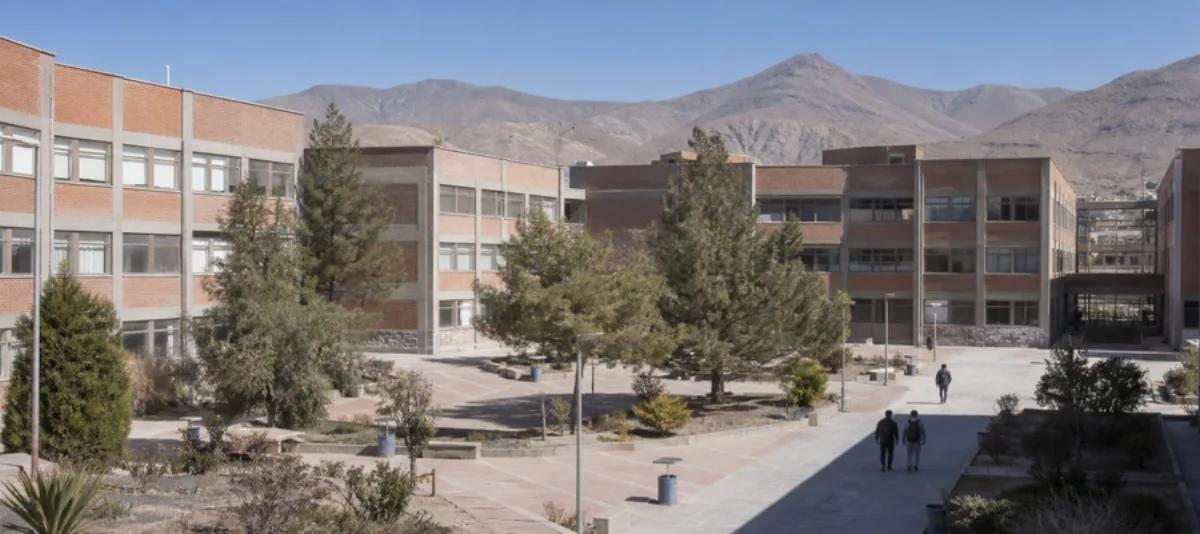
The Rectorado and central offices are on Av. 6 de Octubre 5715, in the city centre. The FNI's carreras work out of the Ciudadela Universitaria (Av. Dehene; Industrial Engineering, for example, is in the "Bloque Industrial"). Other faculties have their own buildings around the city. Oruro sits at about 3,700 m on the altiplano. It is windy and cold, with freezing winter nights and strong sun. Carnaval de Oruro (UNESCO heritage) takes over the city every February–March and overlaps with the start of the academic year.
Exchange programs
UTO has a Dirección de Relaciones Nacionales e Internacionales, Convenios y Becas, but it publishes little about inbound exchange. Information pending on current partner universities and how incoming students apply — contributions welcome. The practical route is a bilateral agreement or a Bolivian-network programme negotiated by your home university.
Admissions
Admission is by curso preuniversitario, examen de ingreso directo (with a complementary exam about two weeks later), or admisión especial (academic excellence, sport, olympiads, second degree). Pre-university course approval is valid only for the faculty and seat where it was taken. In 2024 UTO had 8,381 applicants and 4,948 new enrolees, which puts the effective admission rate near 59%. This is our calculation from the yearbook, not an official rate.
Foreign degree-seekers need a legalised or apostilled secondary diploma and birth certificate. They must also convert the 60-day Bolivian student visa into a DIGEMIG permanencia temporal de estudiante (1–3 years, renewable).
Student housing
There are no residences. Rooms for students are advertised from about Bs 350 a month with shared bathroom and kitchen and water and electricity included (about €28). Rooms with a private bathroom or small studios (garzonieres) go for Bs 700–800. Heating is rarely included, so ask.
Career services
Links to mining and regional industry run through pasantías and trabajo dirigido at carrera level. Some FNI carreras, such as Industrial Engineering, run their own bolsa de trabajo (job board) and an entrepreneurship centre. Information pending on a university-wide careers service — contributions welcome.
Academic programs
- Mining Engineering
- Metallurgical Engineering
- Geological Engineering
- Civil Engineering
- Mechanical Engineering
- Electrical Engineering
- Chemical Engineering
- Industrial Engineering
- Systems Engineering
- Law
- Economics
- Business Administration
- Medicine
- Nursing
- Dentistry
- Architecture
- Agronomy
- Veterinary Medicine
Application deadlines
- fall: Curso preuniversitario and examen de ingreso directo per faculty from late in the previous year; admitted lists for 1/2026 published early 2026
- spring: Semester-plan carreras run a second intake mid-year (dates per faculty convocatoria)
Exchange
Handled by the Dirección de Relaciones Nacionales e Internacionales, Convenios y Becas; small-scale regional mobility. Parlamento Andino network member. Teaching in Spanish.
Next steps
Sources
- rtvu.uto.edu.bo/2026/03/25/uto-registra-mas-de-28-mil-estudiantes-matriculados-e
- uto.edu.bo/wp-content/uploads/2025/10/Estadisticas-Universitarias-2024.pdf
- uto.edu.bo/wp-content/uploads/2025/10/r6.pdf
- uto.edu.bo/wp-content/uploads/2025/10/PDE-29julio-1.pdf
- uto.edu.bo/facultad-nacional-de-ingenieria/
- industrial.fni.uto.edu.bo/Universidad-Tecnica-de-Oruro
- lexivox.org/norms/BO-L-18921015.xhtml
- topuniversities.com/latin-america-south-america-rankings?countries=bo&order_by=a
- bo.infoanuncios.com/cuartos-en-alquiler-para-estudiantes-F150AC70013D2
- consulados.cancilleria.gob.bo/base/visas/