Universidad del Magdalena
Quick facts
- City
- Santa Marta
- Country
- Colombia
- Type
- Public
- Founded
- 1958
- Students
- 29,810
- Tuition (local students)
- COP 0
- Guide score
- 7.0/10
Official website: www.unimagdalena.edu.co
Overview
The Universidad del Magdalena (Unimagdalena) is the public university of the Magdalena department, based in Santa Marta on the Caribbean coast. It was created by Ordenanza 005 of 27 October 1958 and began classes on 10 May 1962 with Agronomía. MEN figures compiled by El Observatorio de la Universidad Colombiana put it at 29,810 students in 2025, one of the larger regional publics.
It first received CNA institutional accreditation in 2016. This was renewed by Resolución 010288 of 4 June 2021 for six years (to 2027). In the Scimago Institutions Rankings 2026 it is placed 8,280th worldwide. It has appeared in older QS Latin America editions at 301–350. No current U-Sapiens position was confirmed.
Academic programs
Six faculties (Educación, Salud, Empresariales y Económicas, Ciencias Básicas, Humanidades, Ingeniería) run about 35 in-person undergraduate programmes, plus distance and postgraduate offerings. Accredited programmes include:
- Ingeniería Agronómica and Ingeniería Pesquera;
- Administración de Empresas and Economía (Economía renewed in October 2025);
- Enfermería and Biología;
- Cine y Audiovisuales, rare in Colombia.
Antropología and Medicina (created 1999) are also offered, and Ingeniería Energética was added in 2025. Location shapes research: the Sierra Nevada, the Ciénaga Grande and the Caribbean coast feed strong marine, fisheries and environmental work. Teaching is in Spanish.
Tuition: each student's fee is calculated individually by stratum and household income, using the university's online estimator. For eligible Colombians, the "Puedo Estudiar" / national gratuidad scheme covers net tuition, so eligible local students pay nothing. Foreign degree students need a valid student visa and a cédula de extranjería and are not covered by gratuidad; ask admissions for your liquidation.
Campus life
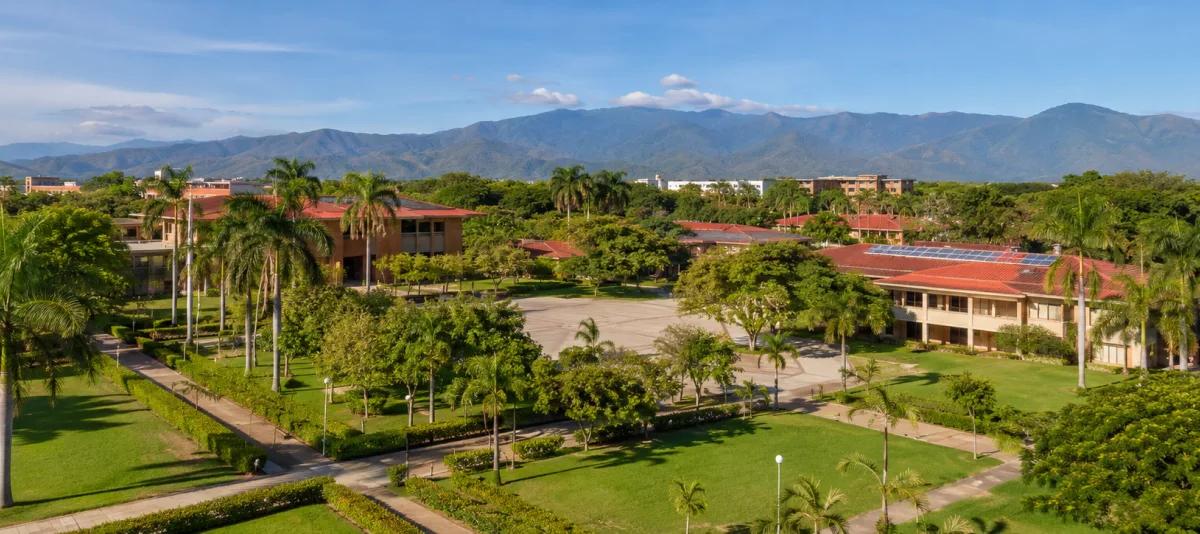
The main campus sits in the south of Santa Marta, on the road toward the airport and Rodadero. It is a spread-out, green site with sports fields, and the city's heat is part of daily life. Beaches, Taganga, Minca and Tayrona National Park are close, which makes weekends unusually good. Bienestar runs sports, culture and support services. The Centro Histórico and Rodadero provide nightlife.
Exchange programs
The ORI (Oficina de Relaciones Internacionales, created 2003; Edificio Mar Caribe; relinternacional@unimagdalena.edu.co) handles incoming students. Your home university nominates you. You must obtain a PID entry stamp (visa-exempt stays of up to 180 days) or a Visa V Estudiante before enrolling. Partners are concentrated in Latin America and the Caribbean, and field-heavy programmes (marine biology, agronomy, anthropology) suit visiting students best.
Admissions
Degree applicants need Saber 11 with a minimum of 180 out of 500, pay a registration PIN (COP 124,500 in 2026), and are interviewed. For 2026-II, 1,767 applicants were interviewed; no admitted-to-applicant ratio is published, so the acceptance rate is null. Foreign bachilleratos must be apostilled and convalidated with the MEN.
Student housing
Unimagdalena offers free residences for low-income students: Los Laureles, opened in 2026 with 38 places in a building seized from drug traffickers, and La Bolivariana (2025). Places are means-tested and scarce. Private rooms near campus cost about COP 400,000–630,000 per month.
Career services
Graduates feed the region's ports, tourism, agro-industry and public health system, and faculties coordinate prácticas. We found no published employment statistics: Information pending — contributions welcome.
Academic programs
- Medicine
- Nursing
- Agronomic Engineering
- Fisheries Engineering
- Environmental Engineering
- Energy Engineering
- Biology
- Anthropology
- Film and Audiovisual Studies
- Business Administration
- Economics
- Law
- Education (Licenciaturas)
- Masters and Doctoral programmes
Application deadlines
- fall: Semester 2026-II presencial registration closed 18 June 2026, interviews 7 to 10 July, final admitted list 23 July
- spring: Semester 2026-I registration until 22 December 2025 plus 6 to 15 January 2026, classes from February
Exchange
Parlamento Andino partner; the ORI (relinternacional@unimagdalena.edu.co) hosts students nominated by partner universities in the Caribbean and Latin America, with strong marine and environmental research links.
Next steps
Sources
- seguimiento.co/magdalena/acreditacion-de-alta-calidad-de-la-unimagdalena-fue-ren
- unimagdalena.edu.co/UnidadesOrganizativas/informacionInstitucional/14?entrada=1&
- revista7.co/unimagdalena-entrevista-a-1-767-personas-en-el-proceso-de-admision-a
- admisiones.unimagdalena.edu.co/filecomp/presencial/inscripciones/Normatividad/In
- admisiones.unimagdalena.edu.co/filecomp/publicaciones/pdf/2026/Circular_Derechos
- scimagoir.com/institution.php?idp=1929
- unimagdalena.edu.co/UnidadesOrganizativas/Direccion/18
- unimagdalena.edu.co/PresentacionMicrositio/Micrositios/3098
- elheraldo.co/magdalena/2026/03/18/edificio-incautado-por-la-sae-a-narcos-es-ahor
- unimagdalena.edu.co/PresentacionPrograma/InformacionInstitucional/8108?entrada=4
- universidad.edu.co/las-50-ies-mas-grandes-del-pais-por-numero-de-estudiantes-en-
- cancilleria.gov.co/v/estudiante