Bucaramanga, Colombia
Quick facts
- Country
- Colombia
- Population
- 620,000
- Languages
- Spanish
- Currency
- COP
- Time zone
- COT (UTC-5)
- Guide score
- 6.2/10
- Safety
- 7/10
Overview
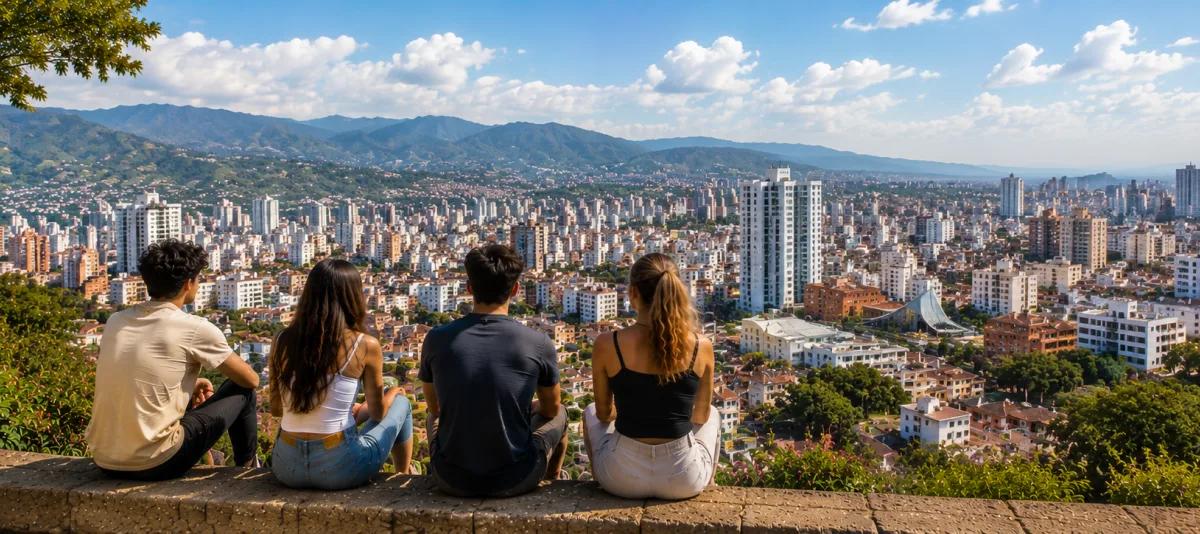
Bucaramanga is Colombia's "City of Parks" — a mid-sized metropolis of 620,000 people (1.2 million in the metropolitan area) perched on a plateau at 959 meters above sea level in northeastern Colombia's Santander department. It's one of Colombia's best-kept secrets for students: an extremely affordable, remarkably safe, and pleasantly warm city with a high quality of life that consistently ranks among the best in the country. What it lacks in international glamour it makes up for in genuine livability, stunning natural surroundings (canyons, rivers, and mountains), and a strong university presence.
The city's metropolitan area (including Floridablanca, Girón, and Piedecuesta) hosts several important universities: Universidad Industrial de Santander (UIS, one of Colombia's top public universities for engineering), Universidad Autónoma de Bucaramanga (UNAB), Universidad de Santander (UDES), and Universidad Santo Tomás. The student population is substantial relative to the city's size, creating a lively campus culture. However, the international student community is small — this is a deeply Colombian experience with minimal tourist infrastructure, making it ideal for serious language immersion.
Student life
Student life in Bucaramanga is centered around its universities and the neighborhoods that surround them. UIS has a large, active campus with student organizations, sports teams, cultural groups, and events. The city's affordable cost of living means students can enjoy a comfortable lifestyle without financial stress — eating out, going to the gym, and socializing are all accessible on a modest budget.
The social scene is genuine and local — don't expect many English speakers or international student meetups. Instead, you'll integrate into Colombian friend groups through university classes, study groups, and shared activities. The city's parks (over 150 of them) serve as natural gathering points — Parque de los Niños, Parque San Pío, and Parque del Agua are popular student hangouts. Adventure sports culture is strong: paragliding from the Chicamocha Canyon, caving, rafting on the Chicamocha and Fonce rivers, and hiking are all accessible within 1–2 hours. Weekend trips to San Gil (Colombia's adventure sports capital, 2 hours away) are a student staple.
Neighborhoods
Cabecera del Llano is the most popular area for students and young professionals — a vibrant commercial and residential neighborhood with modern amenities, shopping centers (Centro Comercial Cabecera), restaurants, and nightlife. It's walkable, safe during the day, and well-connected. One-bedroom apartments: 1,000,000–1,800,000 COP (€230–410/month); rooms in shared apartments: 400,000–700,000 COP (€90–160/month).
Sotomayor is a quieter residential neighborhood with a local feel — good for students who prefer calm surroundings and proximity to the city center without the commercial bustle. Safe for walking, affordable, and authentic. Rooms: 350,000–600,000 COP (€80–135/month); apartments: 800,000–1,400,000 COP (€180–320/month).
San Francisco / Centro is the traditional downtown area with markets, historic buildings, and the lowest prices. Budget-friendly but louder and busier. Rooms from 300,000–500,000 COP (€68–115/month). Safe during daylight hours but exercise caution at night.
Real de Minas / Cañaveral are northern neighborhoods closer to shopping malls and newer development — modern buildings, good security, and a suburban feel. Apartments: 900,000–1,600,000 COP (€205–365/month). Good if you prefer newer construction and don't mind being slightly further from the university campuses.
UIS area (Ciudad Universitaria) — the immediate surroundings of the UIS campus are the most budget-friendly option for students at that university. Rooms in shared houses from 300,000–500,000 COP (€68–115/month). Basic but social, with cheap food options and a student community feel.
Food & restaurants
Bucaramanga's food culture is distinctly Santandereano — hearty, meat-heavy, and uniquely Colombian. The city is famous for its hormigas culonas (roasted large ants — a regional delicacy), cabrito (roasted goat), mute santandereano (a thick bean and tripe soup), and arepa santandereana (thinner and crispier than other regional arepas). The almuerzo corriente here is one of the cheapest in Colombia: 10,000–15,000 COP (€2.30–3.40) for a full set lunch.
Street food is excellent and incredibly cheap: empanadas (2,000–3,000 COP), arepas (2,500–4,000 COP), and obleas (2,000–3,000 COP). The Cabecera area has the best concentration of restaurants, from local corrientazos to international options. Mercado Central and Mercado San Francisco offer fresh produce at very low prices. For a treat, Restaurante Club del Comercio serves traditional Santandereano cuisine in a classic setting; Tony Roma's and other chains are in the malls.
Groceries are very affordable at D1, Ara, and Éxito. A monthly grocery budget of 400,000–600,000 COP (€90–135) covers a single person comfortably. Coffee is exceptionally good and cheap — Santander is a coffee-producing region, and a tinto costs 1,500–3,000 COP at local cafés.
Nightlife & entertainment
Bucaramanga's nightlife is modest compared to Bogotá, Medellín, or Cali — it's not a party city. However, there's enough to keep students entertained, concentrated mainly in Cabecera del Llano and the Zona Rosa along Carrera 33.
The Zona Rosa has a mix of bars, small clubs, and lounges. Weekends see students gathering at bars along Carrera 33 and Calle 48–52 for drinks and crossover music (a mix of reggaeton, vallenato, and electronic). Cover charges are low (10,000–20,000 COP / €2.30–4.50) and beer is cheap (5,000–10,000 COP / €1.15–2.30). The nightlife peaks Thursday–Saturday with most venues closing around 2–3 AM.
For cultural entertainment, the city has several theaters and cinemas. Cine Colombia at Centro Comercial Cacique shows new releases (around 18,000–20,000 COP per ticket). The Teatro Santander and Teatro UNAB host concerts, plays, and cultural events throughout the year. Weekend day-trips are the main entertainment draw — San Gil for adventure sports, Mesa de los Santos for cool-climate villages, and Chicamocha National Park for the canyon views and cable car.
Transport
Bucaramanga's public transport relies mostly on conventional bus routes plus Metrolínea (SITME), a small bus rapid transit system with stations such as Provenza, UIS and Centro — there is no metro. The city is compact enough that most daily needs can be met with short bus rides or walking.
Buses: In 2026 both conventional buses and Metrolínea charge 3,000 COP (~€0.68) for short routes and 3,600 COP (~€0.82) for long intermunicipal routes. Routes cover the metropolitan area (Bucaramanga, Floridablanca, Girón, Piedecuesta) but service can be irregular, especially at night and on weekends, and Metrolínea runs with limited coverage.
Alternative transport:
- Taxis are metered and affordable (minimum fare 9,100 COP, or 10,200 COP at night; airport minimum 21,000 COP)
- Uber, DiDi, and InDriver work well and are very cheap (5,000–10,000 COP for most rides)
- Walking is feasible within neighborhoods — the city is relatively flat in the central areas
- The city is compact enough that you rarely need transport for more than 20 minutes
Monthly transport budget: 100,000–160,000 COP (€23–36) for daily bus commutes, or less if you live near campus and walk. No official student transport discount exists.
Intercity travel: The Terminal de Transporte connects Bucaramanga to other Colombian cities by bus. Bogotá is ~8 hours by road; San Gil ~2.5 hours. The Palonegro airport (BGA) has domestic flights to Bogotá, Medellín, and other cities.
Cost of living
Bucaramanga is one of the cheapest cities in Colombia for students — significantly more affordable than Bogotá, Medellín, or even Cali. A comfortable student life is possible on 1,500,000–2,500,000 COP (€340–570/month), making it one of the most budget-friendly options in Latin America.
Monthly breakdown:
- Room in shared apartment: 350,000–700,000 COP (€80–160)
- Rent (1BR apartment): 800,000–1,600,000 COP (€180–365)
- Groceries: 400,000–600,000 COP (€90–135)
- Transport: 100,000–160,000 COP (€23–36)
- Utilities (water, electricity, gas): 150,000–280,000 COP (€34–64)
- Internet (50+ Mbps): 75,000–130,000 COP (€17–30)
- Dining out: 200,000–350,000 COP (€45–80)
- Gym membership: 80,000–120,000 COP (€18–27)
- Mobile phone: 30,000–50,000 COP (€7–11)
- Entertainment: 100,000–200,000 COP (€23–45)
- Cinema ticket: 18,000–20,000 COP (~€4.10–4.50)
The extremely low food costs (almuerzos corrientes from 10,000 COP) and affordable rent make Bucaramanga ideal for students on tight budgets who don't need big-city amenities.
Safety
Bucaramanga is considered one of the safest cities in Colombia — significantly safer than Bogotá, Medellín, or Cali. Violent crime rates are low, and the general atmosphere is calm and family-oriented. Students can expect to feel comfortable in most areas during the day.
Safety notes:
- Cabecera, Sotomayor, Real de Minas, and Cañaveral are safe neighborhoods for students
- The city center (San Francisco) is safe during daytime but exercise normal caution at night
- Petty theft exists but is less common than in larger Colombian cities
- Standard precautions apply: keep valuables concealed, use ride-hailing apps at night, avoid isolated areas after dark
- The overall atmosphere is notably more relaxed and secure than other Colombian cities of similar size
The smaller size and strong community fabric contribute to safety. Emergency number: 123. Local police are present and generally responsive.
Weather & climate
Bucaramanga has a pleasant warm tropical climate with an average temperature of 24°C year-round. Its elevation (959m) keeps it from being as hot as coastal cities while remaining warmer than highland cities like Bogotá.
Temperature: Average highs of 28–30°C and lows of 19–21°C year-round. Minimal seasonal variation — consistently warm and comfortable. The heat is dry rather than humid, making it more tolerable than coastal cities.
Rainfall: Two wetter periods (March–May and September–November) and two drier periods (December–February and June–August). Annual rainfall is approximately 1,100mm. Rains are typically short afternoon showers.
What to pack: Light clothing for warm days, a light jacket for air-conditioned spaces or occasional cooler evenings. Rain jacket or umbrella for wet season months. Sunscreen and sunglasses are essential — the sun is strong year-round. No need for any cold-weather gear.
Microclimate: The nearby municipality of Floridablanca (part of the metro area) is slightly cooler due to higher elevation. Mesa de los Santos (45 min away) offers a cool mountain climate (18°C average) for weekend escapes from the heat.
Universities in Bucaramanga
Other cities in Colombia
Next steps
Sources
- elespectador.com/colombia/mas-regiones/pasaje-bucaramanga-2026-la-tarifa-en-los-
- elfrente.com.co/metrolinea-actualiza-las-tarifas-del-sitme/
- vanguardia.com/area-metropolitana/bucaramanga/2026/01/05/asi-quedaron-las-tarifa
- caracol.com.co/2026/01/05/atentos-asi-quedo-la-tarifa-del-transporte-publico-en-
- telencuestas.com/censos-de-poblacion/colombia/2026/santander/bucaramanga
- numbeo.com/cost-of-living/in/Bucaramanga