Maastricht, Netherlands
Datos rápidos
- País
- Netherlands
- Habitantes
- 126.017
- Idiomas
- Dutch, English
- Moneda
- EUR
- Zona horaria
- CET (UTC+1)
- Nota media de la guía
- 7,8/10
- Seguridad
- 8/10
Resumen
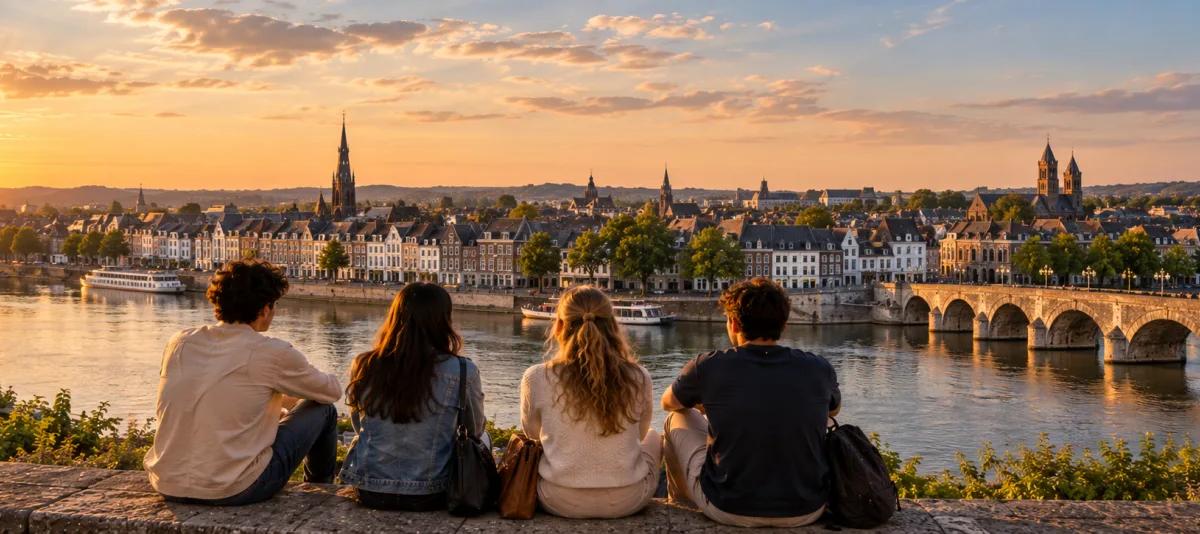
Maastricht is the southernmost major city in the Netherlands and the capital of the province of Limburg, sitting on the Meuse where the country meets Belgium and Germany. The municipality had 126,017 inhabitants on 1 January 2026, a provisional CBS figure. Unlike the flat canal cities of the Randstad, the centre is old, hilly and stone-built, with the river splitting the historic core from the station side.
For students it is a small, very international city. Maastricht University and Zuyd University of Applied Sciences draw a large share of the population, and English is routine in cafés, shops and housing searches. The city is compact enough to cross on a bike, with trains onward to the rest of the Netherlands and direct regional trains to Liège and Aachen. Housing is tighter than the size of the city suggests, and cheaper than Amsterdam, but you still need a room before you travel.
Vida estudiantil
Student life is the centre of the city rather than a campus on the edge. Maastricht University spreads across the inner city (faculties around the Jeker and Minderbroedersberg) and Randwyck in the south, next to the university hospital. Zuyd Hogeschool adds a large applied-sciences student body. There is no single enclosed campus, so evenings happen in the centre, in Wyck and in student houses rather than inside a gate.
The student population is unusually international for a Dutch city of this size, which makes the first weeks social and English-speaking. Study associations, sports clubs and the carnival season do more of the social work than big-city clubbing. A bike is still the default, but expect hills and cobbles, not the flat paths of Rotterdam. Register with the municipality for a BSN soon after arrival, and with a local GP. The practical student guide used by the university is mymaastricht.nl.
Barrios
Binnenstad and Jekerkwartier: The historic centre west of the Meuse, around the Vrijthof, the Markt and the Jeker. Beautiful, walkable and close to several faculties. Rooms here are among the most sought after.
Sint Pieter and the south-west: Quieter streets toward the Sint Pietersberg hill. Pleasant and residential, a bike ride uphill from the centre.
Wyck: Between Maastricht station and the Sint Servaas bridge. Cafés, small shops and restaurants, and the first neighbourhood you walk into off the train. Lively without being the old fortified core.
Céramique: Next to Wyck, on the site of the old pottery works. Modern housing, the library at Centre Céramique, Plein 1992 and the Bonnefantenmuseum along the river.
Randwyck: South of the centre, around Maastricht Randwyck station, the hospital (MUMC+) and university buildings. This is where a lot of purpose-built student housing sits. Buses and a short train hop link it to the station.
Further out (Malberg, Pottenberg, Caberg, Heer, Amby, De Heeg): More ordinary residential districts. Usually easier on rent, with Arriva buses into the centre and the station. Neighbouring Belgian and Dutch towns are a backup when the city itself is full.
Maastricht Housing is the shared portal for the university, Zuyd and the Jan van Eyck Academy. Registration is a one-time fee of €35. The university says affordable rooms are short and tells students to start well before arrival, and not to pay a deposit before a real viewing. Huurteam Zuid-Limburg can check a rent or a contract. A 2026 student-housing guide puts a room at roughly €450–€750 a month depending on size and whether utilities are included. That is a market range, not an official tariff, and the city centre and south-west tend to sit at the top of it.
Comida y restaurantes
Maastricht eats more like a Belgian and French border city than like the Randstad. The Markt and the streets of Wyck (Rechtstraat, Wycker Brugstraat) are full of cafés, frites and long lunches. Limburgse vlaai, the local fruit pie, is everyday food, and Belgian beer is easier to find than in most Dutch cities. The Bonnefanten and Céramique side of the river has a smaller, more designed set of restaurants.
Supermarkets are the usual Dutch ones: Albert Heijn, Jumbo, Lidl and Aldi. Maastricht University points students to the 2024 Nibud national student survey, adjusted for earlier inflation, which puts groceries at about €272 a month. That figure is a national average, not a Maastricht checkout, but it is a sane planning number if you cook. Eating out in the centre costs more than a canteen meal. Self-catering plus the occasional terrace is how most students stay inside a budget.
Vida nocturna y ocio
The going-out scene is café-led rather than a big club circuit. Wyck and the streets around the Markt and the Vrijthof fill up on Thursday and weekend nights. Carnival, locally Vastelaovend, takes over the whole centre for several days before Lent and is the city’s defining party, with costumes, dialect and street bars. Outside that week the nights are smaller and earlier than in Rotterdam or Amsterdam.
Culture is stronger than the size of the city suggests. The Bonnefantenmuseum, the theatre in the old Céramique factory hall, and TEFAF, the international art fair, sit alongside student nights and free events on the squares. In summer the terraces on the Meuse and the Vrijthof are the default plan. Student discounts show up at museums and at some venues. Ask locally, because they are not one national card.
Transporte
Arriva runs the buses in Limburg and the regional trains toward Heerlen, Roermond, Liège and Aachen. City lines cross the centre and the station and continue to Randwyck, the hospital and the outer neighbourhoods. You can check in with a contactless bank card or phone (OVpay), with an OV-chipkaart, or buy a ticket from the driver. For 2026 the province set the boarding fare at €1.16 and the bus price at about €0.22 per kilometre. Dutch students with a DUO student travel product still use the OV-chipkaart for that product. A second-hand bike matters more than a monthly transit pass if you live in town, but lock it well and be ready for hills.
Maastricht station is on the edge of Wyck. NS intercity trains run north toward Eindhoven, Utrecht and Amsterdam, a bit over two hours to Amsterdam. Arriva’s fast regional train links Maastricht Randwyck and the main station with Liège-Guillemins and Aachen, so a weekend in Belgium or Germany is a normal plan, not a trip. Maastricht Aachen Airport is a small regional field in Beek. For long-haul flights, Brussels, Düsseldorf and Amsterdam Schiphol are the practical airports, all by train. A car is unnecessary inside the city.
Coste de vida
Monthly budget for a student in Maastricht:
- Room: roughly €450–€750, from 2026 housing guides. Utilities may or may not be included. The centre costs more than outer districts.
- Groceries: about €272 on the national Nibud student line that Maastricht University publishes
- Health insurance: about €50–€60 if you stay on student or EHIC cover and do not work. About €156 on that same Nibud line if you need Dutch basic insurance because you work
- Transport: a second-hand bike plus occasional Arriva or NS trips. The Nibud line for transport is €67
- Phone and internet: about €20–€55
- Going out: highly personal. The Nibud leisure line is €238 and many students spend less
- Total: often about €1,000–€1,400 if the room is in the middle of that range
Maastricht University’s published table adds up to roughly €1,460 and is a national student average, including a rent line of €561. Use it as a ceiling check, then replace the rent line with whatever you actually sign. Non-EU students should also budget the 2026 IND fee and the proof-of-funds amount set at national level, plus the €35 Maastricht Housing registration. Do not transfer a deposit before you have seen the room.
Seguridad
Maastricht is a generally safe student city. Violent crime against students is uncommon, and the centre is busy rather than deserted in the evening. The usual problems are bike theft and pickpocketing in crowds, especially around the station, the Markt and during carnival. Use two locks on the bike. Some outer estates are quieter at night. Normal urban awareness is enough.
The emergency number is 112. For a dispute about rent, Huurteam Zuid-Limburg is the local place to start, not the police. Register your address with the municipality. An unregistered room can block your BSN, your bank account and your insurance.
Clima
Maastricht has a temperate climate with rain in every season, but it is less of a North Sea city than Rotterdam. Winters are cool and damp, often around a few degrees above freezing, with short days and occasional frost in the river valley. Springs are mild and changeable. Summers are pleasant and a little warmer than on the coast, with long evenings on the squares. Autumn is wet and windy.
The difference students notice is the landscape, not a different season. The Sint Pietersberg and the surrounding Limburg hills mean cycling in the rain is uphill, and a waterproof jacket still matters from October to April. The driest, easiest months to arrive and explore are late spring through early autumn.
Otras ciudades de Netherlands
Siguientes pasos
Fuentes
- cbs.nl/nl-nl/maatwerk/2026/11/voorlopige-bevolkingsaantallen-per-gemeente-1-1-20
- ad.nl/maastricht/maastricht-voor-het-vijfde-jaar-op-rij-gegroeid-bijna-500-inwon
- maastrichtuniversity.nl/study/student-life/housing-maastricht
- maastrichtuniversity.nl/study/student-life/cost-studying-financial-assistance
- maastrichthousing.com/
- dutchstudenthousing.nl/guides/city/maastricht
- maastrichtbereikbaar.nl/en/how-do-i-travel/i-take-public-transport/i-take-bus
- visitmaastricht.com/en/doing/city-districts/wyck
- limburg.bestuurlijkeinformatie.nl/Document/View/243d102a-c3e9-4e5f-b1cf-2020c6be