Tecnológico de Antioquia
Quick facts
- City
- Medellín
- Country
- Colombia
- Type
- Public
- Founded
- 1983
- Students
- 21,089
- Tuition (local students)
- COP 0
- Guide score
- 6.9/10
Official website: www.tdea.edu.co
Overview
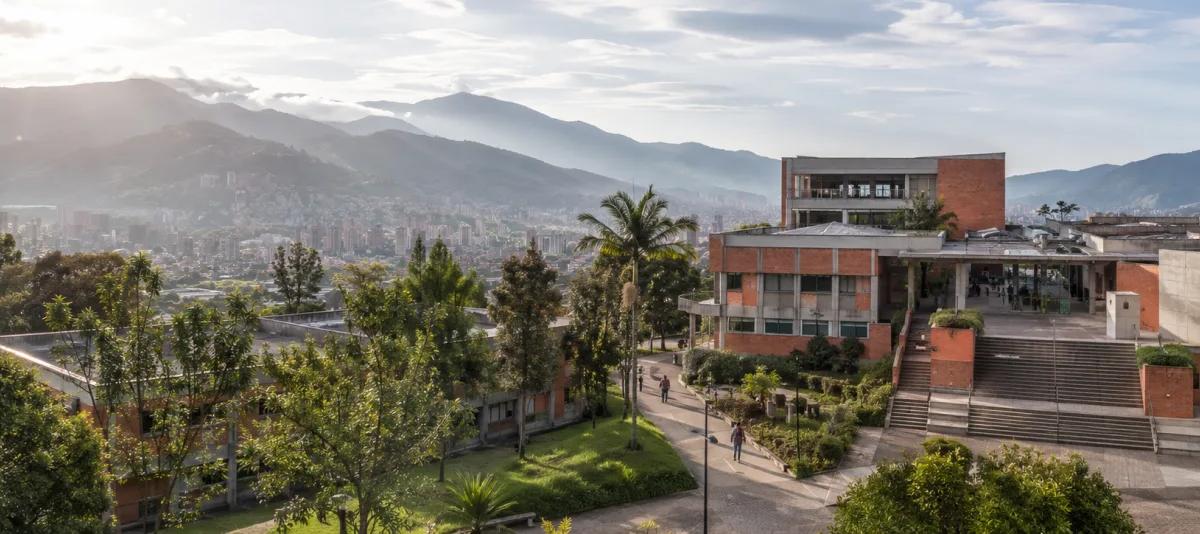
The Tecnológico de Antioquia (TdeA) is a public *institución universitaria* run by the Department of Antioquia. It grew out of the CEFA school and was created by Decreto 262 of 1979. Classes began on 14 March 1983, and it gained institución universitaria status in 2008. Its main campus has been in Robledo, northwest Medellín (Calle 78B #72A-220), since 1999. There is a second campus in Itagüí (Aburrá Sur) and a site in Copacabana. MEN figures compiled by El Observatorio de la Universidad Colombiana put enrolment at 21,089 students in 2025.
TdeA holds CNA institutional accreditation. It was first granted in 2016 and renewed by Resolución 13167 of 17 July 2020 for eight years (to 2028). The institution is now self-evaluating for a third accreditation. Its student body is overwhelmingly working and lower-middle class: in 2020, 98.74% came from strata 1–3. We found no U-Sapiens or Scimago position.
Academic programs
Five faculties cover:
- Ciencias Administrativas y Económicas;
- Educación y Ciencias Sociales;
- Derecho y Ciencias Forenses, with a well-known Criminalística programme as well as Derecho;
- Ingeniería (Software, Agronómica, Ambiental);
- Ciencias Básicas.
The offer spans técnico, tecnología and professional levels, up to doctorates in Educación y Estudios Sociales and in Economía y Finanzas. Teaching is in Spanish, in semesters starting in February and August.
Fees are pegged to the minimum wage (SMMLV, COP 1,750,905 in 2026) per semester:
| Level | Per semester |
| --- | --- |
| Most professional programmes | 2 SMMLV (COP 3,501,810) |
| Derecho, Software and Agronómica | 2.5 SMMLV |
| Tecnologías | 1.5 SMMLV |
| Técnicos | 1.25 SMMLV |
Under the national Política de Gratuidad, eligible Colombian undergraduates pay only about COP 39,000; local tuition is shown as 0 on that basis. Foreigners do not qualify for gratuidad; the list price is the realistic reference, but confirm it with admissions.
Campus life
Robledo is a busy, dense campus of numbered blocks (bloques). It sits in a residential university district shared with other institutions such as the Pascual Bravo and ITM. Bienestar offers sports, culture, health and psychological support. The Metro and Metroplús network makes the rest of the Aburrá Valley reachable. Medellín's nightlife in El Poblado and Laureles is a longer ride.
Exchange programs
The Internationalization office (Bloque 6, office 116) handles incoming students. Partners are in Peru, Mexico (UAS), Portugal, South Korea, Paraguay, Costa Rica and Chile (Universidad Técnica Federico Santa María). TdeA also takes part in PALOMA and Alianza del Pacífico mobility; the 2027-1 exchange call was open in 2026. Tuition is waived under the agreement. Incoming students pay only about USD 15 for their student card and insurance, and are assigned a tutor plus a "Partner TdeA" buddy.
Admissions
Degree applicants need Saber 11, or an ICFES-recognised foreign equivalent, and a bachillerato apostilled and convalidated with the MEN. The registration fee is COP 17,400. No acceptance data is published. Stays of more than 180 days, or nationals who need a visa, require the Cancillería Visa V Estudiante, backed by an admission letter, health insurance and six months of bank statements.
Student housing
TdeA has no residences. Private rooms around Robledo and nearby Laureles typically cost COP 630,000–720,000 per month. Rooms closer to El Poblado cost noticeably more.
Career services
Graduate and internship support runs through the institution's graduates office and the faculties' práctica coordinators. Criminalística and accounting graduates feed public agencies and firms in the Valle de Aburrá. We found no published employment statistics: Information pending — contributions welcome.
Academic programs
- Business Administration
- Public Accounting
- Law
- Criminalistics
- Software Engineering
- Agronomic Engineering
- Environmental Engineering
- Education (Licenciaturas)
- Social Sciences
- Technology and technical programmes
- Doctorate in Education and Social Studies
- Doctorate in Economics and Finance
Application deadlines
- fall: Semester 2026-2 registration 26 March to 1 June 2026, admitted list 25 June, classes 3 August
- spring: Semester 2027-1 registration expected from about September 2026, classes from February (check tdea.edu.co/aspirantes)
Exchange
Active partner in the Parlamento Andino / Uniwords network; the Internationalization office receives students under bilateral agreements, PALOMA and Alianza del Pacífico, with tuition waived per agreement and a Partner TdeA buddy.
Next steps
Sources
- tdea.edu.co/sobre-el-tdea/
- tdea.edu.co/tramites/guia-aspirantes-nuevos-pregrado/
- tdea.edu.co/aspirantes/
- tdea.edu.co/programas-profesionales/
- tdea.edu.co/micrositios/internacionalizacion/
- tdea.edu.co/laautoevaluacionpuntodepartidahacialaterceraacreditacioninstituciona
- oai.usm.cl/destino/tecnologico-de-antioquia/
- universidad.edu.co/las-50-ies-mas-grandes-del-pais-por-numero-de-estudiantes-en-
- compartoapto.com/en-arriendo-medellin/habitacion-privada/H1801241126195
- cancilleria.gov.co/v/estudiante