Munich, Germany
Quick facts
- Country
- Germany
- Population
- 1,612,000
- Languages
- German, English
- Currency
- EUR
- Time zone
- CET (UTC+1)
- Guide score
- 7.7/10
- Safety
- 9/10
Overview
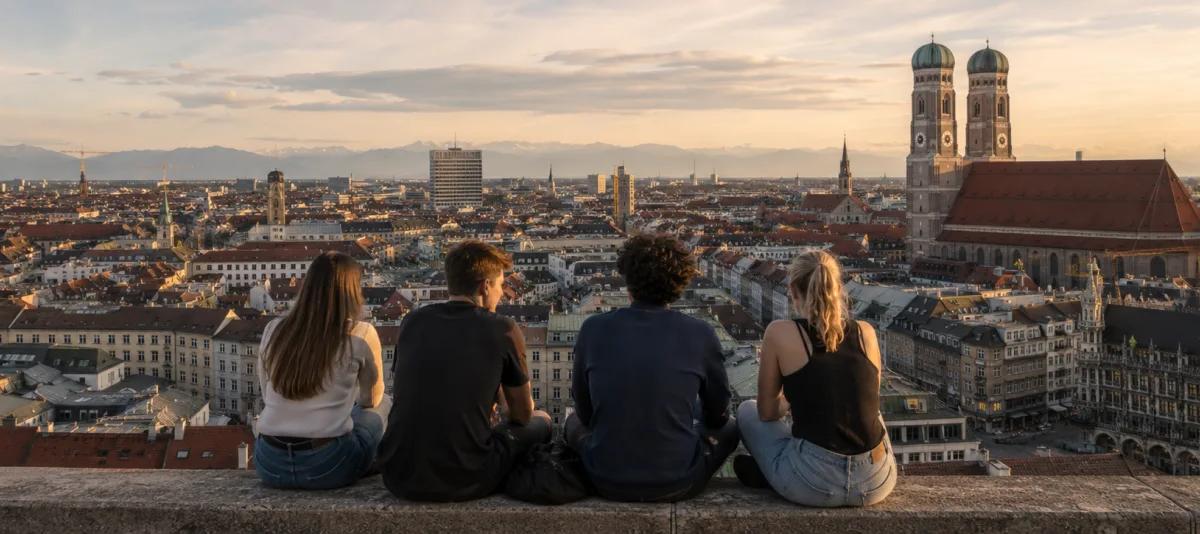
Munich (München) is the capital of Bavaria and one of Germany's most prosperous, beautiful, and desirable cities — home to about 1.6 million people at the foot of the Alps. It's a global centre for engineering, technology, and research, headquarters to companies like BMW, Siemens, and Allianz, and home to two of Germany's best universities: the Technical University of Munich (TUM), 25th in the world and the top university in the EU in the QS World University Rankings 2027, and Ludwig Maximilian University (LMU).
For students, Munich offers world-class academics, exceptional job prospects, superb quality of life, and the Alps and Bavarian lakes right on the doorstep. The trade-off is cost: Munich is by far Germany's most expensive student city, with a median WG room of about €850 a month versus €650 in Berlin, and a fiercely competitive housing market. It blends traditional Bavarian culture (beer gardens, Oktoberfest, lederhosen) with cutting-edge industry, and it's safe, clean, and impeccably organized — if you can find (and afford) somewhere to live.
Student life
Munich's student life is anchored by TUM and LMU, whose central campuses put tens of thousands of international students in the heart of the city. The academic culture is rigorous and prestigious, especially in engineering and the sciences at TUM. Student associations, the Studierendenwerk's many canteens, and university sports (ZHS) offer plenty of ways to connect, and the international community is large.
Bavarian outdoor culture defines free time: cycling everywhere, swimming in the Isar river and nearby lakes in summer, watching (or joining) the surfers on the famous standing wave at the Eisbach in the English Garden, and heading to the Alps for hiking and skiing in winter (the mountains are barely an hour away). Beer gardens are central to social life from spring to autumn, and Oktoberfest is a once-a-year spectacle. The vibe is more polished, traditional, and affluent than freewheeling Berlin — Munich pairs a high standard of living with a slightly more conservative, orderly feel.
Neighborhoods
Maxvorstadt (top of the market, often €900+/mo for a room): The prime student district — LMU, TUM, and museums are all here — central, safe, and in-demand, so the most expensive and hardest to find.
Schwabing (upper end of the market): Historic bohemian quarter next to the English Garden, lively and desirable.
Sendling (mid-range by Munich standards): South of the centre, well-connected (U3/U6), with a good local feel.
Giesing (mid-range by Munich standards): South and increasingly popular, with cafés and somewhat lower prices than the centre.
Pasing / Laim / Neuperlach / Moosach (lower end, closer to the €550 bottom quarter of the market): Outer districts with lower rents and good S-Bahn/U-Bahn links (15–25 min to the centre) — the value option.
Food & restaurants
Munich's food culture is proudly Bavarian: Weißwurst (white sausage) with sweet mustard and a pretzel, Schweinshaxe (pork knuckle), Obatzda cheese spread, and of course beer, all best enjoyed in a traditional beer garden or hall like the Hofbräuhaus. The Viktualienmarkt is a lovely (if not cheap) daily food market in the centre.
For students, the Studierendenwerk canteens (Mensa) are the key to eating cheaply: most charge by weight (€0.90 per 100 g for students, plus a surcharge for meat or fish), the cheapest daily dish starts at €1, and fixed-price dishes cost about €3–5. Cooking at home is essential to managing Munich's high costs; discount supermarkets (Aldi, Lidl, Netto, Penny) keep groceries affordable at €150–250/month. Cheap eats include döner kebab, Turkish and Asian food, and food trucks. A mid-range restaurant meal is noticeably pricier than in most German cities. The beer-garden tradition of bringing your own food (only buying the drinks) is a genuine budget hack.
Nightlife & entertainment
Munich's nightlife is good but more restrained and upmarket than Berlin's. There are clubs (notably around the Werksviertel near Ostbahnhof and in the centre), student bars in Maxvorstadt and Schwabing, and a strong live-music scene, though the city is known more for its beer gardens and cultural life than for wild clubbing. Student nights and university parties provide affordable options.
Beyond nightlife, Munich is rich in culture and recreation: world-class museums (the Pinakothek galleries, the Deutsches Museum), the Bavarian State Opera, and endless outdoor life. The vast English Garden (bigger than New York's Central Park) is the city's playground for cycling, sunbathing, beer gardens, and river surfing. Oktoberfest each autumn is legendary. And the Alps and Bavarian lakes — an hour away by train — make day trips for hiking, swimming, and skiing a core part of Munich entertainment.
Transport
Munich's MVV public transport network — U-Bahn, S-Bahn, trams, and buses — is efficient, clean, and punctual. There is currently no MVV semester ticket and the student ID is not a valid ticket; instead, students buy the Bavarian discounted Deutschlandticket (Bayerisches Ermäßigungsticket) from MVG for €43 per month, valid on all local and regional transport across Germany and cancellable monthly (it must be renewed each semester). The regular Deutschlandticket costs €63 per month in 2026.
Munich is very bike-friendly and flat, so a second-hand bike is a great investment and many students cycle year-round. The airport is connected by S-Bahn (about 40 minutes). Munich's central location and main station make weekend trips easy — to the Alps, Bavarian lakes, Salzburg, and across Germany and Austria. A car is unnecessary given the excellent transit and cycling infrastructure.
Cost of living
Monthly budget for a student in Munich:
- WG room (shared flat) or dorm: €300–500 (Studierendenwerk dorm) – €850+ (typical WG room)
- Groceries: €150–250
- Transport (student Deutschlandticket): €43
- Health insurance (mandatory): ~€140–150
- Leisure & going out: €100–200
- Phone & internet: €10–20
- Total: €1,000–€1,600/month
Munich is Germany's most expensive student city, and housing is the crux: for winter semester 2026/27 the median WG room costs about €850 per month, with a quarter of offers below €550 and a quarter above €1,000. The Studierendenwerk München Oberbayern offers more than 9,000 rooms and apartments (average rent about €400 per month) but waiting times range from one to seven semesters, so apply the instant you're enrolled, secure temporary accommodation for arrival, and expect a Kaution (deposit) of up to three months' rent. Always confirm whether rent is "warm" (utilities included) or "cold" (base only).
Safety
Munich is one of Germany's — and Europe's — safest big cities. Violent crime is rare, the streets are clean and well-lit, and public transport feels safe at all hours. Students, including women alone, generally feel comfortable walking or cycling home at night. The main concerns are petty theft and pickpocketing in crowded tourist areas, the central station (Hauptbahnhof) surroundings, and during big events like Oktoberfest.
Bike theft is common, so use a good lock. The area immediately around the Hauptbahnhof is a bit rougher than the rest of the city but still generally fine with normal awareness. Emergency numbers: 112 (fire/ambulance), 110 (police). Overall, Munich's safety and orderliness are consistently rated among its greatest strengths.
Weather & climate
Munich has a temperate continental climate influenced by its proximity to the Alps, giving it four distinct seasons and somewhat more sunshine (and more dramatic weather) than northern Germany. Winters (Dec–Feb) are cold at -3 to 4°C with regular snow — great for nearby skiing — so a warm coat and boots are essential. Spring (Mar–May) is variable and mild at 8–18°C.
Summers (Jun–Aug) are warm and pleasant at 20–28°C, occasionally hot, and are the season for beer gardens, the Isar river, and the lakes. Autumn (Sep–Nov) is cool and crisp at 5–15°C (Oktoberfest weather). A distinctive local phenomenon is the Föhn — a warm Alpine wind that brings sudden clear, sunny days when you can see the mountains sharply on the horizon. Rainfall is spread through the year, with summer thunderstorms common. Overall a pleasant climate, with the Alps adding a scenic and recreational bonus.
Universities in Munich
Other cities in Germany
Next steps
Sources
- stadt.muenchen.de/infos/statistik-bevoelkerung.html
- wg-gesucht.de/presse/studentische-wohnkosten/wintersemester-2026-2027-wg-zimmer-
- studierendenwerk-muenchen-oberbayern.de/wohnheime/
- mvv-muenchen.de/tickets-preise/zeitkarten-abos/mvv-semesterticket/index.html
- studierendenwerk-muenchen-oberbayern.de/gastronomie/preise-und-bezahlung/
- tk.de/techniker/versicherung/gut-versichert-in-jeder-lebenslage/versichert-als-s
- tum.de/en/about-tum/facts-and-figures/tum-in-figures/
- mgt.tum.de/our-stories-with-impact/detail/top-global-university-tum-ranks-25th-w