Mendoza, Argentina
Quick facts
- Country
- Argentina
- Population
- 1,200,000
- Languages
- Spanish
- Currency
- ARS
- Time zone
- ART (UTC-3)
- Guide score
- 6.6/10
- Safety
- 7/10
Overview
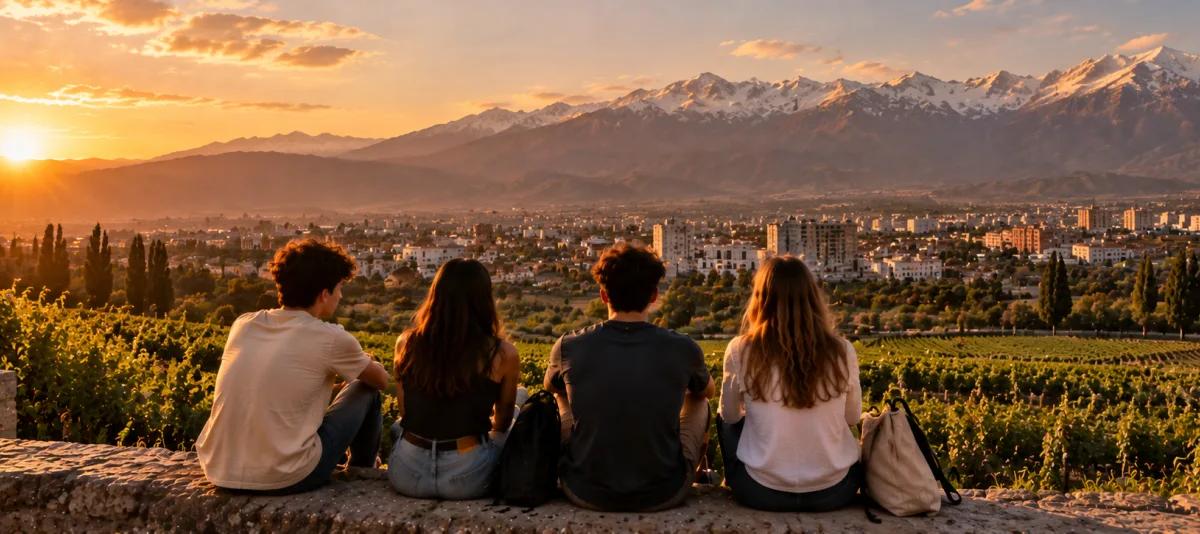
Mendoza is Argentina's wine capital, sitting at the foot of the Andes about 1,000 km west of Buenos Aires. Greater Mendoza has around 1.2 million people; the city itself is a low-rise, tree-lined grid of acequias (irrigation ditches) and sycamores, rebuilt after the 1861 earthquake with wide streets and Parque General San Martín as its lung.
The academic anchor is Universidad Nacional de Cuyo (UNCuyo) — the main public university of western Argentina, ~35,000–45,000 students, campus in the Centro Universitario next to the park. There are also Universidad de Mendoza, Universidad Champagnat and UTN regional faculties. International students come for Spanish, exchange, viticulture/agronomy, and the mountains. Life is slower, sunnier and more outdoors than Buenos Aires or Córdoba.
Student life
UNCuyo's campus (Centro Universitario) concentrates faculties, the comedor, sports and a small residencia (beca-based, not a realistic option for most internationals). Students live in the Centro, Quinta Sección (beside the park) and Godoy Cruz, then bus or Metrotranvía in.
Weekends are bodegas in Luján de Cuyo and Maipú, hiking or skiing (seasonal) in the Cordillera, and asado. The city is bikeable on the flat centre; the Andes are a visual constant. Exchange runs through SIIP (bilateral, PILA, AUGM, and a fee-paying independent track). Spanish is required for almost all undergraduate courses; the tourist wine circuit is more bilingual than the classroom.
The social scene is smaller than Nueva Córdoba: fewer *boliches*, more house gatherings, wine bars and park days. That is the point for a lot of people who pick Mendoza.
Neighborhoods
Quinta Sección (1BR roughly USD 350–700 unfurnished; rooms less): Next to Parque General San Martín and close to the UNCuyo campus. Green, safe, the student/young-professional favourite. This is the first place to look.
Centro / Arístides Villanueva (similar or a bit cheaper than Quinta): Cafés, bars on Arístides, walkable, well connected. Arístides is the city's bar street. Good if you want nightlife without losing the campus bus.
Godoy Cruz: South of the centre, Metrotranvía stops, better value (1BR often USD 265–530). A real city neighbourhood rather than a tourist postcard. Fine for students who do not mind a commute.
Las Heras: Cheaper still, more residential, north of the centre.
Chacras de Coria (Luján de Cuyo): Houses, vines, Andes views — needs a car or a long bus, not a student default.
UNCuyo residencias are for holders of the *Beca de Residencia* (under 24, living 50+ km away, annual February call) — not built for exchange students. Search ZonaProp and local Facebook groups. Expensas (building fees) of USD 30–120 can sit on top of rent; always ask.
Food & restaurants
This is the best everyday food city of the three Argentine pages: produce from the oases, cheap and excellent wine, olive oil, and a parrilla culture that is local rather than performative. Student lunches are milanesa, empanadas mendocinas (often baked, with olives), and the UNCuyo comedor if you can access it.
Arístides Villanueva is the evening strip — beer, pizza, wine by the glass. Bodega restaurants are a weekend splurge, not a weekly habit. Groceries at Carrefour, Vea and the municipal markets; a cooking student can keep food near USD 180–280/month. Water is a topic: Mendoza is desert irrigated — tap water is generally fine in the city, but the climate is dry and you will drink more than you expect.
Nightlife & entertainment
Quieter than Córdoba. Arístides Villanueva is the bar corridor (evening, not 6am). Some clubs on the Godoy Cruz / Acceso Sur side. Harvest season (Vendimia, late February–early March) is the city's festival peak — parades, the Reina de la Vendimia, packed hotels. Do not arrive looking for a room that week without a booking.
The real entertainment is outside the city: bodega bikes in Maipú, high-mountain day trips toward Aconcagua / Puente del Inca (check seasonal road closures), rafting on the Mendoza River, and skiing at Las Leñas or Penitentes in winter. Parque San Martín on a Sunday is as social as a club.
Transport
City buses plus the Metrotranvía (light rail) through Godoy Cruz–Centro–Las Heras. SUBE-style / local cards apply; fares are low. The centre and Quinta Sección are walkable and bikeable. Uber/Cabify exist; many locals still call a *remis*.
Outer wine districts and the mountains need a tour, a rented bike, or a car. MDZ airport is close to the city. Buses to Santiago de Chile cross the Andes when the pass is open (winter closures are common — always check Paso Internacional Los Libertadores). Buenos Aires is a 1.5–2 hour flight or a long overnight bus.
Cost of living
Monthly student budget in Mendoza (2026, excluding tuition):
- Room / modest 1BR: USD 200–500
- Groceries: USD 180–280
- Transport: USD 20–40
- Utilities (unsubsidised, shared): USD 40–80
- Health insurance: USD 30–60
- Leisure / wine / mountains: USD 80–200
- Total: USD 550–1,100. A single international student including a basic prepaga often lands around USD 750–1,000.
UNCuyo undergraduate programmes follow the national public model (free in practice for now; Decreto 366/2025 allows charging foreigners without permanent residence — confirm). Independent (non-agreement) exchange may carry a fee; partner-university exchange usually does not.
Safety
Among the safer large Argentine cities. Quinta Sección, the Centro and Godoy Cruz are comfortable at night on the main streets. Mountain roads, not street crime, are the bigger physical risk on weekends. Petty theft exists around bus terminals and packed Vendimia events. Emergency: 911.
Weather & climate
Dry continental, 750+ m above sea level, 300+ days of sun. Summers are hot (30–35°C) but low humidity; winters are cold at night (sometimes below 0°C) and bright by day. The Zonda wind (hot, dry, from the Andes) can give headache days. Rain is scarce — Mendoza is a desert with irrigation. Pack sunscreen, a winter layer, and forget the umbrella. Ski season is roughly June–September; vendimia is late February–March.
Universities in Mendoza
Other cities in Argentina
Next steps
Sources
- uncuyo.edu.ar/relacionesinternacionales/en/foreign-students
- topuniversities.com/universities/universidad-nacional-de-cuyo
- uncuyo.edu.ar/bienestar/residencias-universitarias
- riotimesonline.com/cost-of-living-mendoza-expats-2026/
- thelatinvestor.com/blogs/news/mendoza-rents
- tolatam.com/en/countries/argentina/cost-of-living
- study-abroad.org/blog/arg-accommodation-guide/