Cambridge (UK), United Kingdom
Quick facts
- Country
- United Kingdom
- Population
- 149,000
- Languages
- English
- Currency
- GBP
- Time zone
- GMT (UTC+0)
- Guide score
- 7.1/10
- Safety
- 8/10
Overview
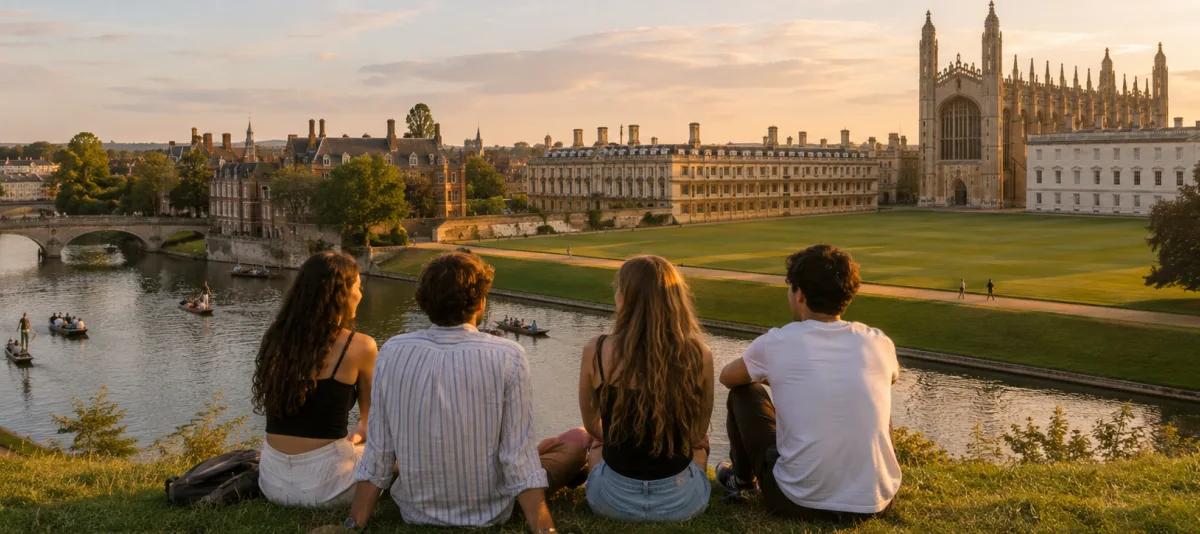
Cambridge is a historic university city about 80 km north of London, dominated by the University of Cambridge — one of the oldest and most prestigious universities in the world, founded in 1209. With around 149,000 residents and nearly 25,000 university students, it's a compact, walkable city where academic life is woven into every street: ancient colleges, chapels, libraries, and the punts drifting along the River Cam.
For international students, Cambridge offers a world-class education in an intimate, beautiful setting. The collegiate system means you belong to one of 31 colleges that provide housing, dining, and small-group teaching. Beyond the university, Cambridge is a thriving tech and biotech hub ("Silicon Fen", home to over 5,000 knowledge-intensive companies), giving strong graduate opportunities. It's quieter than London but rich in history, tradition, and academic intensity.
Student life
Student life at Cambridge is structured around the colleges and the academic calendar's three short, intense eight-week terms (Michaelmas, Lent, Easter). The collegiate system creates tight-knit communities — you live, eat, and study with your college, fostering close friendships. Supervisions (small-group teaching with academics) are the heart of the academic experience and are famously demanding.
Traditions abound: formal halls (candlelit gowned dinners), May Balls (lavish end-of-year celebrations), rowing on the Cam, and college societies covering every interest imaginable. The workload is heavy and terms are short, so the pace is fast. Sports, drama (the ADC Theatre launched many famous comedians), and the Cambridge Union debating society are major parts of student life. Punting on the Cam is the quintessential Cambridge pastime.
Neighborhoods
College accommodation (around £880/mo on average, per the university's 2027-28 estimate): The default and best-value option for most undergraduates, in or near the historic centre, with shorter term-time contracts.
City Centre (£800–£1,100/mo private): Beautiful but expensive and limited; you're walking distance to everything.
Mill Road / Romsey (£650–£850/mo): Cambridge's most multicultural and lively area, full of independent shops, cafés, and restaurants — popular with graduate students.
Cherry Hinton / Chesterton (£600–£800/mo): More residential and affordable, a short cycle from the centre.
Newnham / West Cambridge (£700–£950/mo): Near several colleges and science departments, leafy and pleasant.
Food & restaurants
College dining halls are the everyday staple — cafeteria-style meals typically cost £3–£10, making them the cheapest and most social way to eat. Formal halls, usually at least weekly and always optional, are a special multi-course gowned experience for around £12–£25. Beyond college, Mill Road is the city's best food street, packed with affordable international restaurants — Middle Eastern, South Asian, East Asian, and more.
The market square hosts a daily market with cheap street food and fresh produce. Groceries at Sainsbury's, Aldi, and the Mill Road stores keep costs down; the university estimates total food spending at about £255/month. A mid-range restaurant meal runs £15–25, and a pub meal £12–18. As a small city, Cambridge has fewer options than London, but Mill Road and the growing food scene keep students well fed.
Nightlife & entertainment
Cambridge nightlife is modest compared to bigger cities — a handful of clubs (like MASH, Vinyl and Kiki, plus Revolution bar) cater mostly to students, with cheap student nights during term. The real social life happens in college bars (subsidized drinks), historic pubs like The Eagle (where DNA's structure was announced) and The Mill by the river, and college events.
Entertainment leans cultural and traditional: the ADC Theatre and Corn Exchange for performances, punting on the Cam, the Fitzwilliam Museum (free), and formal dinners. The famous May Balls and June Events at the end of the year are the social highlight — extravagant all-night parties. For bigger nights out, London is under an hour away by train.
Transport
Cambridge is a cycling city — bikes are the dominant mode of transport, and most students buy a second-hand bike (£50–£120) on arrival. The city is flat, compact, and largely walkable, so you rarely need anything else within town. Bus services (mainly Stagecoach, plus the Universal service with discounted student fares) cover the wider area; single fares are capped at £3 until the end of 2026 and at £2 throughout 2027 under the national fare cap.
The main station connects Cambridge to London (King's Cross/Liverpool Street) in about 50–80 minutes — a common trip for day trips and nights out. Cambridge North and the new Cambridge South station (opened June 2026, next to the Biomedical Campus and Addenbrooke's Hospital) add extra rail access. Stansted Airport is roughly a 30-minute train ride away, offering budget flights across Europe. Car ownership is unnecessary and parking is restricted and expensive in the centre. Cycle theft is common, so invest in a good lock.
Cost of living
Monthly budget for a student in Cambridge:
- Accommodation (college room): ~£880
- Food: ~£255
- Personal items: ~£75
- Social & leisure: ~£85
- Study costs & miscellaneous: ~£35
- Total: ~£1,330/month (university estimate for 2027-28, about £11,970 for 9 months)
College accommodation is the most economical route — most students live in college for their whole course and contracts cover only part of the year. International tuition is high (£30,798–£70,554/year for 2027 entry) plus the annual college fee (about £12,500–£15,950 depending on the college). Sign any private tenancy early, as demand is intense.
Safety
Cambridge is a safe city with low levels of violent crime. The main risks are bike theft (extremely common — always double-lock) and occasional petty theft. The city centre is busy and well-lit, and walking or cycling home at night is generally safe, though the usual sensible precautions apply.
Colleges have porters and security staff providing 24-hour presence and support, adding an extra layer of safety for students. Emergency number: 999 (or 111 for non-urgent NHS advice). Overall, students find Cambridge a secure and comfortable place to live.
Weather & climate
Cambridge has a temperate maritime climate — mild but often grey and damp. It's actually one of the driest parts of the UK, but you should still expect frequent light rain and overcast skies. Winters (Dec–Feb) are cold at 1–8°C with occasional frost and rare snow; days are short, dark by 4pm. Spring (Mar–May) is mild at 8–16°C. Summers (Jun–Aug) are pleasant at 18–24°C, occasionally hitting 30°C. Autumn (Sep–Nov) is cool and wet at 8–15°C.
The flat, open landscape means it can be windy and cold-feeling in winter. A good waterproof jacket and layers are essential year-round. The best months are late spring and early summer, when the colleges and gardens look their finest and the Cam is full of punts.
Universities in Cambridge (UK)
Other cities in United Kingdom
Next steps
Sources
- undergraduate.study.cam.ac.uk/international-students/international-fees-and-cost
- undergraduate.study.cam.ac.uk/finance/living-costs
- cam.ac.uk/about-the-university/cambridge-at-a-glance
- ons.gov.uk/explore-local-statistics/areas/E07000008-cambridge/indicators
- gov.uk/government/news/cambridge-south-station-opens
- gov.uk/government/speeches/2-bus-fares-from-january-2027
- nightlifecambridge.co.uk/event/deja-vu-thursdays/
- undergraduate.study.cam.ac.uk/apply/application-dates-deadlines